
Buying a Motorcycle Helmet for a Tall Rider: Fit Beyond the Size Chart

Buying a Motorcycle Helmet for a Tall Rider: Fit Beyond the Size Chart
Tall riders face fit problems that a size chart does not solve: a helmet that sits too low over the eyes, a neck roll that presses, or a shell that hits the collar or shoulder when turning your head. Here are the features that matter for tall riders, what to check in the mirror and on the bike, and how to judge a fit beyond the numbers.
For tall riders, a helmet must fit more than just the head: eye position in the shell, neck roll height, collar clearance, and the ability to turn the head without the shell catching matter as much as the size number. Measure your head for size, then test the helmet in riding posture, checking the eye opening, neck area, and how the shell behaves when you look over your shoulder.
This guide follows general helmet fit guidance consistent with NHTSA helmet selection advice, which emphasizes that a helmet should fit properly and stay in place without moving around on the head. Tall-rider fit checks described here are practical observations, not measurements specific to any model. Fit guidance follows NHTSA helmet selection guidance.
Why Size Charts Do Not Tell the Whole Story
A size chart maps head circumference to a size number, but height changes more than the circumference. Some tall riders find their head sits deeper in the shell, their neck lands against a different part of the lower edge, or their shoulders change how the helmet clears the collar, and all three change how a helmet behaves once it is on.
Two riders can wear the same size and have completely different experiences because of where their eyes sit in the shell and where the lower edge lands on their neck. This is why the try-on, not the chart, decides the fit.
Representative Rider Scenario: Ben - Six Feet Four and Squinting. Ben's measured size fits, but the helmet sits so the upper edge of the eye opening cuts into his vision. The size is correct; the shell geometry is wrong for his head position inside it.
What Tall Riders Should Check in a Helmet
- Eye position: with the helmet on and the strap done up, the upper edge of the eye opening should sit above your eyebrow line, not in your vision.
- Front-to-back head space: your forehead should feel supported, and the top of your head should touch the liner lightly without a pressure point or a floating gap.
- Neck roll height: the lower edge should not dig into your neck or push your head forward when you look up.
- Collar clearance: with the helmet on and a jacket collar closed, you should be able to turn your head without the shell catching.
- Shoulder check: look over both shoulders in riding posture; the shell should not force your head to tilt.
- Vent and visor reach: controls should be reachable without stretching, which matters more if the helmet sits differently on taller heads.
Test the helmet with the gear you actually wear: your jacket, collar, and if you use one, your windscreen. A helmet can feel fine in a t-shirt and catch your collar when the jacket is on.
Shell Shape and Head Shape Work Together
Helmet shells are not the same shape inside. Some are rounder, some longer front to back, and some feel deeper. A tall rider with a longer head front to back may find certain shells press the forehead or sit oddly, even at the correct size.
When buying online, ask about the shell's interior shape and the model's fit reputation rather than relying on the size chart alone. If the store offers exchange or return support, use it to test the fit at home.
How This Applies When Choosing
Apply the tall-rider checklist by testing the helmet in your riding posture with your normal gear, and compare how the eye opening and neck edge feel between models. A full face option is a reasonable starting point for the checks above.
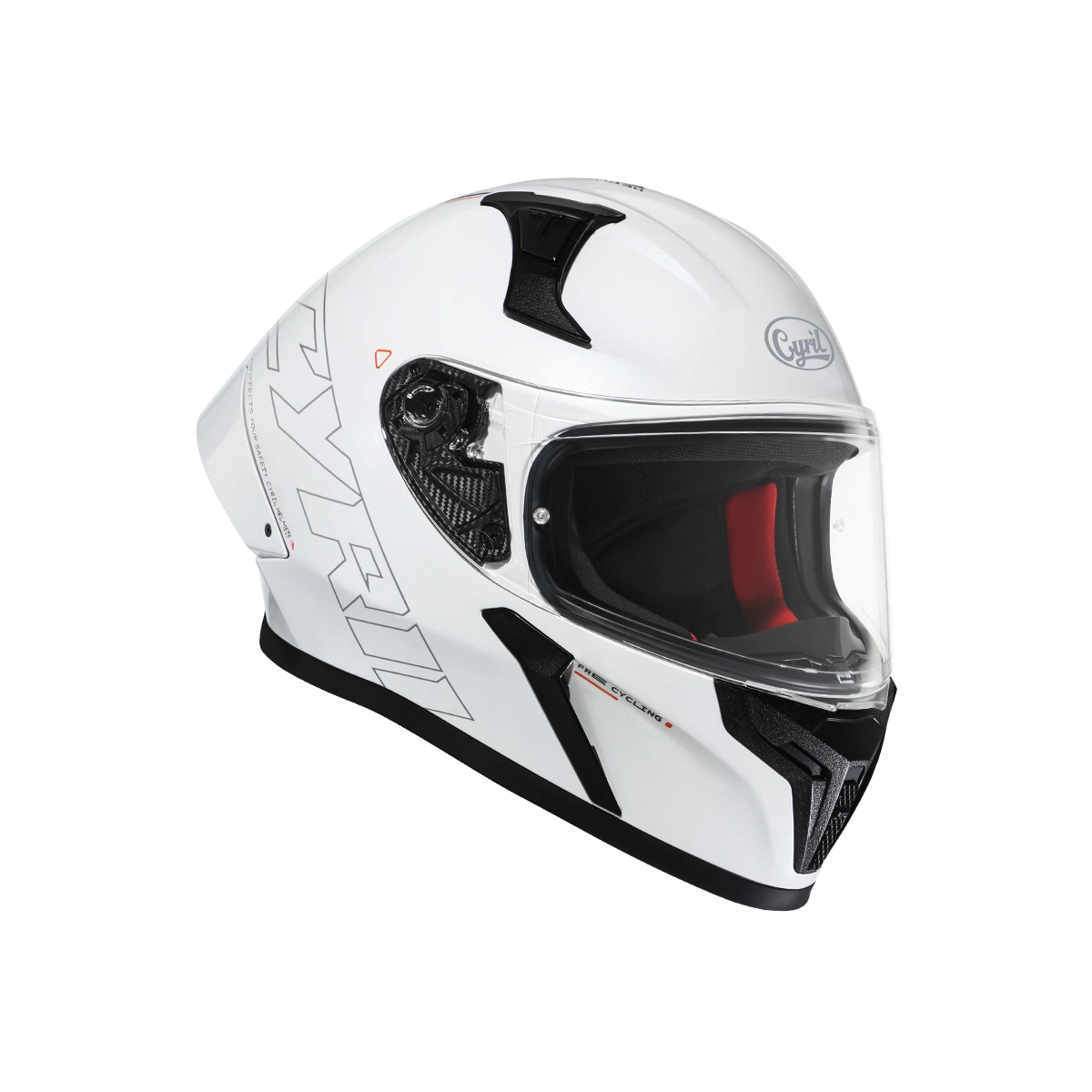
A Full Face Model to Test With Your Fit Checklist
The Mad Shark Full Face Helmet is a relevant example for tall riders comparing full face options with active ventilation, clear visor, removable washable liner, ABS shell, multi-layer EPS, and DOT / ECE information on the product page. Use the official size guide, then verify the eye opening and neck clearance on your own head before ordering.
View current Mad Shark Full Face Helmet detailsCommon Questions About Helmets for Tall Riders
Do tall riders need a different helmet size?
Size follows head circumference, but tall riders often need to check eye position, neck roll height, and collar clearance that a size number does not show.
Why does my helmet sit too low over my eyes?
Your eyes may sit higher in the shell than the model expects. Try a different shell shape or check how the helmet seats on your head.
Should tall riders choose a larger shell?
A larger shell changes how the helmet sits and can add weight. Fit the head first, then check the lower edge and neck area.
Do taller riders notice helmet weight more?
Height itself does not change weight, but a long neck and upright posture can make a heavy helmet more noticeable.
Can a helmet collar catch on tall riders' jackets?
Yes. Test the helmet with your jacket collar closed and turn your head to check the shell clears the collar.
How should I check fit if I cannot try a helmet in a store?
Measure your head, read the size guide, then order from a store with return or exchange support so you can test at home.
Is a modular helmet easier for tall riders?
Modular helmets can be easier to put on and take off, but the same eye position and neck clearance checks still apply.
Does a windscreen change how a tall rider's helmet fits?
A windscreen changes airflow, not fit, but it can affect neck strain. Check helmet posture both with and without your screen.
Final Notes
Buy a helmet for your height by testing beyond the size chart: eye position, neck roll, collar clearance, and shoulder checks in your real gear. The right shell geometry matters as much as the right size number.