
Does Dropping a Helmet Mean It Must Be Replaced?

Does Dropping a Helmet Mean It Must Be Replaced?
Dropping an empty helmet from hand, seat, or handlebar height does not always mean automatic replacement. The decision depends on whether the helmet was empty, how hard it hit, where it landed, whether the shell or hardware shows damage, and whether the liner may have been compressed. This page separates light empty drops from crash or head-inside impacts.
An empty helmet that tips off a seat and lands lightly may only need careful inspection. A helmet that hit the ground with your head inside, flew off at road speed, has cracks, loose hardware, exposed or compressed EPS, or repeated hard drops should be treated much more seriously. Sort the drop scenario first, then decide whether inspection is enough.
This guide uses the Snell Foundation helmet FAQ, NHTSA helmet fit guidance, and 49 CFR 571.218 for impact, fit, and standards context. The article applies those public references to practical rider inspection steps without treating any label as proof of post-drop condition. The product note uses only the official Mad Shark Full Face Helmet page; no independent test result is inferred.
The Drop Scenario Changes the Answer
No, dropping a motorcycle helmet does not automatically mean it must be replaced in every case. The more useful question is what kind of drop happened. A helmet that slipped from your hand onto a clean garage floor is different from a helmet that bounced down concrete steps, fell from a moving bike, or hit the ground while someone was wearing it.
The reason riders worry is valid. Motorcycle helmets manage impact by using a hard shell and an energy-absorbing liner, often EPS, that can crush during a meaningful impact. Some liner damage may not be obvious from the outside. That is why the answer is not "ignore every drop" or "replace after every tiny tip-over." It is inspect, separate the scenario, and act conservatively when the impact is uncertain.
Representative Rider Scenario: Caleb - The Gas Station Drop. Caleb sets his helmet on the seat while paying for fuel. It tips off, lands empty on smooth pavement, and leaves a small scuff near the rear edge. His next step is a full inspection, not panic buying and not dismissing it without looking at the shell, visor, strap hardware, and liner.
Empty Helmet vs Helmet With a Head Inside
The biggest divider is whether the helmet was empty. Snell's public FAQ explains that a helmet dropped from hand, seat, or handlebar height generally does not have to be replaced, while impact with a head inside changes the situation. When the helmet is being worn, the liner may have to manage the mass and motion of the head. That is the kind of impact helmets are designed to address, and it can use up protective capacity.
An empty helmet can still be damaged if the fall is violent enough. If it flies from a moving motorcycle, lands on a sharp edge, gets slammed onto concrete, or is dropped repeatedly, the situation is no longer the simple "it rolled off the seat" scenario.
This is the point where riders often bargain with themselves. The shell still looks clean, the visor still closes, and replacing a helmet is inconvenient. But the inspection needs to follow the event, not the inconvenience.

Signs That Matter More Than the Scuff
A small paint scuff is not the same thing as a cracked shell, loose side plate, distorted visor seal, or compressed liner. Start with the impact point. Look for cracks, spidering in the finish, deep gouges, flattened edges, loose trim, damaged vents, rattling hardware, or a visor that no longer closes evenly.
Then look inside. Remove only the comfort parts the manufacturer allows you to remove. Check whether the EPS liner shows cracks, dents, crushed spots, separation, or unusual white stress marks. Do not dig, pry, sand, heat, or chemically clean the liner to "check better." You can create new damage while trying to inspect old damage.
If the helmet now rattles, closes differently, smells like chemicals from a cleanup attempt, or fits looser than before the drop, treat that as more than a cosmetic scuff.
A Practical Inspection Routine After a Drop
- Write down what happened: empty or worn, approximate height, surface, impact point, and whether it bounced.
- Inspect the shell under bright light. Rotate the helmet and look across the surface, not only straight at it.
- Open and close the visor several times. Check side plates, gasket contact, detents, and clear movement.
- Check vents, trim, spoiler pieces, edge beading, strap anchors, rivets, buckle, and stitching.
- Remove allowed comfort pads and inspect visible EPS without poking or modifying it.
- Put the helmet on and repeat a fit check. NHTSA fit guidance says a helmet should fit snugly and should not move around.
- If anything feels newly loose, sharp, sticky, cracked, compressed, or misaligned, stop treating the issue as cosmetic.
When Replacement Is the Wiser Choice
Replace the helmet if it was involved in a crash or impact while worn. Also replace it if you see shell cracks, EPS compression, damaged strap hardware, a visor system that no longer works properly, or manufacturer guidance telling you not to keep using it.
Replacement is also the more careful choice when the story is unclear. Maybe the helmet fell off the bike at speed, was found on the ground after being knocked from a high shelf, or was borrowed and returned with a new scrape. Without a clear event and a clean inspection, you are guessing.
Representative Rider Scenario: Dana - The Unknown Parking Lot Impact. Dana finds the helmet on the pavement after a windy day at work. There is a gouge near the shell edge and the visor mechanism feels rough. Because the fall height, surface contact, and possible second impact are unknown, replacing or asking the manufacturer is more sensible than arguing that it "probably only fell once."

Dropped Helmet Decision Table
Use the table to separate low-concern events from situations that deserve a harder stop.
| What Happened | What It Usually Means | Next Step |
|---|---|---|
| Empty helmet fell from seat height | Often cosmetic, but still inspect | Check shell, visor, hardware, liner, and fit |
| Helmet hit while being worn | Possible impact-liner loading | Replace or follow manufacturer crash guidance |
| Helmet flew from moving bike | Higher-energy unknown impact | Do not rely on surface scuffs alone |
| Crack, crushed EPS, or loose hardware | Not just cosmetic | Replace or ask manufacturer before use |
| Repeated drops over time | Accumulated abuse and uncertainty | Inspect more strictly and consider replacement |
| Small scuff but fit changed | Possible liner or shell change | Stop and investigate before riding |
When to Ask Manufacturer Support
Ask support when you cannot inspect the EPS clearly, when a mechanism has shifted, when the impact was high or unknown, or when the helmet model has removable parts you are not sure how to reinstall. Send clear photos of the impact point, shell edge, visor mechanism, strap hardware, and inside liner. Explain whether the helmet was empty or worn.
Take the photos before you clean, polish, glue, tape, or adjust anything. A "fixed" helmet is harder for support to evaluate, and a repair attempt can hide the exact clue that would have made the decision clearer.
Do not expect a photo to prove that everything inside is unchanged. Some manufacturers may offer inspection options, some may not, and some may recommend replacement based on the event description. That is not a contradiction; it reflects the limits of what can be confirmed from outside the helmet.
Use Product Care Language Without Inventing a Drop Rule
A manufacturer's care page can tell you when to stop and ask for help, but it cannot reveal hidden condition from a photo alone. Describe the fall height, surface, whether the helmet was occupied, visible damage, and any change in operation.
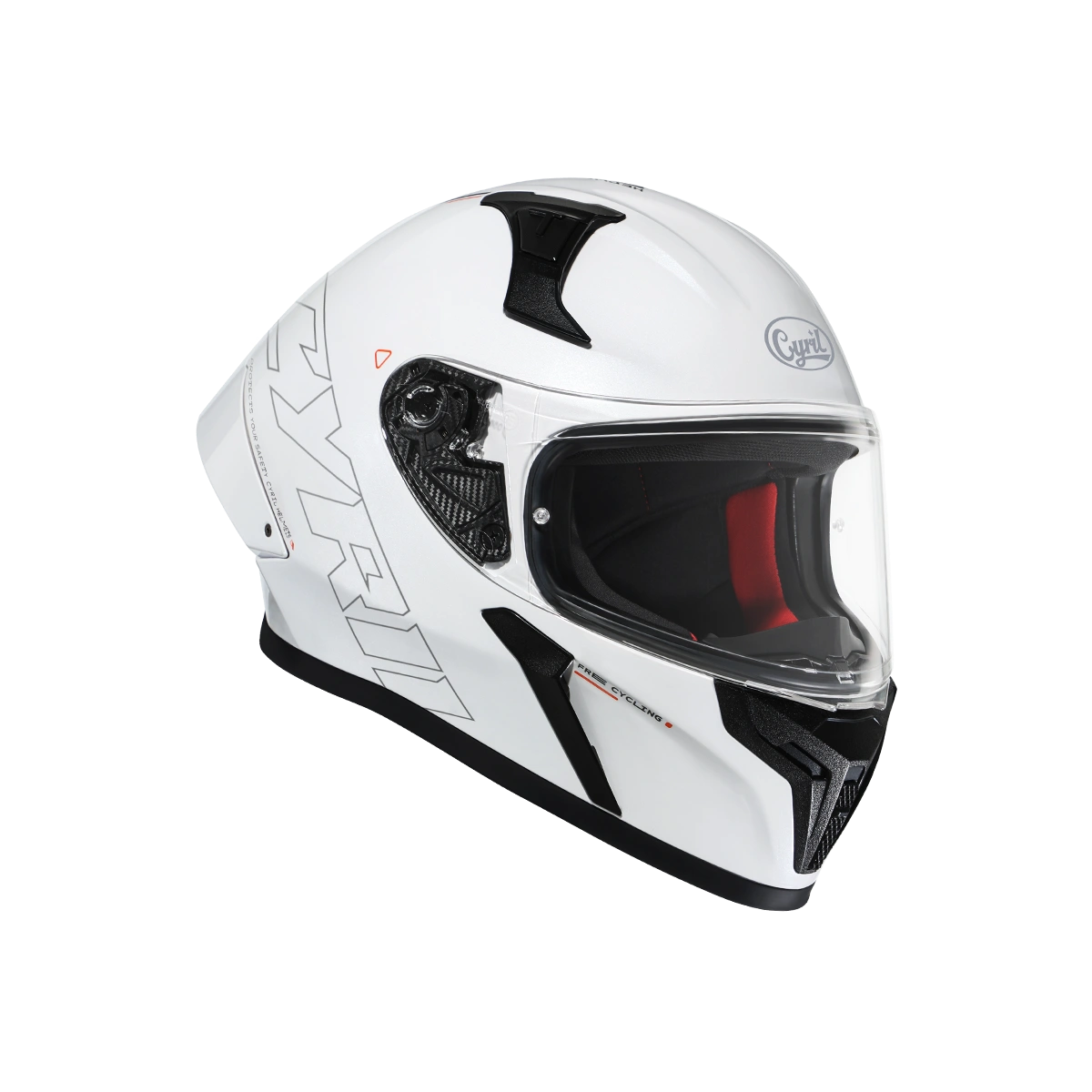
A Full-Face Example With Impact Care Guidance
The Mad Shark care instructions say to replace or stop using the item after major impact, damage, or abnormal wear. They do not state that every unoccupied drop has the same outcome, so a specific incident still needs careful inspection and support guidance.
View current Mad Shark Full Face Helmet detailsCommon Questions About Dropped Motorcycle Helmets
Does dropping a helmet mean it must be replaced?
Not always. A light empty drop may only require careful inspection, but worn impacts, high-energy drops, cracks, liner damage, or uncertain events should be treated much more seriously.
What if my helmet only has a small scratch?
A small surface scratch may be cosmetic, but inspect the shell, visor, trim, straps, hardware, and visible EPS before deciding.
Should I replace a helmet if my head was inside when it hit?
Yes, replacement is usually the careful decision after an impact while worn because the liner may have absorbed energy even if the outside looks normal.
Can EPS damage be hidden?
Yes. Some liner damage may be hard to see, especially under comfort padding or where the EPS is bonded to the shell.
Is the DOT label enough to know the helmet is okay after a drop?
No. A label describes standards information for the helmet, not its condition after a specific drop, crash, or unknown impact.
Can I keep riding if the visor still closes?
Only if the rest of the inspection is clean. Visor movement is one check, but shell, liner, strap, hardware, and fit still matter.
What if I dropped the same helmet many times?
Repeated drops increase uncertainty. Inspect more strictly and consider replacement if marks, looseness, rattles, or fit changes are accumulating.
Who can inspect a dropped helmet?
Start with the helmet manufacturer or authorized support channel. A general shop opinion may help spot visible damage but may not confirm hidden liner condition.
Final Notes
The uncomfortable part of a drop is uncertainty. Do not bargain from a clean-looking shell or assume every fall is identical; preserve the details, inspect without dismantling protective layers, and ask the manufacturer when the history is unclear.