
Which CYRIL Helmet Should You Choose? Mad Shark, R1-PRO, THUNDER or R18

Which CYRIL Helmet Should You Choose? Mad Shark, R1-PRO, THUNDER or R18
Choose the shell structure before styling. Mad Shark and R1-PRO are fixed full-face options, THUNDER is modular, and R18 is 3/4 open face. The right choice is the one whose structure fits your routine and whose fit stays secure and even.
Start with the non-negotiable structure: fixed full face, modular or open face. Then use the listed visor and liner features to narrow the choice. No model should be chosen on a general claim about safety, noise, cooling or head shape.
This article was reviewed against Mad Shark official product information, R1-PRO official product information, THUNDER official product information, R18 official product information, NHTSA helmet-selection guidance. CYRIL is the publisher and seller where CYRIL products are discussed. It uses published information and does not present unpublished road, noise, weight, visor-operation, comfort or durability testing.
How This Guide Was Evaluated
This selector compares CYRIL models by published structure and listed features, not by a single winner. The hierarchy is deliberate: coverage and shell format first, routine second, listed features third and individual fit last.
Editorial boundary: A product page can identify listed construction and features. It cannot by itself prove a universal fit, independent test result, safety guarantee, road-performance result or replacement-part compatibility.
What to Compare Before You Choose
| What to compare | What published information supports | What you still need to verify |
|---|---|---|
| Mad Shark | Fixed full-face format; clear visor and removable washable liner are listed. | You want a straightforward fixed full-face routine and an even fit. |
| R1-PRO | Fixed full-face format; sport-inspired profile and magnetic visor release are listed. | You value that feature direction and the model fits correctly. |
| THUNDER | Flip-up modular format; clear outer shield and inner sun visor are listed. | Frequent appropriate stopped moments make modular use relevant. |
| R18 | 3/4 open-face format; clear outer shield and inner sun visor are listed. | You deliberately accept an open-face structure without a chin bar. |
Choose Coverage and Structure First
A model selector should not treat four different helmet formats as trim levels. Mad Shark and R1-PRO are fixed full-face models. THUNDER is modular, so its front section changes the parked-stop routine. R18 is 3/4 open face and has no chin bar. Those structural differences should narrow the list before color, styling or accessory ideas.
If a chin bar is a requirement, remove R18 from the shortlist. If you prefer fewer moving parts, compare the two fixed full-face models. If frequent stops make a flip-up format useful, examine THUNDER's exact instructions. This sequence keeps a feature comparison from hiding the main decision.
Compare Features You Will Actually Use
Mad Shark lists a quick-release visor base, while R1-PRO lists a magnetic visor release. THUNDER and R18 list a clear outer shield plus an internal sun visor. These are useful only when they answer a real ownership question: routine cleaning, changing light or the need for a particular structure.
A dual visor is not automatically better if you want a fixed full-face shell. A sport-inspired profile is not automatically better if a modular routine is the real need. Choose features after the structural decision, not before it.
Let Fit Override the Table
Two riders can share a head measurement and still find different shell shapes more comfortable. Test indoors with the retention system fastened. Watch for a helmet that rotates independently, shifts forward or feels manageable for a few minutes but painful after a longer wear period.
An evenly snug helmet with no concentrated hot spot is stronger decision evidence than a long comparison table. If a favored model fails the wear test, recheck the size or change the shell shape rather than accepting a loose fit.
Rider Situations That Make the Choice Clearer
These are representative planning scenarios, not customer testimonials or test records. They show the practical decision each page is designed to support.
A fixed full-face shortlist
A rider who requires a chin bar and prefers fewer moving parts can remove R18 and THUNDER from the first comparison. Mad Shark and R1-PRO then become a focused full-face decision based on listed visor handling and, ultimately, the model that fits evenly.
A frequent-stop routine
Another rider may accept a modular structure because parking and short off-road conversations happen repeatedly. That does not make THUNDER universally better; it makes the exact modular instructions, closed fit and dual-visor habit more relevant to that rider.
Do the Fit and Condition Check Before Your First Ride
Use the selector to narrow the type, then use the chart for that exact model. A fixed full-face model, modular model and open-face model can feel different even when the same head measurement appears on their charts.
The final check is the same across the range: fasten the retention system, move your head and check for stable, even contact. A helmet that rotates independently or creates a strong hot spot should leave the shortlist.
How This Applies When Choosing
Use these official product cards to continue from the decision guide into the exact model details, size guidance and care information. The final choice should still be based on the received product, its labels, its condition and its fit on your head.
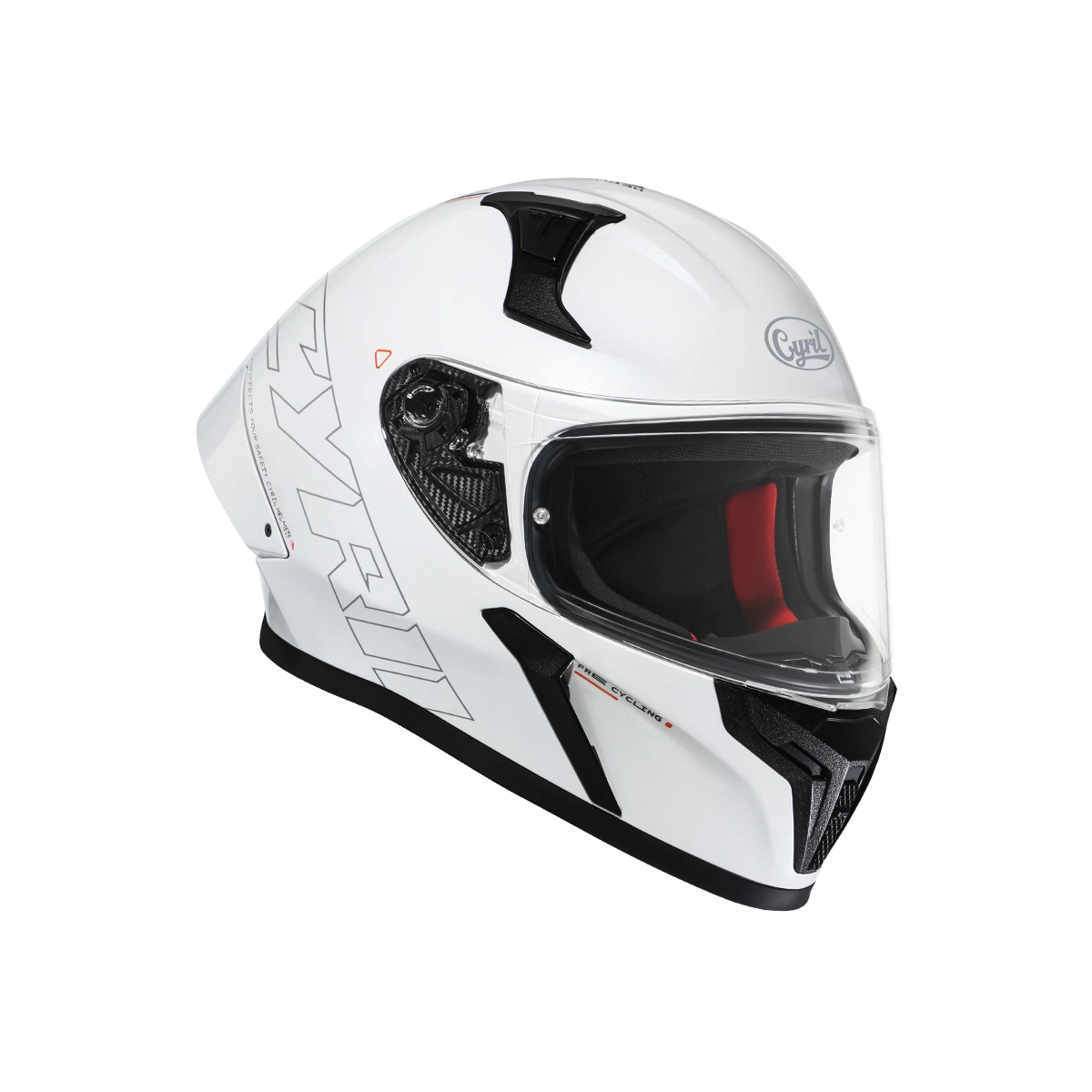
Mad Shark Full Face Helmet
A fixed full-face option for riders who want a clear visor, removable washable liner and a straightforward daily-care routine. Confirm the exact model fit before use.
View Product Details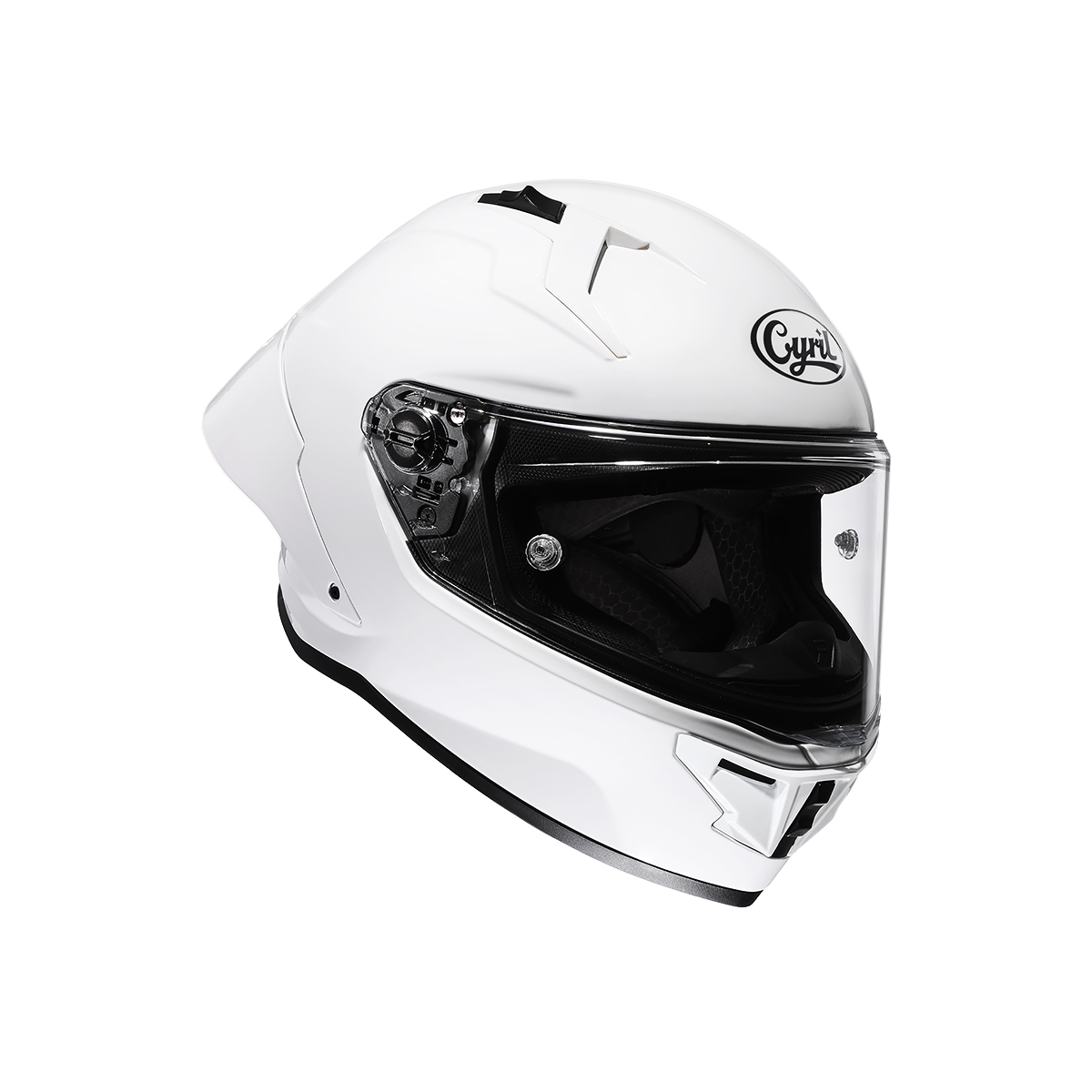
R1-PRO Full Face Helmet
A fixed full-face option for riders comparing a sport-inspired profile with a listed magnetic visor-release system. Use the model-specific size guidance.
View Product Details
THUNDER Dual Visor Modular Helmet
A modular option for riders who need a flip-up structure, clear outer shield and internal sun visor. Confirm fit with the front closed and the retention system fastened.
View Product DetailsA Practical Next Step
Open the CYRIL helmet collection only after you have selected the structure that matches your routine. Then compare exact labels, care information and the model-specific size chart.
Common Questions
Which CYRIL models are fixed full face?
Mad Shark and R1-PRO are listed as full-face models.
Which CYRIL model is modular?
THUNDER is listed as a flip-up modular helmet.
Which CYRIL model is open face?
R18 is listed as 3/4 open face and does not include a chin bar.
Which listed models use a clear outer shield and internal sun visor?
THUNDER and R18 product pages list that dual-visor arrangement.
How do I know whether a helmet fits correctly?
Use the exact model size chart, fasten the retention system, and check for even snug contact. The helmet should move with your head rather than slide independently.
Should I choose a larger size to remove a pressure point?
Not automatically. A loose helmet can move too much. A focused pressure point can indicate a shell-shape mismatch, so recheck the model and fit before sizing up.
Can I assume a removable liner is sold as a replacement part?
No. Removable means it can be taken out for cleaning. Confirm whether a replacement exists and is compatible with the exact model.
Can I use a visor from a different helmet model?
Do not assume compatibility. Visors can differ in shape, tabs, pivots and locking points. Confirm the exact model before ordering a replacement.
Final Notes
The right CYRIL helmet is not a universal winner. It is the model with the structure you intentionally choose, the features you will use and an actual fit that remains secure and even.