
Can You Put a Camera Mount or Sticker on a Motorcycle Helmet? What Riders Should Check First

Can You Put a Camera Mount or Sticker on a Motorcycle Helmet? What Riders Should Check First
A camera mount, sticker, Bluetooth clamp, or reflective decal can seem harmless until it touches the shell, visor seal, vent, or safety label area. Before adding anything to a motorcycle helmet, check the material, placement, adhesive, and manufacturer guidance.
Do not add a camera mount, sticker, paint, glue, clamp, or communication accessory to a motorcycle helmet without checking the helmet manufacturer's instructions and the accessory installation method. Avoid drilling, cutting, sanding, solvent-based adhesives, blocking vents, covering safety labels, interfering with the visor, or adding hard protrusions in a risky position. If in doubt, contact the helmet or accessory manufacturer before modifying the helmet.
Why Small Helmet Add-Ons Deserve a Careful Check
Most riders are not trying to "modify" a helmet in a serious way. They just want to record a ride, add a reflective sticker, mount an intercom, or mark a helmet as theirs. The problem is that a helmet is safety equipment, and small add-ons can touch parts that were not designed around that accessory.
The concern is not only whether the accessory sticks. It is whether the installation affects the shell, liner, vent system, visor movement, strap path, safety label, or how the helmet slides and moves in an impact. A mount that looks clean in a garage may still create a protruding hard point or block a vent you rely on in traffic.
The Snell Foundation helmet FAQ warns that after-market accessories such as camera and audio equipment can affect certification status and should be installed properly by knowledgeable and experienced people. For everyday riders, the practical takeaway is simple: do not treat helmet add-ons like phone-case decoration.

Do Not Drill or Cut
Any accessory that requires drilling, cutting, sanding, or reshaping the shell should be avoided unless the helmet maker explicitly supports it.
Check the Chemical Side
Strong glues, solvents, or paints may not be compatible with helmet shell, trim, or visor materials.
Avoid Function Areas
Do not block vents, visor movement, strap hardware, labels, or areas that affect fit and visibility.
Camera Mounts and Hard Accessories Need Extra Attention
Action camera mounts are common, but they create more questions than a flat decal. They add weight, height, edges, adhesive pads, and sometimes tether points. They can also catch wind, create noise, or pull your head differently at speed if placed poorly.
The rushed version usually happens the night before a group ride. The camera is charged, the mount is in the box, and the curved pad seems to fit "well enough" above the visor or on the side of the shell. That is exactly when riders skip the important questions: whether that part of the helmet is approved for mounting, whether the adhesive belongs on that surface, and whether the camera will still feel acceptable after an hour of wind.

Before mounting a camera, check whether the helmet manufacturer allows it, whether the accessory maker provides helmet-specific guidance, and whether the mount interferes with vents, visor operation, or your shoulder-check movement. Do not assume that a mount is acceptable just because it is sold for motorcycle use.
A practical test is to ask what happens if the mount fails or catches something. Will it strike the visor? Will the camera block your field of view? Will the adhesive pad cover a label or vent? Will the extra weight make the helmet feel different on a long ride? If you cannot answer those questions, slow down before sticking it on.
Stickers, Decals, Paint, and Glue Are Not All the Same
A small sticker can be harmless in many everyday situations, but the details matter. What is the helmet shell material? What adhesive is on the sticker? Does the decal cover cracks, warning labels, reflective areas, vents, visor edges, or inspection marks? Is it removable without solvent?
Paint and strong glue deserve even more caution. The Snell FAQ also advises following manufacturer instructions, avoiding unauthorized paint, and avoiding chemical cleaning products on helmet surfaces. That same thinking applies to decorative changes: if the manufacturer does not approve the material, do not experiment on the helmet you rely on.

| Add-On | Main Concern | What to Check First |
|---|---|---|
| Flat sticker or decal | Adhesive compatibility and label coverage. | Manufacturer guidance, placement, and removability without solvent. |
| Reflective tape | Blocking vents, trim gaps, or safety labels. | Place only where it does not interfere with helmet function. |
| Action camera mount | Hard protrusion, adhesive strength, wind pull, and placement. | Helmet maker guidance, accessory instructions, and road-speed comfort. |
| Bluetooth or intercom clamp | Pressure on shell edge, liner fit, strap path, and speaker comfort. | Fit after installation, cable routing, and whether it changes how the helmet sits. |
| Paint or permanent glue | Chemical compatibility and irreversible surface change. | Do not use unless the helmet manufacturer specifically allows it. |
Places on a Helmet Where Add-Ons Create More Problems
Placement matters as much as the accessory itself. A small item in the wrong place can block airflow, affect visor movement, cover safety information, create pressure under the liner, or make the helmet harder to inspect later.
- Do not place accessories where they block vents or intake/exhaust channels.
- Do not cover DOT, ECE, model, warning, or size information labels.
- Do not place adhesive pads across visor hinges, visor seals, or shield movement paths.
- Do not route wires where they press into your head or interfere with the chin strap.
- Do not add hard protrusions where they affect shoulder checks, storage, or helmet handling.
- Do not hide cracks, scratches, shell damage, or liner problems with stickers.
Checklist Before Adding Anything to a Motorcycle Helmet
The most conservative accessory decision is usually the one that keeps the helmet closest to its intended condition. If you add something, make the change reversible, clean, and supported by manufacturer guidance.

- Read the helmet manufacturer's instructions before adding mounts, paint, stickers, or clamps.
- Read the accessory instructions and confirm it is intended for helmet use.
- Avoid drilling, cutting, sanding, or reshaping the shell.
- Avoid solvent-based cleaners, unknown glues, and permanent surface changes.
- Test visor movement, ventilation, strap operation, and comfort after installation.
- Remove the accessory if the helmet feels heavier, noisier, unstable, or uncomfortable.
- If you are unsure, contact the helmet manufacturer or choose a non-helmet mounting location.
Cyril Helmet Options to Compare Before Adding Accessories
If you are choosing a helmet and already know you use cameras, intercoms, glasses, or reflective markings, compare helmet type, visor operation, shell shape, vent placement, liner comfort, and whether the helmet still fits correctly after your normal riding setup.
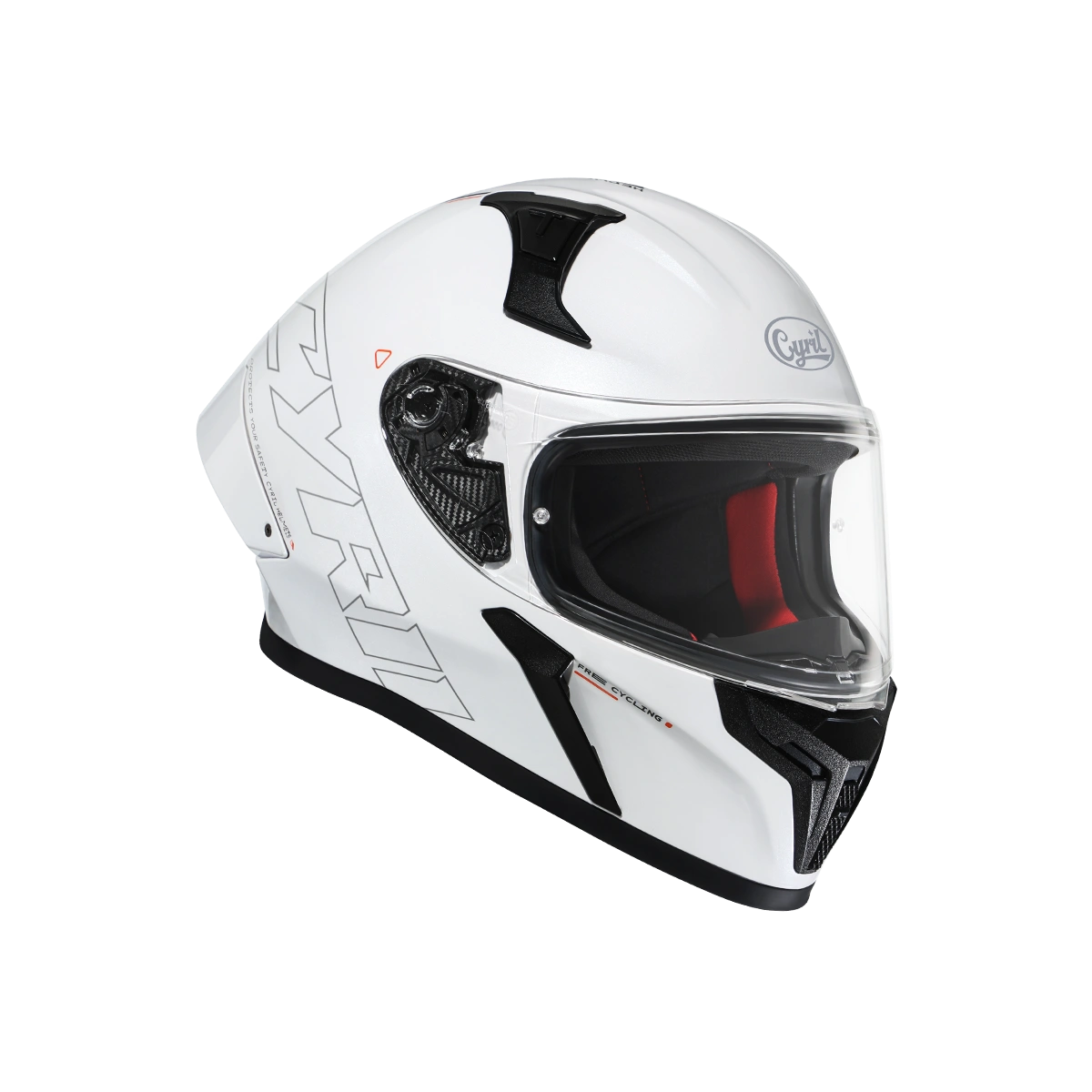
Mad Shark Full Face Helmet
The Mad Shark Full Face Helmet is relevant for riders comparing a daily full face helmet with active ventilation, clear visor view, removable washable liner, ABS shell construction, multi-layer EPS, and stated DOT FMVSS 218 information.
View Mad Shark
A128 Dual Visor Modular Helmet
The A128 Dual Visor Modular Helmet fits riders who want modular convenience while checking clear outer shield movement, inner sun visor use, wide-view comfort, removable washable liner, and stated DOT FMVSS 218 and ECE 22.06 information.
View A128
R1-PRO Full Face Helmet
The R1-PRO Full Face Helmet is worth comparing if you want a sport-inspired full face profile with ventilation, magnetic visor release, removable washable liner, stated DOT FMVSS 218 and ECE 22.06 information, and a stable full-face shell profile.
View R1-PROThe easiest accessory to install is not always the best accessory for a helmet. If an add-on changes fit, visibility, ventilation, strap function, or shell condition, remove it and rethink the setup.
Common Questions About Helmet Cameras and Stickers
Can I put a camera mount on a motorcycle helmet?
Only if the helmet manufacturer and accessory instructions support the installation method. Avoid drilling, cutting, unsafe placement, blocked vents, visor interference, and hard protrusions that change how the helmet functions.
Are stickers safe on motorcycle helmets?
Some simple stickers may be acceptable, but it depends on adhesive, shell material, placement, and manufacturer guidance. Do not cover labels, vents, cracks, visor areas, or use solvents to remove them.
Can I paint my motorcycle helmet?
Do not paint a helmet unless the manufacturer specifically allows the paint or process. Unauthorized paints and solvents may not be compatible with helmet materials.
Where should I avoid putting a helmet accessory?
Avoid vents, visor hinges, visor seals, safety labels, strap hardware, shell edges that affect fit, and any area with cracks or damage that needs to remain visible for inspection.
What if my helmet feels different after adding an intercom?
Remove or adjust the accessory before riding. Speakers, wires, clamps, or pads that create pressure or change helmet position can turn a comfortable helmet into a poor fit.
Final Notes
Before putting a camera mount, sticker, paint, clamp, or communication accessory on a motorcycle helmet, check manufacturer guidance and the real effect on fit and function. A helmet should stay easy to inspect, comfortable to wear correctly, and as close as possible to the condition it was designed to be used in.