
Why Does My Helmet Whistle at Speed and How Do I Stop It?

Why Does My Helmet Whistle at Speed and How Do I Stop It?
A whistle is air being forced through a narrow gap or over a sharp edge at speed, the same physics as blowing across a bottle. Find the gap, close or block it, and the whistle usually stops; if the pitch changes with your posture or bike screen, the helmet is reacting to airflow rather than leaking.
Whistles come from gaps: visor seals, vent sliders, strap edges, chin curtains, and mounts. Close and seat everything, then test one change at a time. If the whistle follows your riding position, the airflow around the helmet is the cause, not a leak.
This guide uses NHTSA's helmet guidance and Snell Foundation fit guidance for the fit and retention checks that keep helmets sealed and stable. Wind-noise fixes are practical checks, not measured performance claims.
Why a Helmet Whistles at All
A whistle is a tone created when fast air passes through a small opening or over a sharp edge. On a helmet, the usual candidates are the visor seal, a vent slider left half-open, the strap and buckle edge, a chin curtain that does not sit flat, and any mount with a gap behind it.
Whistles often appear at one speed range and disappear at others, because the air pressure and flow angle change as speed builds. That is useful information: it tells you the sound is airflow-related, not a loose part rattling.
A whistle and a rattle are different clues. A rattle is a mechanical part moving, often over bumps or at idle. A whistle is steady, tone-like, and speed-dependent. If you hear both, fix the rattle first, because a loose part can also create a gap for air to sing through.
Find the Gap Without Guessing
- Ride at the speed where the whistle starts, on a safe, straight road.
- Close and re-open the visor fully, then check whether the pitch changes.
- Close all vents, then open them one at a time and listen.
- Use one hand to cover the visor edge, chin area, and strap in turn, keeping control of the bike.
- Repeat the ride with a different posture or behind the screen to see if the sound follows you.
Change one variable per ride. If you close everything at once, you will not know which gap was singing.
At a standstill, run your fingers around the visor seal and vent sliders. A gap you can feel with a fingernail is a gap wind can sing through.
Fixes by Source
| Source | Check | Fix |
|---|---|---|
| Visor seal | Visor not fully seated, worn seal | Seat firmly; clean seal; replace seal or visor if worn |
| Vent sliders | Half-open position creates a lip | Close fully or open fully; avoid halfway |
| Strap and buckle | Loose tail flapping in wind | Tuck the strap tail; seat the buckle flat |
| Chin curtain | Not seated or missing | Re-seat; if missing, fit the maker's part |
| Camera or mount | Gap behind a mount | Remove or reposition; use a lower-profile mount |
When the Whistle Comes From the Bike, Not the Helmet
Airflow around the helmet depends on the motorcycle. A touring screen can push turbulent air at helmet height, and an upright riding position changes the angle of the visor edge. If the whistle appears only behind your screen or only in a certain posture, the helmet is reacting to the air it is given.
Try lowering or raising the screen, changing your head angle slightly, or comparing the helmet on another bike before replacing it. A helmet is not defective because it whistles in one airflow setup; it is just telling you where the air is going.
Representative Rider Scenario: Ada - The Screen-Height Whistle. Ada heard a high whistle at 70 mph on her touring bike. Her first thought was the helmet. After testing, she found the whistle appeared only when the screen was at its highest setting and disappeared two notches lower. The helmet was fine; the airflow was not.
When to Accept the Whistle
Some helmets whistle at a narrow speed range no matter what, especially with vents open. If the sound is a small tone at one speed and everything is seated and sealed, riders often accept it or reduce it with earplugs for long rides. A whistle is not by itself a safety defect, but persistent loud noise adds to fatigue, so it is worth fixing when a fix exists.
How This Applies When Choosing
Whistles are airflow details, and airflow details are shaped by the shell. When you compare helmets, look at how vents, visor pivots, and rear edges are designed, and test the helmet in your normal riding position if you can.
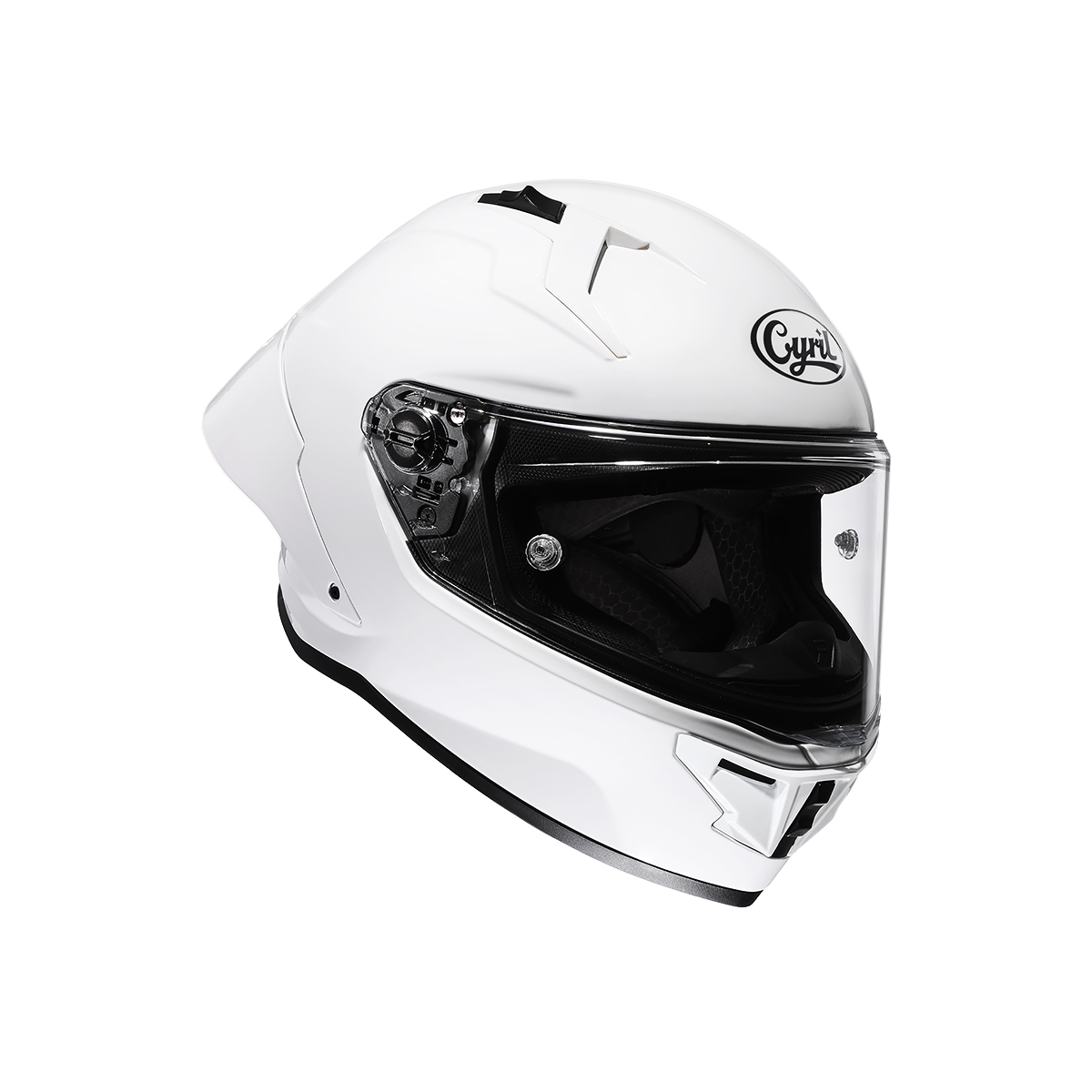
An Aerodynamic Shell to Evaluate in Your Posture
The R1-PRO page lists an aerodynamic shell shape and rear spoiler. Those are airflow details worth checking in your riding position; they are not a promise of silence at every speed.
View current R1-PRO Full Face Helmet detailsCommon Questions About Helmet Whistling
Why does my helmet whistle?
Air is passing through a narrow gap or over a sharp edge at speed, often at the visor seal, a vent slider, the strap, or a mount.
Is a whistling helmet a safety problem?
A whistle itself is not a defect, but loud, persistent noise adds fatigue. Fix it when you can and protect your hearing on long rides.
How do I find where the whistle comes from?
Change one thing at a time: seat the visor, close vents, tuck the strap, then cover each area in turn on a safe ride.
Can vents cause whistling?
Yes, especially when sliders sit halfway open and create a sharp lip for air to sing over. Close fully or open fully.
Does a visor crack cause whistling?
It can. A visor left one notch open, or a worn seal, creates exactly the narrow gap that produces a tone.
Will earplugs stop the whistle?
Earplugs reduce how much you hear it, but they do not fix the airflow gap. Fix the cause first.
Why does my helmet whistle only at certain speeds?
Air pressure and flow angle change with speed, so a gap may sing only in a narrow speed range.
When should I replace a whistling helmet?
Replace it when the seal is worn out, parts cannot be re-seated, or the noise comes with other fit problems. A clean airflow whistle alone is usually fixable.
Final Notes
Seat everything, close the gaps, and test one change per ride. If the whistle follows your posture and screen rather than the helmet, the helmet is showing you where the air is going, not failing.