
How Do I Replace a Motorcycle Helmet Chin Strap?

How Do I Replace a Motorcycle Helmet Chin Strap?
Most motorcycle helmet chin straps cannot be safely replaced by the rider. A damaged strap is a retention problem, and retention is the system that keeps the helmet on your head in a crash. Stop riding the helmet, contact the maker or your seller, and treat sewing or gluing a new strap as out of the question.
Do not DIY a chin strap. Contact the helmet maker or seller for warranty or service options; if none exist, replace the helmet. Inspect straps regularly for fraying, buckle failure, and loose anchors, and stop riding on any doubt.
This guide uses Snell Foundation helmet guidance on how a properly buckled strap should feel and NHTSA's helmet guidance on fit and retention. Replacement advice is a practical position: straps are manufacturer-specified safety parts, not field-replaceable hardware.
What the Strap Is Actually Doing
The chin strap is not a convenience; it is the retention system. Snell's guidance describes the correct setup: buckle the strap snugly under the chin, with no more than two fingers sliding under the strap, and a loose strap can let the helmet shift or even come off in a crash. The strap is stitched and anchored to take forces at a level a home sewing machine cannot reproduce.
That is the core of the replacement question. A strap replacement is only as good as its anchor, its stitching, and its buckle, and none of those can be verified after a garage repair.
Why DIY Replacement Is Not a Fix
Sewing a new strap onto a shell looks possible, but it changes the load path completely. The original strap is attached inside the helmet, often behind the liner and through shell anchors, in a way that spreads force. A visible stitch through the shell weakens the material at exactly the point you do not want weakened.
Glue is worse. Adhesives may hold for a week of light use and fail under the sudden load of a crash, which is the only moment the strap actually matters.
If you are considering sewing or gluing a strap, ask yourself one question: would you trust that repair to hold the helmet on your head in a crash? If the answer is not an immediate yes, the helmet needs a real solution.
Signs a Strap Needs Attention
- Frayed or cracked webbing at the buckle, the anchor, or anywhere along the strap.
- A buckle that will not latch firmly or releases when you tug it hard.
- A strap that keeps loosening after you tighten it, or feels different on one side.
- Loose stitching or movement where the strap enters the shell or liner.
- Signs of heat damage, melted fibers, or deep abrasion.
Any one of these is a stop-riding condition. The strap can look fine from the outside while the internal anchor is failing, which is why a helmet that has been in a crash or heavy drop should be replaced on that basis alone.
What to Do With a Damaged Strap
- Stop using the helmet until the strap issue is resolved.
- Photograph the damage from several angles, including the buckle and anchor points.
- Contact the helmet maker or the seller and ask whether the strap is serviceable under warranty or as a paid repair.
- If the maker offers no service, treat the helmet as unrideable and replace it.
- Do not pass the helmet to another rider while the strap is in doubt.
Warranty terms vary, and some makers will inspect a suspected defect. That inspection is worth doing because it is the only way to get a manufacturer-supported answer.
Keeping the Strap Healthy Longer
Most strap damage is gradual. Check the webbing and buckle once a month, avoid storing the helmet by hanging it on the strap, and do not yank the buckle open with gloves when a release lever or button exists. Sweat and grime can stiffen webbing over time, so wipe the strap clean when you clean the liner.
The pre-ride check takes about ten seconds: run the webbing through your fingers for fraying, tug the buckle after latching, and pull gently on each side where the strap enters the shell. Do it when you put the helmet on, not when something feels wrong at speed.
Representative Rider Scenario: Theo - The Secondhand Surprise. Theo bought a used helmet and noticed the strap was stiff and the buckle clicked loose under pressure. The seller said it was normal. Theo checked with the maker, learned the helmet was out of serviceable range, and replaced it before his first ride.
How This Applies When Choosing
Retention is one of the first things to test before buying, and a strap you can adjust cleanly and fasten with confidence matters on every ride. When you compare helmets, check the strap type and how the release works, and keep the warranty and support details from the product page.
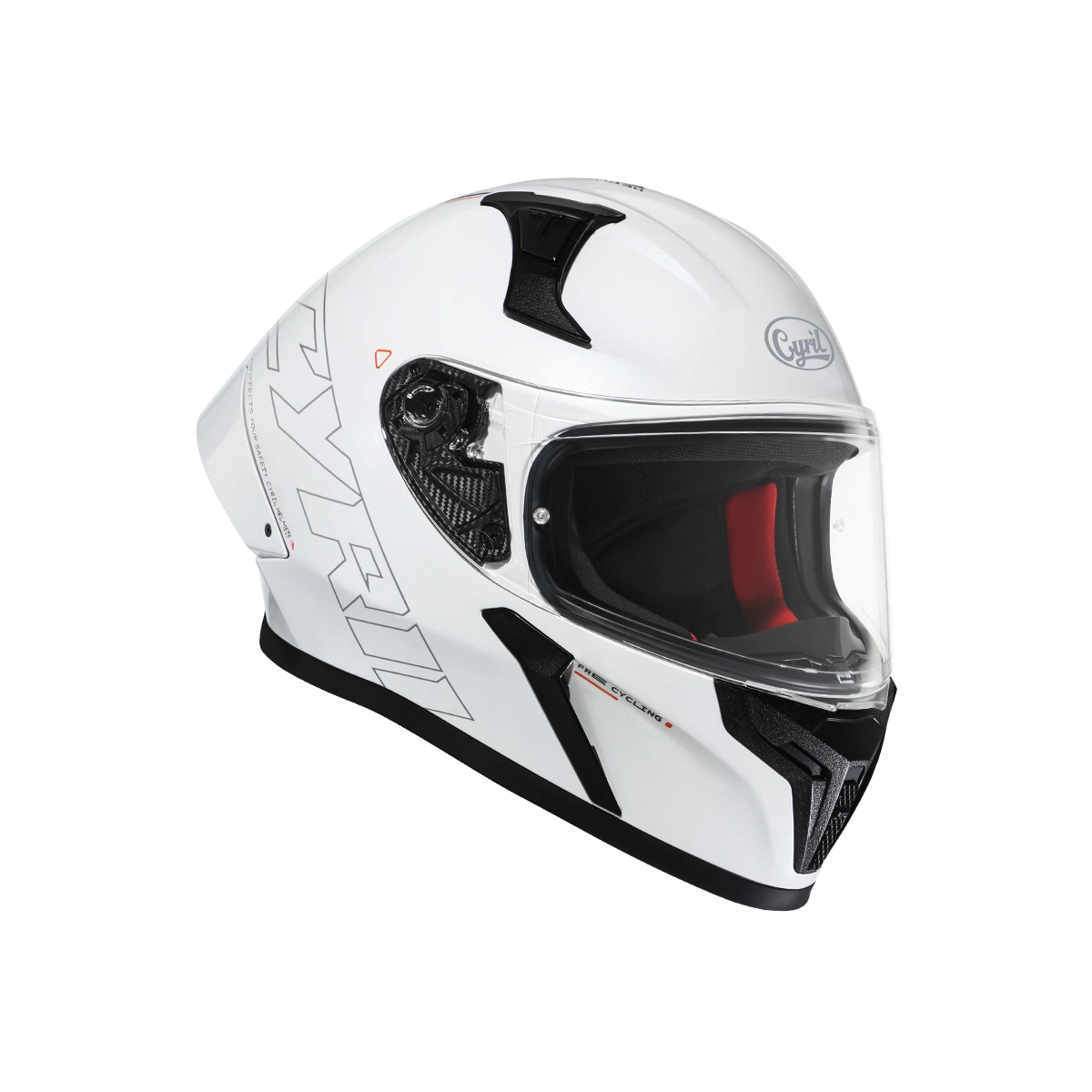
A Retention System to Check Before You Buy
The Mad Shark FF357 page lists an adjustable quick-release retention system. Test how it feels, how it releases with gloves, and how it sits under your chin before committing to the helmet.
View current Mad Shark FF357 detailsCommon Questions About Helmet Chin Straps
Can I replace a motorcycle helmet chin strap?
Riders generally cannot replace a strap safely. Contact the maker for warranty or service options; otherwise replace the helmet.
Why can't I just sew on a new strap?
Home stitching cannot reproduce the factory load path, and sewing through the shell weakens it. The repair could fail exactly when you need it.
How do I know if my chin strap is damaged?
Look for frayed webbing, a buckle that releases under pressure, stitching that moves, or a strap that loosens after tightening.
What should I do if my chin strap breaks?
Stop riding the helmet, photograph the damage, and contact the maker or seller for warranty and service options.
Will the warranty cover a damaged strap?
It depends on the maker and the cause. Ask with photos and your purchase details; some defects are covered, some are not.
How tight should a chin strap be?
Snell's guidance is a snug strap under the chin, with no more than two fingers sliding underneath.
Can a strap be repaired?
Only the maker can decide that for a given model. Treat any field repair as unverified.
How often should I check my chin strap?
Once a month is a practical habit, plus a check after any drop, crash, or heavy sweat season.
Final Notes
A chin strap is a safety part with no home-repair shortcut. Inspect it, protect it, and when it fails, take the helmet out of service and ask the maker for the only answer that counts.