
Crashed in Your Motorcycle Helmet? Why It May Need Replacing Even If It Looks Fine

Crashed in Your Motorcycle Helmet? Why It May Need Replacing Even If It Looks Fine
A motorcycle crash leaves you with a strange question after the bike is upright and your breathing slows down: can you keep wearing the helmet? The shell may only have a scrape, the visor may still close, and replacing a helmet right after repairing the bike feels expensive. This guide explains why a helmet worn in a crash is different from an empty helmet dropped in a garage, what you can inspect, and when replacement is the only sensible decision.
If your motorcycle helmet hit the road, a curb, a vehicle, or another hard object while it was on your head, replacement is usually the safer decision even when the outside looks fine. The EPS impact liner is designed to crush once to slow your head down; that damage can be hidden behind the comfort padding. Dropping an empty helmet from a seat is not the same event. After a crash, document the helmet, inspect visible parts, check the manufacturer's guidance, and do not ride again in a helmet you suspect has absorbed an impact.
The Question Riders Ask After a Minor Crash
The hardest helmet decision often comes after a crash that does not feel dramatic enough to match the word "crash." Maybe you low-sided at 25 mph on a wet turn. Maybe the bike tipped during a parking-lot U-turn and your helmet tapped the pavement. Maybe you got clipped at an intersection, rolled onto your shoulder, and stood up with more embarrassment than pain. The helmet is still in your hands, the shell has a scuff, and the first thought is practical: do I really need to buy another one?
This is the moment many riders try to bargain with themselves. The visor still opens. The chin strap still clicks. There is no crack you can put a fingernail into. But helmets are not built like crash bars or jacket sliders. Their most important damage may not be on the outside. It may be in the EPS liner, the crushable foam layer under the comfort padding, where your head pressed into the helmet during impact.
Rider Persona: Jake — 25-Minute Urban Commuter After a Wet Low-Side. Jake rides to work five days a week and rarely goes above 45 mph. One rainy morning he braked on painted lane markings, lost the front tire, and slid into the curb lane. His helmet touched the pavement once near the left temple and left a shallow gray scrape. He felt fine enough to ride home, but the scrape was exactly where his head would have loaded the EPS. For Jake, the useful question was not "does the shell look destroyed?" It was "did the helmet slow my head down during that fall?" The answer was yes, so replacement was the right call.


Crash Impact vs Dropping an Empty Helmet
Riders often mix two separate problems: "I dropped my helmet" and "I crashed in my helmet." They deserve different answers. An empty helmet that falls from a motorcycle seat or workbench has no head mass driving into the EPS liner. It may get scuffed, and repeated hard drops are not harmless, but a single low empty drop usually does not create the same internal load as a crash with your head inside.
A helmet worn in a crash is trapped between your moving head and whatever it hits. Your head continues moving into the liner as the shell slows against the road. That is exactly when the EPS is designed to crush. The shell scratch may be small because the helmet hit once and slid only a little. The liner damage can still matter because the force was concentrated during first contact.
| Event | What usually matters | Practical decision |
|---|---|---|
| Empty helmet falls from a seat | Cosmetic scrape, visor mark, possible vent damage | Inspect carefully; replacement is not automatic unless damage is visible or severe. |
| Helmet falls from height or at road speed while empty | Higher shell impact, possible hidden damage | Contact the manufacturer or replace if you cannot verify condition. |
| Low-speed fall with helmet touching pavement while worn | Head mass loads the EPS at the contact point | Replacement is usually the conservative choice. |
| Crash involving vehicle, curb, barrier, or high-speed slide | Impact plus abrasion plus possible shell distortion | Stop using the helmet and replace it. |

A quick way to tell which category you are in: ask whether the helmet was protecting a moving head when it hit. If the answer is yes, you are no longer deciding about a dropped object. You are deciding about protective equipment that may have already performed its job once.
What to Inspect Before You Decide
Inspection cannot prove a crashed helmet is safe. It can only identify obvious reasons to stop using it immediately. A clean inspection does not reset the helmet to new condition; it only means you did not find visible damage. Still, it is worth checking because it helps you document the event and avoid riding in a helmet with obvious defects.
- Outer shell: look for cracks, dents, deep gouges, flat spots, exposed fibers, or a scrape pattern that shows one clear impact point.
- EPS liner: remove comfort pads if the helmet allows it and look for crushed foam, cracks, shiny compressed areas, dents, or gaps between EPS and shell.
- Chin bar: inspect the lower front edge and side areas, especially on full-face and modular helmets. A chin-bar hit may not be obvious from the top view.
- Retention system: pull the straps by hand and check rivets, D-rings, quick-release buckles, stitching, and anchor points for distortion or fraying.
- Visor and hinge: close the visor and check whether it seals evenly. A visor that no longer lines up can signal shell distortion.
- Fit: put the helmet on only for a stationary fit check. If it now rocks, sits crooked, pinches differently, or makes clicking sounds, stop using it.
If you find any of these problems, the decision is over. Replace the helmet. If you find nothing but know the helmet hit while you were wearing it, do not let a clean surface inspection become permission to ignore a real impact.
When Replacement Is the Safer Decision
Replacement is the safer decision when the helmet was involved in a real impact while worn, when structural damage is visible, or when you cannot confidently separate the event from a head impact. The helmet's value is not in surviving the first hit cosmetically. Its value is being able to manage the next hit if one happens. A liner that has already crushed in one area has less energy-absorbing capacity there next time.
Borderline situations exist. If you tipped over at a stop and the helmet barely brushed soft dirt, you may decide differently than after a pavement strike. But once the story includes road speed, body weight, head contact, curb impact, vehicle impact, or a slide, the cost of guessing wrong is too high. If you hear yourself building a legal case for why the helmet is "probably fine," you already know it is not a helmet you fully trust.
Replace Immediately
The helmet hit pavement, curb, vehicle, barrier, guardrail, or gravel while it was on your head. Also replace if there are shell cracks, EPS dents, strap damage, or a changed fit.
Ask the Manufacturer
The event was low speed but unclear, or the helmet has an unusual mark you cannot interpret. Some manufacturers offer inspection guidance or crash replacement support.
Inspect, Then Monitor
The helmet was empty and fell from a low height, with no structural damage, no visor misalignment, no EPS mark, and no change in shell sound or fit.
Rider Persona: Sarah — Weekend Canyon Rider With a Helmet That Looked Fine. Sarah low-sided at about 40 mph on a decreasing-radius turn. Her jacket and glove told the truth immediately; both were scraped. The helmet, oddly, had only a thumb-sized mark near the rear quarter. She almost kept it because the mark looked minor. Then she remembered that her head had snapped sideways during the slide. A small shell mark was enough evidence that the liner had been asked to work. She retired the helmet and kept it on a shelf as a reminder, not as a backup.
What to Document for Support or Insurance
After a crash, document the helmet before you throw it away. This helps with insurance claims, replacement programs, warranty conversations, and your own memory. Crash details blur quickly when you are also handling bike damage, medical checks, and transport.
Take daylight photos: full helmet from all sides, close-ups of impact marks, visor and hinge areas, chin strap hardware, interior labels, manufacturing date labels, and visible EPS after removing comfort pads. Photograph the bike and gear damage too. If the helmet was purchased online, save the order confirmation and product page screenshot.

Rider Persona: Mike — Touring Rider Who Needed Proof Later. Mike was on day two of a long weekend trip when a car changed lanes into him at highway speed. He walked away, but his helmet had scraped along the right side during the slide. The helmet was packed in his luggage by a friend and nearly forgotten while the bike went to a shop. Two weeks later, insurance asked for gear documentation. Mike had taken photos at the motel that night: shell marks, inner label, visor damage, receipt. Those photos turned a frustrating conversation into a straightforward gear replacement line item.
- Photograph the helmet before cleaning it or removing damaged parts.
- Keep the helmet until insurance or replacement support is complete.
- Record the crash date, road surface, speed range, and where the helmet contacted.
- Do not ride in the helmet just because you still need it for documentation.
How to Choose the Next Helmet After a Crash
Replacing a crashed helmet is not just buying the same thing again in a hurry. Use the crash as feedback. Did the helmet stay stable? Did the visor remain closed? Did the chin strap sit correctly? Did you notice pressure points before the crash that made you loosen the strap? The next helmet should solve the old helmet's weak points, not repeat them.
For U.S. riders, the NHTSA helmet fit and DOT guidance is a good baseline: look for the DOT symbol and required FMVSS No. 218 labeling, then focus on fit, shape, pressure points, and whether the helmet stays stable when you shake your head. Certification matters, but it only works as designed when the helmet fits your head and stays on correctly.
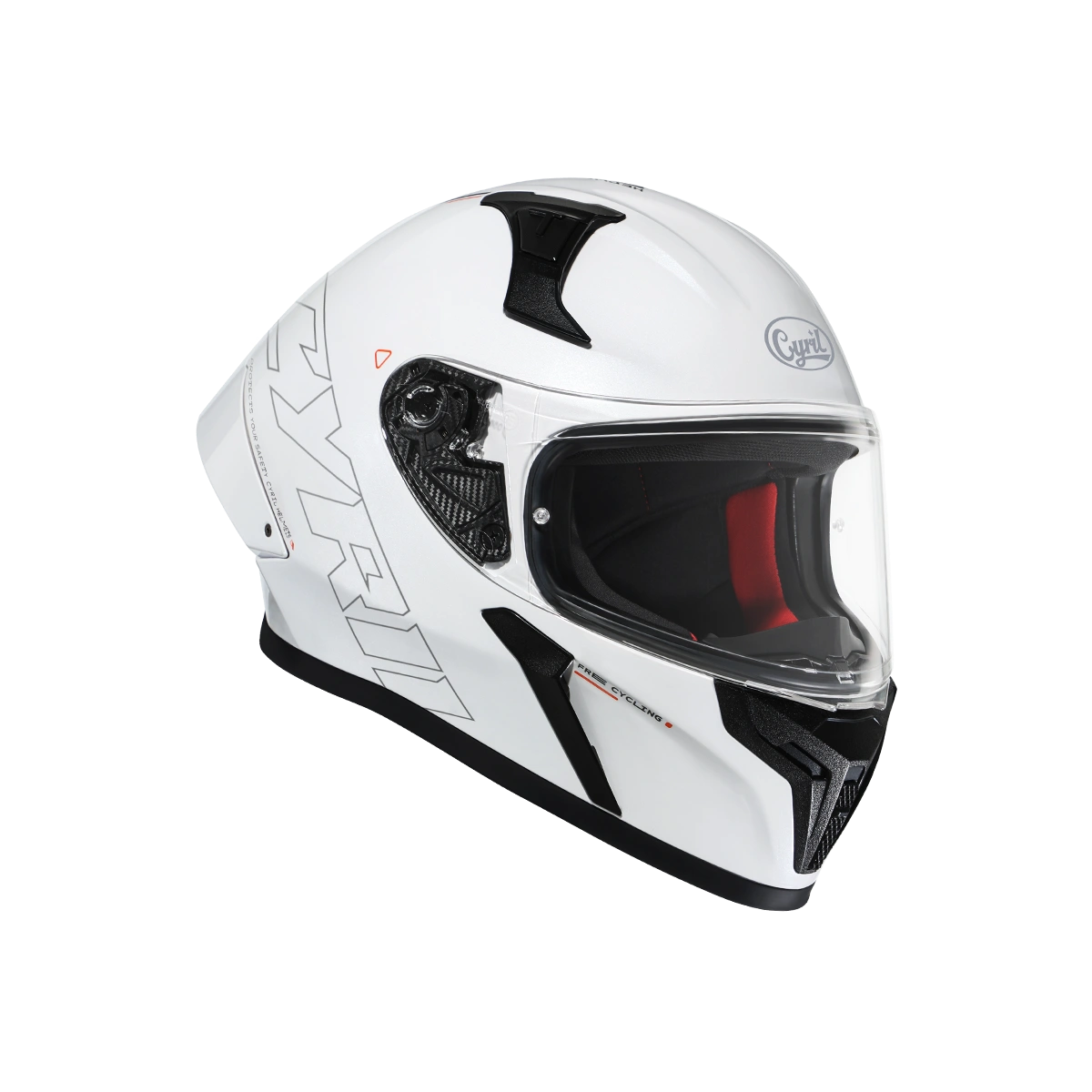
Best for Replacing a Daily Commuter Helmet
The Mad Shark Full Face Helmet fits riders replacing a commuter helmet after a low-speed street incident. It uses an ABS shell with multi-layer EPS, active ventilation, a clear visor view, and a removable washable liner. DOT FMVSS 218 information makes it a practical daily replacement without turning the crash into an expensive upgrade project.
View Mad Shark
Best for Riders Rebuilding Confidence After a Slide
The R1-PRO Full Face Helmet suits riders who want a more stable full-face setup after a road slide or weekend crash. It carries DOT FMVSS 218 and ECE 22.06 information, with a sport-inspired profile, ventilation, a magnetic visor release, and a removable washable liner. If your old visor or shell shape felt distracting at speed, correct that during replacement.
View R1-PRO
Best for Touring and Stop-and-Go Recovery Rides
The A128 Dual Visor Modular Helmet is a useful replacement candidate for riders who want modular convenience after a crash shook their confidence. It offers a flip-up modular design, clear outer shield, inner sun visor, wide-view comfort, removable washable liner, and DOT FMVSS 218 plus ECE 22.06 information. The dual visor setup is especially practical if your crash reminded you how quickly glare, traffic, and fatigue stack up.
View A128If the helmet hit while it was on your head, do not treat the lack of visible damage as proof. Replace it, contact the manufacturer, or at minimum keep it out of riding use until a trained inspection path says otherwise. A crashed helmet can still look good enough for a shelf, a training display, or a reminder of what happened. That does not make it good enough for the next ride.
Common Questions About Motorcycle Helmet Replacement After a Crash
Do I have to replace my motorcycle helmet after every crash?
If the helmet hit anything while it was on your head, replacement is the conservative answer. The helmet may have used part of its EPS crush capacity even if the shell only shows a small scrape. A simple bike tip-over where the helmet never touched the ground is different, but once the helmet contacts pavement, a curb, a vehicle, or a barrier during a crash, keep it out of riding use.
What if the helmet only has scratches on the outside?
Scratches alone do not tell you how much force reached the liner. A helmet can slide briefly and show only surface marks, while the first point of contact loaded the EPS underneath. Check the shell, EPS, strap, visor, and fit, but remember that a clean visual inspection cannot prove the liner is undamaged. If your head was inside during the impact, do not rely on appearance.
Can I inspect EPS damage myself?
You can remove the comfort liner, if the helmet is designed for that, and look for crushed foam, cracks, dents, shell separation, or shiny compressed areas. That can catch obvious damage. It cannot catch every form of internal compression or stress. If the helmet was worn in an impact and you cannot get a qualified manufacturer inspection, replacement is safer than guessing.
Is dropping an empty helmet the same as crashing in it?
No. An empty helmet falling from a seat or handlebar does not have your head mass driving into the EPS liner. It still deserves inspection, especially if it hit hard or from height, but it is not the same as a worn helmet absorbing crash energy. The serious category is impact while in use, especially with road speed or a hard object involved.
Can a manufacturer inspect my helmet after a crash?
Some manufacturers offer inspection guidance or crash replacement support, but policies vary by brand and model. Contact the manufacturer with photos, purchase proof, model information, and a clear description of the crash. Do not keep riding in the helmet while waiting for an answer. If the manufacturer cannot inspect it or says replacement is required, replace it.
Will insurance cover helmet replacement after a motorcycle accident?
It depends on your policy, the crash circumstances, and local claim handling. Many claims can include damaged riding gear, but you need documentation. Photograph the helmet, damage marks, inner labels, purchase receipt, and the rest of your gear. Keep the helmet until the claim is resolved. If another driver was at fault, include the helmet in your property damage discussion.
Can I keep a crashed helmet as a spare?
Do not keep it as a riding spare if it absorbed an impact. That creates the exact second-use risk you are trying to avoid. You can keep it as a garage display, training example, or reminder to document gear after a crash. Mark it clearly so nobody borrows it by mistake.
What should I look for in the replacement helmet?
Start with the correct certification for your market, then fit. The helmet should be snug around the crown and cheeks, with no painful pressure points and no movement when you shake your head. Reconsider features that mattered during the crash or recovery: visor seal, field of view, strap comfort, ventilation, removable liner, and whether full-face or modular design better matches your riding.
Final Notes
A crashed helmet creates an uncomfortable mismatch: the evidence you can see is often less important than the damage you cannot see. That is why the safest advice sounds simple. If the helmet was on your head and it hit during the crash, retire it from riding use. The helmet may have done its job perfectly; that is exactly why it should not be asked to do the same job again.
Before you throw it away, take photos, save labels, and handle any insurance or support claim. Then choose the replacement slowly enough to get fit right. A rushed replacement that pinches, slides, or tempts you to loosen the strap is not a real upgrade. The next helmet should give you what the crashed one just gave you once: a stable, certified, properly fitted layer between your head and the road.