
How Do I Choose a Motorcycle Helmet for a Large Head?

How Do I Choose a Motorcycle Helmet for a Large Head?
Start with a real measurement, not a guess about your size. Large-head riders succeed by measuring circumference correctly, comparing brands because sizes differ, and matching head shape, not by simply ordering the biggest size available. A helmet that fits holds without pressure points and stays put when you shake your head.
Measure your head at the widest point, compare that number to each brand's chart, and choose by fit rather than by label. Large sizes exist in most lines, but shell shape and liner thickness decide whether a size actually works for your head.
This guide uses NHTSA's helmet fit guidance and Snell Foundation guidance, which both explain why a correct size should be snug without pressure points and why head shape matters. Size charts vary by model, so the current product page remains the final source for numbers.
Measure First, Guess Second
Wrap a soft tape measure around your head at the widest point: just above the eyebrows and ears, where the helmet will sit. Write the number down in centimeters and inches. If you are between measurements, your first order should follow the chart's boundary rules, and your final decision should come from how the helmet actually feels.
Do not assume you are "just a size up" because a medium felt tight once. The tightness may be shape, not size.
Measure twice, especially if you are between sizes. A tape pulled at an angle adds a centimeter, and that centimeter can push you into the wrong range. Have someone else read the tape, or measure in front of a mirror, and keep the number in centimeters, because most helmet charts use it.
Size and Shape Are Two Different Problems
Snell's guidance makes the point plainly: two people can have the same head size and different shapes, and a helmet that fits one may not fit the other. For large heads, the common trap is a round head in a long-oval shell or a long head in a round shell, which creates pressure at the front or sides no matter how large the size label is.
If a large helmet feels tight at the forehead but loose at the cheeks, the shape is wrong for your head, and the next size up will not fix it. Try a different model line or brand before you go bigger.
Size Charts Differ Between Brands
NHTSA notes that helmet sizes vary between manufacturers, so a size chart is a starting point, not a universal truth. One brand's XL can be another's L. Check the chart for each model you consider, and use your measured circumference against that specific chart, not your memory of a past helmet.
Stock matters too. Large sizes are produced in smaller volumes, so the size you need can sell out quickly, and some models do not go large enough for the biggest heads. If the chart does not cover your measurement, the model is not for you; do not order it anyway and hope padding fixes the gap.
The Fit Test for Large Sizes
- Put the helmet on without the chin strap and shake your head gently; it should move with your skin, not slide.
- Press the front of the helmet; it should not shift over your brow.
- Wear it for 20–30 minutes and watch for pressure points at the forehead, crown, or temples.
- Check that the lower edge does not dig into the back of your neck.
- Repeat with a different brand or model line if any pressure appears.
A large-size helmet that causes pain is not "broken in"; it is the wrong shape or size for your head.
Ordering online changes the test: buy from a seller with a real return window, keep the tags on, and run the full 30-minute test indoors before you ride. A helmet that only feels right in the mirror for ten seconds is not a fitted helmet.
How This Applies When Choosing
Before ordering, check the model's current size chart against your measurement, and confirm the return policy allows a genuine fit test. The product page should tell you the size range; your head decides the final size.
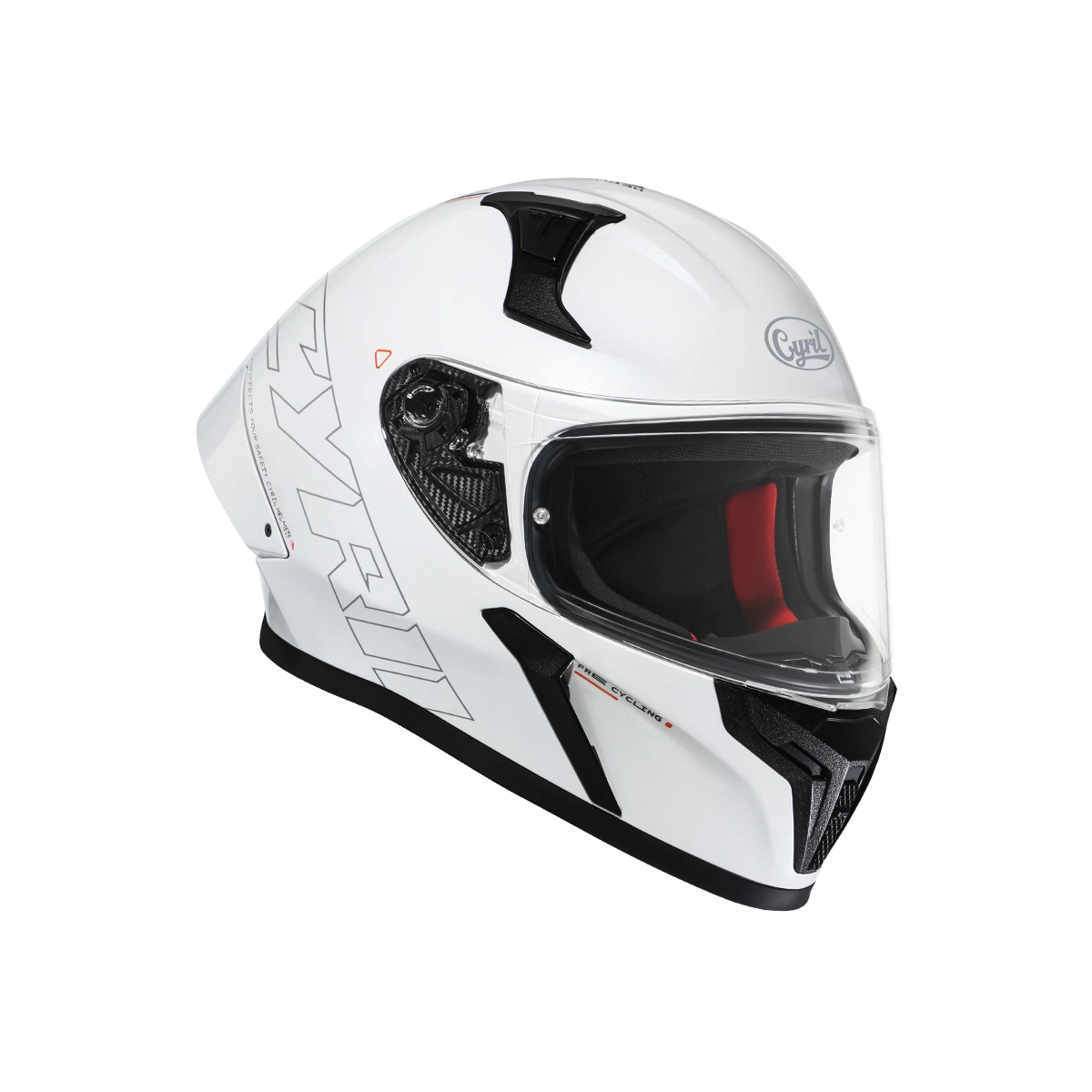
A Size Chart to Compare Against Your Measurement
The Mad Shark FF357 page includes sizing information for the model. Use your measured circumference against the current chart, then run the 30-minute fit test before deciding to keep it.
View current Mad Shark FF357 size detailsCommon Questions About Helmets for Large Heads
What size motorcycle helmet do I need for a large head?
Measure your head circumference and compare it to each brand's chart. Large and XL sizes differ between brands, so the chart for the model you want is the answer.
Do helmet sizes run small for big heads?
Some models run narrow or shallow, which feels small even at the right label. Check shape as well as size, and try another model line if pressure appears.
Should I just buy the biggest size available?
No. A helmet that is too large moves on your head and is unsafe. Buy the size that fits your measured head, not the largest label.
Why is a large helmet still tight on my forehead?
The shell shape is probably wrong for your head shape. A longer or rounder shell, not a larger size, is the fix.
How should a large-head helmet fit?
Snug all around with even pressure, no painful spots, no sliding when you shake your head, and no gap at the brow.
Are full face helmets harder to fit for large heads?
They can feel tighter because of the chin bar and liner, but a correct fit is available in most lines if the shape matches.
Can cheek pads fix a large-head fit?
Cheek pads adjust cheek hold, not head circumference. If the crown or forehead is the problem, pads will not fix it.
How long should I test a large helmet before keeping it?
Wear it for at least 30 minutes at home and check for pressure points, then decide within the return window.
Final Notes
Measure, compare charts, and match shape before you match size. A large head does not need a huge helmet; it needs the right shell for its shape and a fit you can trust for the whole ride.