
How Do I Read a Motorcycle Helmet Product Page Before Buying?

How Do I Read a Motorcycle Helmet Product Page Before Buying?
Product pages are built to sell, not to educate. A good page gives you the facts you need to make a confident choice. A weak page hides what matters behind marketing language. This guide shows you what to look for, what to question, and what to verify before you add a helmet to your cart.
Before buying a helmet online, check four things on the product page: (1) safety certification with specific standard references, (2) sizing method and measurement instructions, (3) what the photos actually show versus what they hide, and (4) whether reviews mention fit, comfort, and real-world use rather than just packaging and delivery. If any of these four areas is missing or vague, contact support before ordering or find a page that gives you the information you need.
This guide is based on official Cyril product information, NHTSA public helmet guidance, the public FMVSS 218 motorcycle helmet standard, and official UNECE Regulation No. 22 materials. It was reviewed for practical shopping accuracy, avoidance of inflated safety claims, and clear separation between marketing language, legal standards, and verifiable product facts.
What a Product Page Should Always Include
Every helmet product page should answer six basic questions without forcing you to dig through marketing copy. If you cannot find clear answers within the first scroll, that is a warning sign.
- What safety certification does the helmet carry, and is the standard referenced by name?
- What is the shell material, described with specific terms rather than vague marketing language?
- How does the manufacturer recommend measuring for size, and is a size chart provided?
- What type of helmet is it — full face, modular, open face — and is that classification clear?
- What are the visor features: pinlock ready, anti-fog coating, quick release, inner sun visor?
- What is the return or exchange policy if the fit is wrong?
A page that buries certification at the bottom, uses terms like "advanced composite" without specifying the material, or shows only flattering angles is asking you to buy on appearance. The best pages put certification, sizing, and material information near the top because they know educated buyers look for it first.
Rider Persona: Jake — First-Time Online Buyer. Jake is buying his first helmet after completing his MSF course. He clicks a product page and sees a glossy helmet with "Ultimate Protection" in large type. He scrolls past three sections of lifestyle photos before finding a single line: "meets safety standards." No standard name. No size chart. No material spec. Jake closes the tab and finds a page that puts facts first.
How to Check Helmet Safety Claims
Certification is the most important fact on a helmet product page, and it is also the most commonly obscured. A page that says "certified" without naming the standard is not giving you useful information. A page that says "DOT approved" but does not reference FMVSS 218 is using shorthand that may or may not be accurate.
Look for specific standard names:
- DOT / FMVSS 218 — the US federal motor vehicle safety standard for motorcycle helmets.
- ECE 22.06 — the current European helmet safety standard, more recent than ECE 22.05.
- Snell M2020 or M2015 — an additional voluntary standard with its own testing protocol.
Be wary of "tested to international standards" without naming the standard. Be equally wary of "exceeds DOT requirements" unless the page specifies which parameters were exceeded. FMVSS 218 is the US motorcycle helmet standard; ECE 22.06 and Snell are separate standards, not marketing adjectives. A good product page tells you which standard applies instead of making you infer it.
If a page mentions MIPS or rotational impact systems, check whether the feature is integrated into the specific model or just referenced as a general brand capability. Some pages mention technology that is only available on specific variants.
Sizing Information: What to Trust and What to Verify
The sizing section is where most online helmet purchases go wrong. A chart that only lists S, M, L with head circumference ranges is the minimum. A useful chart tells you where to measure, how tight the tape should be, and what to do if you fall between sizes.
Look for these specifics:
- Does the page tell you to measure above the eyebrows and around the widest part of the head?
- Is the measurement given in both centimeters and inches?
- Does the chart mention internal shape — round oval, intermediate oval, long oval?
- Is there guidance for riders between sizes?
- Does the page explain whether sizes refer to shell size, liner size, or both?
A page that only gives circumference and a size label is asking you to gamble. Head shape matters as much as circumference. Two riders with the same measurement can need different helmets if one has a rounder head and the other a longer one. The best pages acknowledge this and either offer shape guidance or direct you to a fit questionnaire.
Rider Persona: Sarah — Between Sizes and Frustrated. Sarah measures fifty-eight centimeters, placing her at the upper end of medium and lower end of large on most charts. She ordered a medium from one brand: too tight. A large from another: too loose. The pages gave circumference ranges but no guidance on head shape, pad compression, or boundary sizing. She eventually found a brand that explained how liners compress during break-in and recommended sizing down for riders near the top of a range. That context made the difference.
Photos: What to Look For and What Is Missing
Product photos are designed to make the helmet look good. Your job is to extract practical information. Start by asking what the photos are not showing.
A complete photo set should include:
- Front view with the visor closed and open.
- Side view showing profile and vent placement.
- Rear view showing spoiler or exhaust vent design.
- Interior view showing liner material, pad layout, and any glasses channels.
- Detail shots of the strap mechanism, whether D-ring or quick-release.
- A photo of the certification label or markings, if the brand is transparent.
If the page shows only exterior glamour shots, you are not getting the information you need to assess fit, function, or construction. A page that hides the interior, the strap mechanism, and the certification label is asking you to trust the brand's word rather than verify the product yourself.
Pay attention to whether the helmet in photos has logos, graphics, or colors that might not match what you receive. Some pages use renderings rather than photos of the actual unit. Renderings are not deceptive, but they do not show manufacturing variations, seam quality, or visor action the way real photos do.
Reviews: How to Read Them Without Getting Misled
Reviews are useful, but most review sections are dominated by first impressions rather than long-term use. A rider who unboxed the helmet yesterday and thinks it looks great is not telling you whether it causes headaches after an hour of riding. Your goal is to find reviews that address the questions you actually have.
Sort or filter for these patterns:
- Reviews that mention specific ride duration — "wore it for a two-hour ride" rather than "tried it on and it fits."
- Reviews that mention head shape — "I have a round head and this helmet clamped my temples."
- Reviews that mention weight and fatigue over time.
- Reviews that mention visor function in real conditions — rain, fog, night riding.
- Reviews that mention return or exchange experiences.
Ignore reviews that focus on delivery speed, packaging, or shelf appearance. Those tell you nothing about whether the helmet will work for your head and riding style. Be skeptical of review sections where every post is five stars and within a narrow date window. Authentic distributions have variation, and detailed critical reviews often contain more useful information than vague praise.
Rider Persona: Mike — Comparing Two Similar Listings. Mike is deciding between two helmets at similar prices. Both pages look professional. Both have four-and-a-half-star averages. Mike digs in and notices: Brand A's reviews are mostly about fast shipping and nice boxes. Brand B's reviews mention specific fit experiences — one rider describes forehead pressure after forty-five minutes, another confirms the liner is removable. Mike chooses Brand B because the reviews answer questions he cares about, even though one is critical.
Red Flags That Should Make You Pause
| Red Flag | Why It Matters | What to Do |
|---|---|---|
| No certification named | You cannot verify whether the helmet meets legal requirements | Contact support for the specific standard, or choose a different helmet |
| No size chart or vague sizing | Fit is the most common reason for returns; guessing leads to disappointment | Ask for detailed sizing guidance before ordering |
| Only exterior photos | You cannot assess interior quality, liner construction, or strap mechanism | Request interior photos from support, or find a more transparent listing |
| All reviews are recent and uniformly positive | May indicate incentivized reviews rather than organic feedback | Look for reviews on independent platforms or forums |
| "One size fits most" or similar claims | Helmets do not fit most heads; this suggests the seller does not understand fit | Avoid. A proper helmet requires specific sizing. |
| No return policy for fit issues | If the helmet does not fit, you are stuck with it | Confirm the return window and conditions before ordering |
When to Contact Support Before Buying
There is no shame in asking questions before you order. In fact, contacting support is one of the best ways to judge whether a seller stands behind their product. A responsive support team with detailed product knowledge is a positive signal. A team that gives generic answers or redirects you back to the product page is a warning.
Contact support if any of the following apply:
- You fall between two sizes and need guidance on which to choose.
- The page mentions a feature you care about — glasses compatibility, speaker pockets, pinlock readiness — but does not show it clearly.
- You need confirmation of the certification standard referenced.
- The return policy is unclear about whether worn helmets can be returned for fit issues.
- You are comparing two helmets and need help understanding practical differences beyond the spec sheet.
The quality of the response matters as much as the speed. A detailed answer that references your specific situation shows product expertise. A copy-paste response that does not address your question shows a support team that is either undertrained or overwhelmed. Both tell you something about the company you are buying from.
Treat the product page as a screening tool. If the seller answers basic questions about certification, sizing, construction, and return policy clearly and prominently, the page is giving you usable buying information. If the page relies on emotional language, lifestyle photography, and vague claims while burying the facts, slow down and ask support before ordering.
Helmets With Transparent Product Information
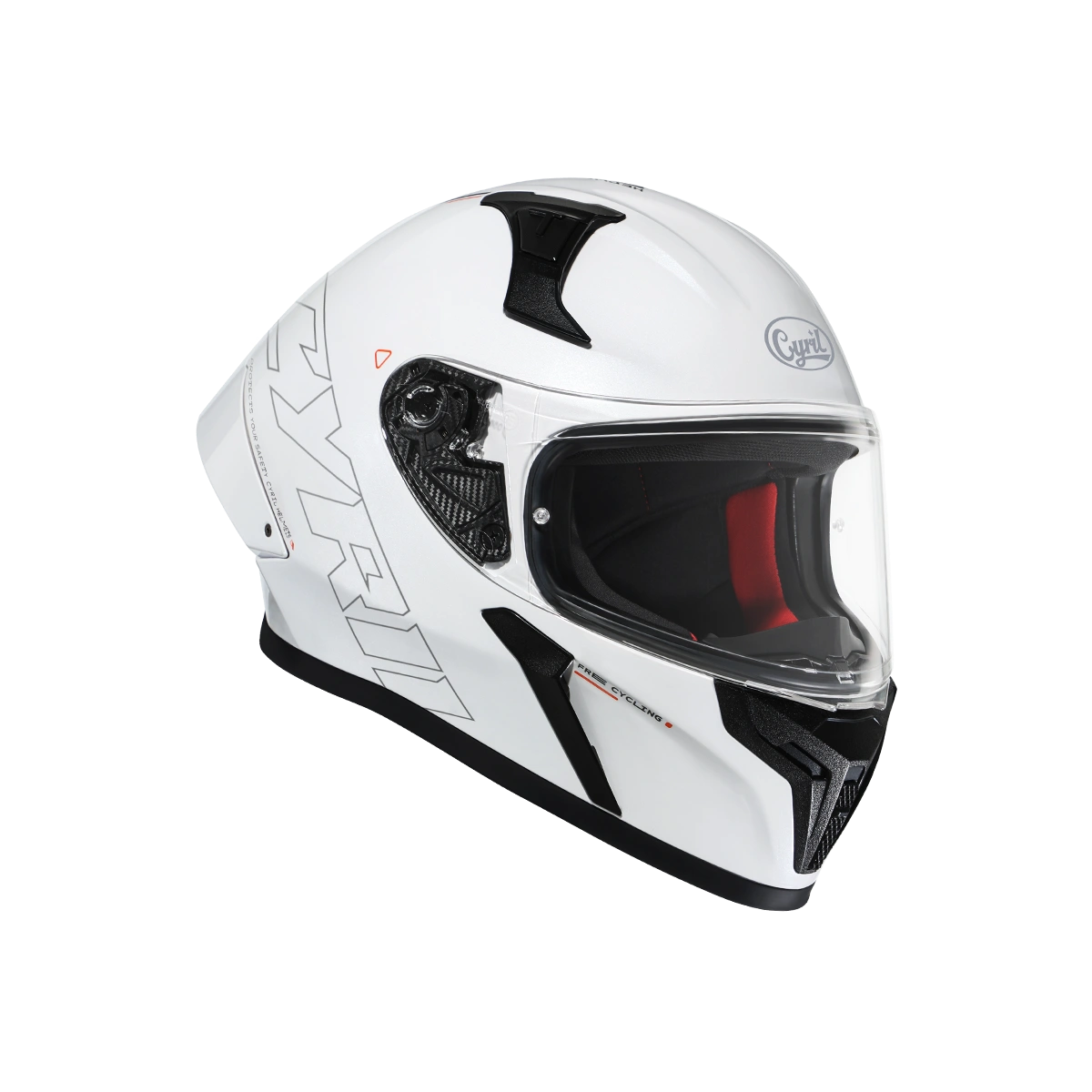
Best for Fact-First Daily Buyers
The Mad Shark is a full-face helmet with DOT / FMVSS 218 information, an ABS shell, multi-layer EPS, and active ventilation. It gives online buyers concrete details to review before ordering instead of asking them to rely on appearance alone.
View Mad Shark
Best for Standard-Conscious Buyers
The R1-PRO lists DOT / FMVSS 218 and ECE 22.06 information with a sport-inspired profile, magnetic visor release, and ventilation system. It suits buyers who want standards named clearly before they start comparing secondary features.
View R1-PRO
Best for Modular Feature Review
The A128 is a dual-visor modular helmet with DOT / FMVSS 218 and ECE 22.06 information and a flip-up chin bar. It is a useful example of a page where the buyer should inspect modular-specific details, including the dual-visor system, flip-up mechanism, and wide-view design.
View A128Common Questions About Reading Helmet Product Pages
What is the most important thing to check on a helmet product page?
Safety certification information is one of the most important facts. Look for specific standard names like DOT / FMVSS 218, ECE 22.06, or Snell M2020. A page that says "certified" without naming the standard is not giving you verifiable information. After certification information, check the sizing method and whether the page provides enough detail for you to choose the right size without guessing.
Should I trust a helmet page that does not show the interior?
Be cautious. The interior liner, pad layout, strap mechanism, and certification label are essential for assessing comfort, construction quality, and safety compliance. A page that only shows exterior glamour shots may be hiding interior details that matter for fit and durability. If you cannot find interior photos, contact support and request them before ordering.
How do I know if helmet reviews are genuine?
Look for detailed reviews that mention specific ride experiences, fit over time, and real-world conditions. Genuine reviews often include minor criticisms alongside praise. Be skeptical of review sections where every post is five stars, uses similar language, or was posted within a narrow time window. Cross-check by searching for the helmet model on independent motorcycle forums where reviewers have no incentive to be positive.
What does "ECE 22.06" mean on a product page?
ECE 22.06 is the newer version of UN Regulation No. 22 for protective helmets and replaced the older ECE 22.05 in markets that use that regulation. It is separate from DOT / FMVSS 218, which is the US standard. If a product page claims ECE 22.06, look for the standard name, label information, and seller documentation instead of relying on a vague phrase like "European approved."
Is it a red flag if a helmet page does not list a return policy?
Yes. Fit is the most common reason for helmet returns, and a seller that does not clearly state their return or exchange policy for fit issues is asking you to take a risk. Look for a policy that allows returns within a reasonable window, typically fourteen to thirty days, with clear conditions about whether the helmet can be tried on or worn briefly. If the policy is missing or vague, contact support for clarification before ordering.
Can I trust "advanced composite" as a shell material description?
"Advanced composite" is marketing language, not a material specification. It could mean fiberglass, carbon fiber, Kevlar, or a blend. Without knowing the specific material, you cannot assess weight, durability, or price fairness. A trustworthy product page names the material directly — ABS, polycarbonate, fiberglass composite, or carbon fiber — rather than using vague terms that sound impressive but say nothing specific.
Should I contact support if the size chart seems wrong for my head shape?
Yes. A size chart that only gives circumference ranges assumes all heads with the same measurement have the same shape. They do not. If you know your head is rounder or longer than average, contact support and ask whether the helmet runs round, intermediate oval, or long oval. A knowledgeable support team can guide you toward the right model or size variant. If they cannot answer that question, consider it a sign that the seller may not have the depth of product knowledge you need for a confident purchase.
What product page details help me compare two similar helmets?
Focus on the details that affect your riding, not the features that look good in photos. Compare certification information, not just whether the helmet only says "certified." Compare visor mechanisms and features relevant to your climate. Compare sizing guidance quality, not just the number of sizes offered. Compare what reviews say about long-term comfort and real-world use, not unboxing experiences. Two helmets with similar prices can differ significantly in the details that actually matter once you are wearing them on the road.
Final Notes
Reading a motorcycle helmet product page well is a skill that saves you from returns, headaches, and the frustration of owning a helmet that looks good online but does not work on your head. The pages that deserve your trust lead with facts: specific certifications, clear sizing guidance, honest photos, and detailed reviews. The pages that lead with emotion and lifestyle imagery are selling you a feeling, not a product.
If you finish reading a product page and still have basic questions about fit, safety, or function, do not guess. Ask support for the missing details or choose a page that provides them clearly. Good helmet pages help buyers make a fit and safety decision before money changes hands.