
How Should I Use a Helmet Size Chart When Buying Online?

How Should I Use a Helmet Size Chart When Buying Online?
A size chart is the bridge between your head and a helmet that fits. Used correctly, it reduces the chance of a bad fit. Used incorrectly, it leads to returns, frustration, and the false belief that all helmets fit the same way. This guide shows you how to measure, how to read the chart, and what to do when your measurement falls between two sizes.
Measure your head circumference with a soft tape measure placed above your eyebrows and around the widest part of your head. Keep the tape level and snug but not tight. Use that measurement against the manufacturer's size chart, not a generic chart. If you fall between two sizes, consider head shape, liner compression, and whether the helmet model runs large or small. A size chart is a starting point, not a guarantee — always verify fit when the helmet arrives.
This guide is based on official Cyril product information, real online-shopping fit scenarios, and NHTSA public guidance on motorcycle helmet fit. It was reviewed to keep measurement instructions practical, avoid promising that a chart can guarantee fit, and separate sizing guidance from the final wear test after delivery.
Why Size Charts Are Only the Starting Point
A size chart converts head circumference into helmet size labels. It does not tell you whether the helmet's internal shape matches your head shape, whether the liner will compress enough, or whether your hair volume changes the effective measurement. A rider with a fifty-eight-centimeter measurement and a round head may need a different helmet than a rider with the same measurement and a long oval head.
The chart is a filter, not a decision. It tells you which sizes to consider. The final decision requires understanding your own head shape, how the specific helmet model fits, and what the return policy allows if the fit is wrong.
Rider Persona: Jake — First-Time Measurer. Jake wraps a piece of string around his head, marks it, and measures the string with a ruler. He gets fifty-seven centimeters. He checks the size chart and orders a medium. The helmet arrives and feels tight at the temples but loose at the forehead. Jake assumed the chart was all he needed. He did not know his head was more oval than the helmet's round interior.
How to Measure Your Head Correctly
Use a soft tape measure, not a ruler or string. A soft tape follows the curve of your head; a ruler does not, and a string stretches unpredictably.

- Place the tape about one finger-width above your eyebrows.
- Wrap it around the widest part of the back of your head, usually just above the bump at the base of the skull.
- Keep the tape level all the way around — not tilted up at the back or down at the front.
- Pull the tape snug enough that it does not slide, but not so tight that it compresses your skin.
- Take the measurement in centimeters and inches if possible.
- Measure three times and use the largest consistent measurement.
Measure with the hairstyle you will wear when riding. A thick braid or bun can add one to two centimeters. A shaved head or very short hair removes that volume. If you switch between hairstyles, measure with your thickest riding hairstyle and consider how that affects your size choice.
Rider Persona: Sarah — Hair Volume and Measurement. Sarah measures fifty-six centimeters with her hair down. With her riding braid, she measures fifty-eight. She ordered based on the fifty-six measurement and the helmet was too tight once she put her hair up. She re-measured with her braid and ordered a size larger. The second helmet fit correctly.
How to Read a Size Chart
Not all size charts are structured the same way. Some use centimeters, some use inches, some use hat sizes. The best charts include all three. Look for these elements:

- Head circumference in centimeters and inches for each size.
- Clear boundaries — does the medium end at fifty-eight centimeters or include fifty-eight?
- Guidance on what to do at the boundary — size up, size down, or contact support.
- Internal shape information — round oval, intermediate oval, long oval.
- Whether the chart applies to all models or specific product lines.
Be wary of charts that use overlapping ranges without explanation. If medium is fifty-six to fifty-eight and large is fifty-eight to sixty, a fifty-eight measurement falls into both. A good chart tells you which way to go. A bad chart leaves you guessing.
Also check whether the chart is specific to the helmet model or a generic brand chart. Some manufacturers use one chart for all models even though different models have different shell shapes and liner thicknesses. If the product page does not specify, contact support and ask.
What to Do When You Are Between Sizes
Falling between two sizes is common. The right choice depends on several factors:

| Factor | Size Down If | Size Up If |
|---|---|---|
| Head shape | Your head is narrower than average | Your head is wider or rounder than average |
| Hair volume | You ride with short or no hair | You ride with thick, long, or styled hair |
| Liner type | The liner is known to compress significantly | The liner is firm and breaks in minimally |
| Helmet model | Reviews say the model runs large | Reviews say the model runs small |
| Return policy | You can return if the smaller size is too tight | You can add a thinner liner if the larger size is loose |
A general rule: if you are near the top of a size range and the helmet has a compressible liner, size down. If you are near the bottom of a size range and the liner is firm, size up. When in doubt, contact the manufacturer's support and describe your measurement and head shape. A knowledgeable support team can guide you better than a chart alone.
Common Size Chart Mistakes
Most size chart errors fall into predictable categories. Avoiding them saves you from returns.
- Using a generic chart. A chart from a third-party website or forum may not match the manufacturer's current sizing. Always use the chart on the product page or the manufacturer's official site.
- Measuring once. A single measurement can be off by a centimeter if the tape slips or your head tilts. Measure three times.
- Ignoring head shape. Circumference is one dimension. Head shape — round, intermediate, or long oval — affects fit as much as size.
- Not checking boundary overlap. If your measurement sits exactly at a size boundary, check what the manufacturer recommends for that specific measurement.
- Ordering based on hat size or clothing size. A large hat is not a large helmet. Use head circumference, not other clothing sizes.
Rider Persona: Mike — Ordered by Hat Size. Mike wears a seven-and-one-eighth hat and assumed that translated directly to a medium helmet. He ordered a medium based on the hat size column on the chart without measuring his head. The helmet was too small. When he finally measured, his head was fifty-nine centimeters — at the top of the large range. Hat sizes vary by brand and do not always align with helmet sizing.
How to Verify Fit After the Helmet Arrives
The size chart got you close. Fit verification confirms whether close is good enough. Run through these checks before deciding to keep or return the helmet.

- Put the helmet on without forcing it. It should slide on with slight resistance, not require you to shove your head through.
- Fasten the strap and check position. The front edge should sit one finger-width above your eyebrows.
- Shake your head. The helmet should move with your skin, not slide over it.
- Wear it for ten to fifteen minutes indoors. Note where pressure appears and whether it worsens over time.
- Check for gaps. Run your fingers around the interior. There should be no significant gap at the forehead, temples, or crown.
- Open your mouth into a yawn. The helmet should not lift, and your cheeks should not feel compressed to the point of restriction.
If the helmet passes these checks, keep it and break it in. If pressure appears within the first ten minutes, or if you feel numbness, hot spots, or jaw restriction, the fit is wrong regardless of what the chart said. Return it within the window and try a different size or model.
Use the size chart as a filter, not a final answer. Measure correctly, read the chart carefully, and when you are between sizes, factor in your head shape, hair volume, and liner type. The best size chart is one that leads you to the right size most of the time and gives you a clear path to exchange when it does not.
Helmets With Clear Sizing Information
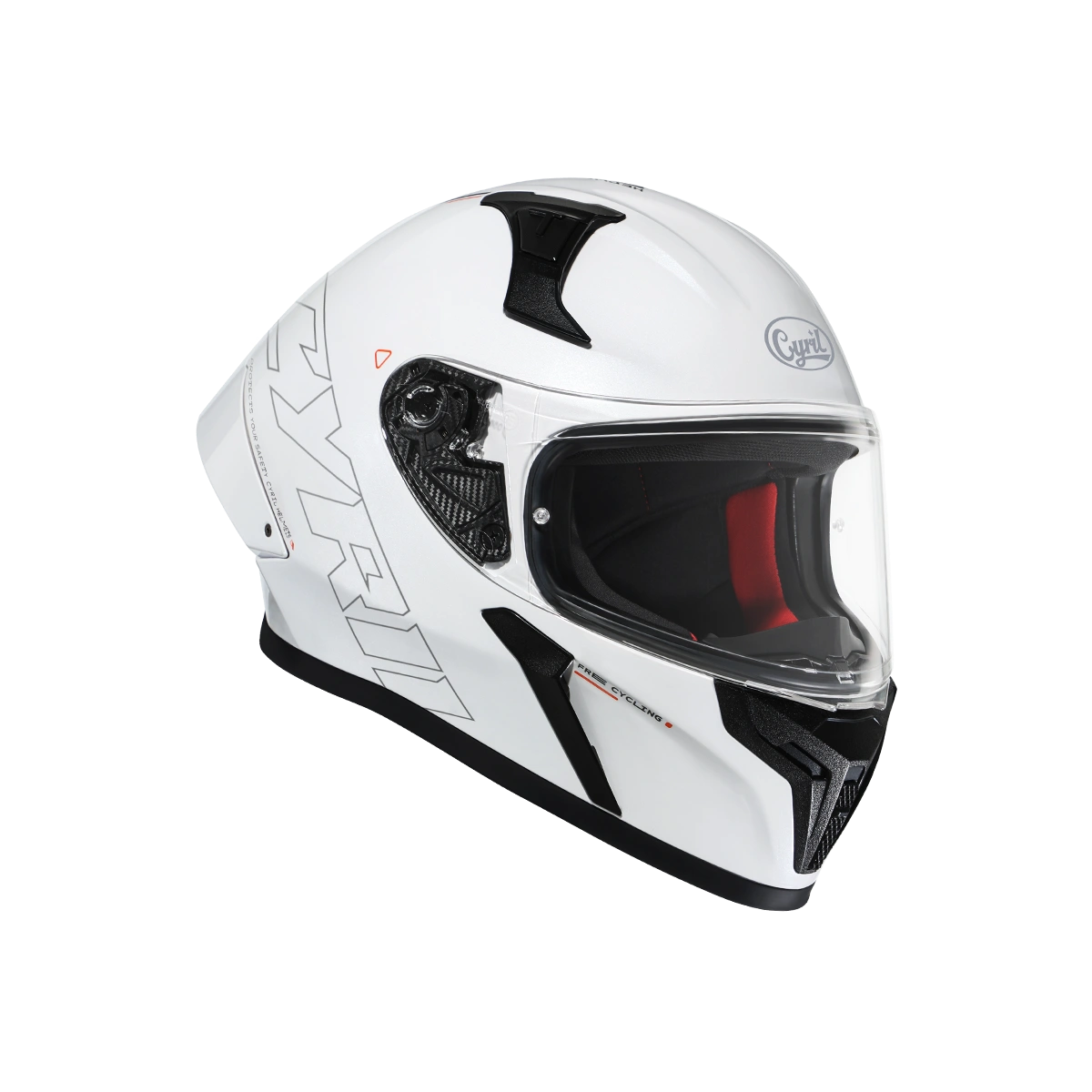
Best for Daily Commuters
The Mad Shark is a full-face commuting option with DOT / FMVSS 218 information and a removable washable liner. It suits riders who want a straightforward product page review, then a careful at-home fit check before deciding to keep the helmet.
View Mad Shark
Best for Sport Riders
The R1-PRO is better for riders who compare size charts alongside certification details and riding posture. Its full-face, sport-inspired profile and DOT / FMVSS 218 plus ECE 22.06 information make the post-delivery fit test especially important before keeping it.
View R1-PRO
Best for Touring and Convenience
For riders comparing modular options on a size chart, the A128 brings DOT / FMVSS 218 and ECE 22.06 information, a flip-up chin bar, and a removable washable liner. Riders between sizes should still judge it by stability, cheek pressure, and return-window testing rather than assuming modular convenience fixes fit.
View A128Common Questions About Helmet Size Charts
Should I use centimeters or inches to measure my head?
Centimeters are more precise. One centimeter is a smaller unit than one inch, so measurements in centimeters give you finer resolution. Most European and Asian manufacturers list charts in centimeters. US manufacturers often include both. If your chart only shows inches, convert your centimeter measurement to avoid rounding errors.
What if my head measurement falls exactly on a size boundary?
Check the manufacturer's guidance for boundary measurements. Some recommend sizing up, some recommend sizing down based on liner compression. If the chart does not specify, contact support with your exact measurement and head shape. As a general rule: if the liner is known to compress significantly, size down. If the liner is firm or you have thick hair, size up.
Can I trust a size chart from a review site instead of the manufacturer?
No. Third-party charts may be outdated, generic, or based on different measuring methods. Always use the chart on the manufacturer's official product page. NHTSA guidance emphasizes that fit is manufacturer-specific and should be verified against the actual product information.
Does head shape affect which size I should choose?
Yes. A size chart based on circumference assumes an average head shape. Riders with rounder heads may find the same-size helmet loose at the forehead. Riders with longer heads may find it tight at the temples. Some manufacturers offer different models for different head shapes. If your head shape is noticeably round or long, look for a product page that mentions internal shape or contact support for guidance.
Should I measure with a hat or balaclava on?
Measure the way you will ride. If you always wear a thin balaclava or skull cap, measure with it on. If you ride with your natural hair, measure with your hair as it will be under the helmet. Do not measure with a thick winter hat unless you plan to wear that hat under your helmet, which is generally not recommended for proper fit.
What should I do if the chart says one size but the helmet feels wrong?
Trust the fit, not the chart. Charts are approximations based on average measurements. Your head may be shaped differently, your hair volume may affect fit, or the helmet model may run large or small. If the fit is wrong, return or exchange the helmet within the window. Use the experience to inform your next choice — note whether the helmet felt too tight, too loose, or wrong in a specific area.
How do I know if a helmet model runs large or small?
Read reviews that mention fit relative to the size chart. Look for comments like "ordered a medium based on the chart but it felt like a large" or "size up — this model runs small." Be specific in your search: include the helmet model name and "fit" or "sizing" in your query. A pattern in reviews is more reliable than a single opinion.
Is it better to buy a helmet slightly too big or slightly too small?
Neither is ideal, but slightly too large is generally more fixable. A loose helmet can sometimes be tightened with thicker pads or a snug liner. A helmet that is too small cannot be safely expanded. However, a loose helmet compromises safety, so the real answer is: keep exchanging until you find the right fit. Do not settle for "close enough."
Final Notes
A helmet size chart is a useful tool, but it is not a substitute for understanding your own head and verifying fit. Measure correctly, read the chart carefully, factor in your head shape and hair, and always test the helmet when it arrives. A chart that leads you to the right size most of the time is doing its job. Your job is to recognize when the chart is wrong and act on what your head tells you.