
What Should I Check Before Buying a Motorcycle Helmet Online?

What Should I Check Before Buying a Motorcycle Helmet Online?
Buying a helmet online saves time and often money, but you lose the ability to try before you buy. The difference between a helmet that fits and one that doesn't is usually a few millimeters of head measurement and how well you read the size chart. Here is what to check before you place the order.
Before buying a motorcycle helmet online, measure your head circumference with a soft tape at the widest point above your eyebrows. Check the helmet's certifications (DOT, ECE, or Snell), read the size chart carefully, and confirm the seller's return policy allows enough time for a 30-minute fit test. Look for a clearly written return window long enough for an at-home fit check. Verify that the seller is authorized and the helmet is not a counterfeit. The most common mistake is guessing your size based on hat size or previous helmet experience instead of taking a fresh measurement.
This guide is based on NHTSA helmet fit and safety guidance, the public FMVSS 218 motorcycle helmet standard, official UNECE Regulation No. 22 materials, and Cyril product pages. Before publication, the article was checked for source-backed fit and certification claims, verified product information, practical shopping relevance, and clear US-versus-European standard wording.
Why Buying Online Is Different
In a store, you can try on three sizes, feel the liner, check the weight, and walk around for 10 minutes. Online, you have a size chart, some photos, and a reviews section. That gap is where most online helmet-buying mistakes happen.
The biggest risk is fit. Helmets from different brands—and sometimes different models within the same brand—fit differently even at the same labeled size. A "large" in one helmet might match a "medium" in another. Online, you do not get to discover this until the box arrives. The second risk is authenticity. Counterfeit helmets that look legitimate online sometimes fail basic safety standards. The third is the return window: some sellers charge restocking fees or require the helmet to be in original packaging with tags intact, which can be hard to manage after a 30-minute fit test.
Rider Persona: Mike — First Helmet Buyer. Mike ordered his first helmet online using his hat size. The helmet arrived, he tried it on for two minutes, and it felt okay. Two days later he went for a 45-minute ride and realized it pressed on his forehead the entire time. He missed the return window because he had already removed the tags. His next helmet purchase started with a tape measure.
Measure Your Head Correctly
The most important step in buying a helmet online is also the most skipped: measuring your head. Do not use your hat size, your previous helmet's size, or a guess. Take a fresh measurement every time.
- Use a soft fabric tape measure. A metal tape or ruler will not follow the curve of your head.
- Measure at the widest point: about one finger-width above your eyebrows, above your ears, and around the back of your head.
- Keep the tape level all the way around. A tilted tape gives a false reading.
- Measure three times and use the largest number. Head shape can make one angle read smaller.
- Measure with the hairstyle you ride with. If you wear a thin skull cap or balaclava, measure with it on.
A quick way to check if your measurement is accurate: measure your head, then measure a helmet you already own that fits well. The numbers should be close. If they are not, one of your measurements is off.
Rider Persona: Lisa — Commuter. Lisa measures 58 cm but assumed she was a size large because her last helmet was a large from a different brand. The new brand's chart listed 58 cm as a medium. She ordered the medium and it fit perfectly. Her old large had been slightly too loose the whole time.
Check the Helmet's Certifications
A helmet's primary job is to protect your head in a crash. Certifications are the minimum proof that the helmet has been tested for that job. When buying online, look for these marks and understand what they mean:
| Certification | What It Means | Where It Applies |
|---|---|---|
| DOT (FMVSS 218) | U.S. Department of Transportation minimum standard for impact absorption, penetration resistance, and retention system strength | Required for all street-legal motorcycle helmets sold in the United States |
| ECE 22.06 | United Nations Economic Commission for Europe standard; tests impact at multiple points, shell rigidity, and visor strength | Recognized in Europe and many countries worldwide; more rigorous than DOT in some test areas |
| Snell M2020 | Voluntary standard by the Snell Memorial Foundation; tests at higher impact energies than DOT | Optional certification; indicates additional testing beyond minimum requirements |
For US street riding, look for DOT / FMVSS 218 information and a proper certification label; FMVSS 218 is the federal motorcycle helmet standard. ECE 22.06 is a separate European and international standard, not a replacement for checking US legal requirements. Be cautious of helmets that claim "DOT style" or "DOT approved" without a specific certification label because that wording does not give you enough evidence to trust the listing.
Understand the Size Chart
Every helmet manufacturer uses its own size chart. A "medium" in one brand might cover 57-58 cm; in another, it might be 56-57 cm. Do not assume your size transfers between brands. Always check the specific chart for the helmet model you are ordering.
What If You're Between Sizes?
If your measurement falls exactly on a boundary between two sizes, the general rule is to size down. A helmet that is slightly too small may break in. A helmet that is too large will never fit safely. However, if you know you have a round head shape and the smaller size feels tight at the sides, the larger size might be the better choice.
Check the Internal Shape
Look for the manufacturer's description of the helmet's internal shape: round, intermediate oval, or long oval. Match this to your own head shape. A helmet that is the right size but the wrong shape will create pressure points that no amount of break-in will fix.
Same Shell, Different Padding
Some manufacturers use one shell size across multiple helmet sizes, changing only the liner thickness. This can mean a medium and large share the same exterior shell. If you are between sizes, a model with multiple shell sizes may give you a better fit.
Read the Return Policy
The return policy is your safety net when buying a helmet online. Not all sellers handle returns the same way, and a restrictive policy can leave you stuck with a helmet that does not fit.
- Return window: Look for a written return window that gives you enough time for an at-home fit test before riding outside. Some sellers offer longer windows, but the exact number matters less than the condition rules.
- Condition requirements: Can you remove the tags for the fit test? Some sellers require tags to remain attached, which makes a realistic 30-minute test impossible.
- Return shipping: Does the seller cover return shipping for fit issues? Helmets are bulky, and return shipping can be expensive enough to change the real cost of a wrong size.
- Restocking fees: Some sellers deduct restocking fees or return shipping. This can make a wrong size more expensive than expected, so read the fee section before ordering.
- Exchange policy: If the size is wrong, can you exchange for a different size? An exchange-only policy might not help if the helmet is the wrong shape.
A quick way to judge a seller's confidence in their products: generous return policies usually mean the seller expects most helmets to fit. Restrictive policies often signal high return rates.
Verify Seller and Authenticity
Counterfeit helmets are a growing problem in online marketplaces. A fake helmet may look identical to a real one but lack the internal structure and materials needed to protect you in a crash. Here is how to verify what you are buying:
- Buy from authorized sellers: Purchase from the manufacturer's website or an authorized dealer. If buying from a marketplace, look for "sold by" or "fulfilled by" the brand or an authorized retailer.
- Check the price: If a deal looks too good, the helmet may be counterfeit. Very low pricing is a reason to slow down and verify the seller, certification information, photos, and return policy before ordering.
- Look for certification labels: The product page should show clear photos of the DOT, ECE, or Snell stickers on the helmet. Vague language like "meets DOT standards" without a visible sticker is a warning sign.
- Read recent reviews: Look for reviews that mention fit, weight, and build quality. A cluster of reviews complaining about "cheap feel," unclear labels, or loose padding can indicate quality or listing problems that deserve support follow-up.
- Check the model year: Some sellers list older model-year helmets at discount prices. Older helmets may have different liner materials or fit characteristics than current models.
Rider Persona: Raj — Experienced Rider. Raj found a very low-priced listing from an unknown third-party seller. The photos looked familiar, but the product page avoided clear certification details and return conditions. He stopped before riding in it, contacted support for documentation, and chose a seller that could provide clearer product information.
Measure twice, check the size chart once, and confirm the return policy. A helmet that fits well is a helmet you will wear every ride. A helmet that does not fit is a mistake that gets expensive fast.
Helmets Worth Checking Out
If you are shopping for a helmet online, start with models that state certification information clearly, show product details plainly, and let you run a realistic fit check before committing. Here are three Cyril options to compare by the kind of online-buyer risk you are trying to reduce.
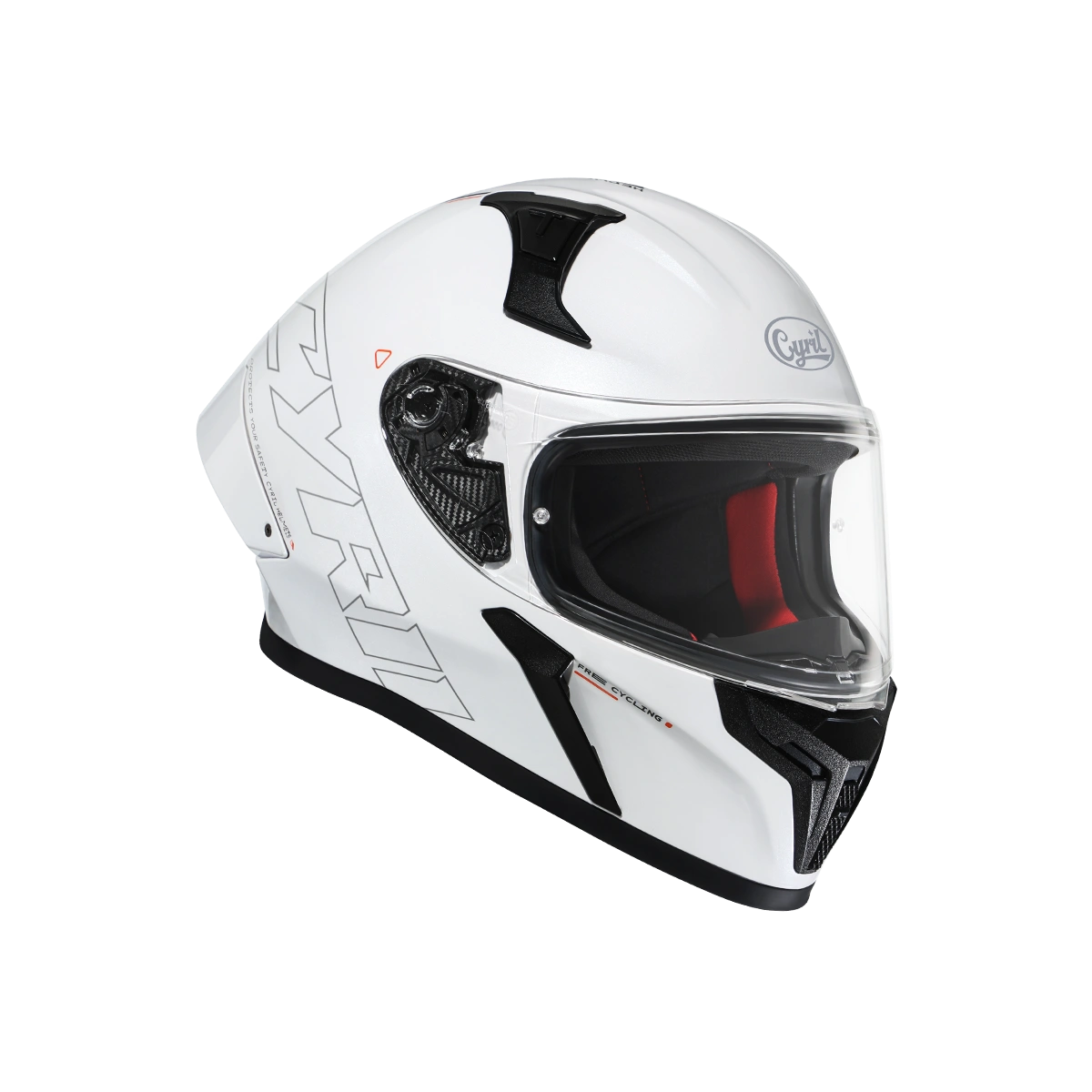
Best for First-Time Online Buyers
The Mad Shark is a full-face helmet with DOT / FMVSS 218 information, a removable washable liner, and active ventilation. It is the practical option to review when your priority is a straightforward daily full-face helmet with concrete product facts to check before ordering.
View Mad Shark
Best for Comparing Certification Claims
The R1-PRO lists DOT / FMVSS 218 and ECE 22.06 information, making it useful for riders who want the product page to be specific about standards. Its sport-inspired profile and magnetic visor release are secondary details; fit, certification wording, and return conditions still need to be checked first.
View R1-PRO
Best for Buyers Comparing Helmet Types
The A128 modular helmet with dual visors gives online buyers a clear feature set to evaluate: flip-up convenience, clear outer shield, inner sun visor, and wide-view comfort. It is worth comparing if your uncertainty is about helmet type, not just size.
View A128Common Questions About Buying Helmets Online
Can I trust helmet size charts when ordering online?
Yes, if you measure your head correctly and use the manufacturer's specific chart. The problem is not the chart—it is using old measurements, guessing, or assuming sizes transfer between brands. Always take a fresh measurement and check the chart for the exact model you are ordering.
What if the helmet doesn't fit when it arrives?
If you ordered from a seller with a good return policy, exchange it for the correct size or a different model. Do the 30-minute fit test within the return window. If the helmet is the wrong shape—not just the wrong size—you may need a different model entirely. Keep all packaging and tags until you are sure the helmet fits.
Is it safe to buy a motorcycle helmet from a marketplace seller?
It depends on the seller. Buy from the manufacturer directly or from an authorized dealer. If buying from a third-party marketplace seller, verify that they are authorized, check reviews for counterfeit complaints, and confirm the helmet page provides clear DOT / FMVSS 218, ECE 22.06, or other relevant certification information. Avoid sellers with no return policy or prices that seem too low.
Should I order two sizes and return the one that doesn't fit?
This can work only if the seller clearly allows multi-size returns and the cost makes sense. Order based on your measurement and head shape first, then consider a second size only after reading the return policy. Some sellers charge fees or deduct shipping, so do not assume this approach is free.
How do I spot a counterfeit helmet online?
Warning signs include prices far below retail, vague certification claims without visible stickers, poor-quality product photos, sellers with no brand authorization, and reviews mentioning "cheap feel" or "different from the real thing." When the helmet arrives, check that the labels, packaging, liner, visor, and build quality match the product page and brand documentation. If anything looks inconsistent, contact support before riding in it.
Does head shape matter more than size when buying online?
Both matter, but shape is harder to fix if you get it wrong. A helmet that is slightly too large can sometimes work with thicker cheek pads. A helmet that is the wrong shape for your head will never fit comfortably no matter what size you try. Check the manufacturer's description of the helmet's internal shape before ordering.
Can I use my old helmet's size for a new online order?
Only if you are ordering the exact same model from the same brand. Different brands size differently, and even different models within the same brand can vary in internal shape. Always take a fresh measurement and check the current model's size chart before ordering.
What should I do the day the helmet arrives?
Inspect the helmet for damage, check that the certification stickers are present and genuine, and verify the model and size match what you ordered. Then do the 30-minute fit test: wear the helmet with the strap fastened for 30 minutes while moving around. If it passes, keep it. If not, start the return process immediately.
Final Notes
Buying a motorcycle helmet online is safe and convenient if you do the work upfront. Measure your head. Read the size chart. Check the certifications. Verify the seller. Read the return policy. These steps take 10 minutes and can save you from weeks of discomfort or the cost of a helmet you cannot use.
The helmet that fits you is out there. The key is knowing your numbers before you click "order."