
Is an Open Face Helmet Enough for City Riding? What Riders Give Up Without a Chin Bar

Is an Open Face Helmet Enough for City Riding? What Riders Give Up Without a Chin Bar
An open face helmet can feel light, cool, and easy for short city rides. The harder question is what you give up when traffic, rain, wind, road debris, or a low-speed fall does not behave like a simple errand.
An open face helmet may feel convenient for low-speed city riding, but it does not cover the chin and lower face the way a full face or modular helmet does. Before choosing one, consider traffic unpredictability, road debris, weather, wind noise, visor coverage, eyewear, local rules, and how often your "short ride" becomes a faster or wetter ride than planned.
Why Open Face Helmets Feel So Easy in the City
Open face helmets are popular because they remove friction from short rides. They are easy to put on, feel airy at low speed, make it easier to talk at a stop, and can feel less closed-in for riders who dislike a chin bar. For a quick coffee run or scooter-style commute, that simplicity is attractive.
The trap is that comfort at the curb can feel like a complete answer. You try it on, feel the airflow, see better peripheral openness, and think, "This is enough for city speeds." But city riding is not controlled only by your speed. It is controlled by intersections, drivers, delivery vehicles, wet lane markings, potholes, sudden braking, and the rider behind you who did not see the light change.

Easy On and Off
Open face designs can feel practical when rides are short and stops are frequent.
Cooler at Low Speed
The open front can feel more comfortable in slow traffic and warm weather.
Less Lower-Face Coverage
The same openness that feels convenient also leaves the chin area uncovered.
The Main Tradeoff Is the Chin Bar
The obvious difference is the missing chin bar. A full face helmet surrounds the lower face with a fixed chin area. A modular helmet adds a flip-up structure while still giving a full-face style shell when closed. An open face helmet leaves that area exposed.
That matters because city spills are not always neat side falls at walking speed. A front brake grab, a car door, a left-turn conflict, gravel near a stop sign, or a wet painted line can send a rider forward or sideways before they have time to choose how they land.
This does not mean every rider must use the same helmet for every ride. It means the decision should be honest. If the reason is "I like the feel," say that. Do not rename convenience as full coverage.

- Open face helmets leave the chin and lower face more exposed than full face or modular helmets.
- Wind, insects, rain, dust, and small road debris can reach your face more easily.
- Eyewear becomes more important because face coverage is less complete.
- Cold weather and highway transitions can feel harsher than expected.
- If your city route includes faster roads, the open design may feel less comfortable than it did at the curb.
City Riding Is Not Automatically Low Risk
Many riders underestimate urban risk because the average speed is lower. But lower speed does not remove unpredictability. City riding often has the most decisions per minute: lane changes, parked cars, pedestrians, buses, potholes, delivery stops, traffic lights, and drivers looking at navigation screens.
A rider may leave home planning a five-minute errand and end up taking a faster road because one street is blocked. The weather may change. The ride may run into dusk. The helmet choice that felt perfect for a slow neighborhood loop may feel less convincing when rain starts hitting your cheeks and the traffic speed rises.

A useful way to decide is to look at your actual route, not the label "city ride." If your ride includes multi-lane traffic, frequent sudden stops, rough pavement, night riding, or short highway sections, the helmet needs to match that reality.
Open Face vs Full Face vs Modular for Everyday Riding
The best helmet type depends on what you are willing to trade. Use the comparison below as a practical starting point, then check local rules, fit, visibility, comfort, and whether you will actually wear the helmet correctly.

| Helmet Type | What Riders Like | What to Watch |
|---|---|---|
| Open face | Airy feel, easy communication, less enclosed feeling, convenient short stops. | No chin bar, more face exposure, more reliance on eyewear or visor coverage. |
| Full face | Fixed chin coverage, better weather isolation, stable all-around road use. | Can feel warmer or more enclosed if ventilation and fit are poor. |
| Modular | Flip-up convenience at stops, full-face style coverage when closed, useful for commuting. | More moving parts, fit and latch operation should be checked carefully. |
Do Not Choose Open Face Just Because the Last Full Face Fit Badly
Some riders move toward open face helmets after one bad full face experience. The old helmet felt hot, squeezed the forehead, fogged at every stoplight, or made glasses painful. Those are real problems, but they do not automatically prove that a chin bar is the problem. They may point to the wrong size, wrong head shape, poor ventilation, visor fogging, or a helmet type that did not match the ride.
This matters because an open face helmet can feel like instant relief in a store or at home. No forehead pressure from the same shell shape, more air on the face, less visor fog, easier glasses use. But if the original problem was fit or ventilation, a better full face or modular option may solve the comfort issue without giving up lower-face coverage.
Old Helmet Was Too Hot
Compare ventilation and liner comfort before assuming only an open front can work.
Old Helmet Hurt
Pressure points may come from size or head shape, not from full face coverage itself.
Old Helmet Fogged
Check visor setup, vents, breath control, and anti-fog options before changing helmet type.
Checklist Before Choosing an Open Face Helmet
If you still prefer an open face helmet, make the choice deliberately. The goal is not to scare yourself out of it; the goal is to understand what the helmet does and does not cover before you rely on it.
- Check whether your local riding rules recognize the helmet type and standard information.
- Think about your real route, including faster roads, night rides, rain, and traffic density.
- Make sure eye protection is adequate for wind, dust, insects, and changing light.
- Ask whether you would still choose the same helmet for cold rain, a rough road, or a longer detour.
- Do not choose open face only because full face helmets you tried were the wrong size or poorly ventilated.
- If you want convenience and lower-face coverage, compare modular helmets as a middle-ground option.
Cyril Helmet Options to Compare if You Want More Coverage
If the open face tradeoff feels too big for your route, compare full face and modular options by fit, visor view, airflow, liner care, and the convenience level you need for daily riding.
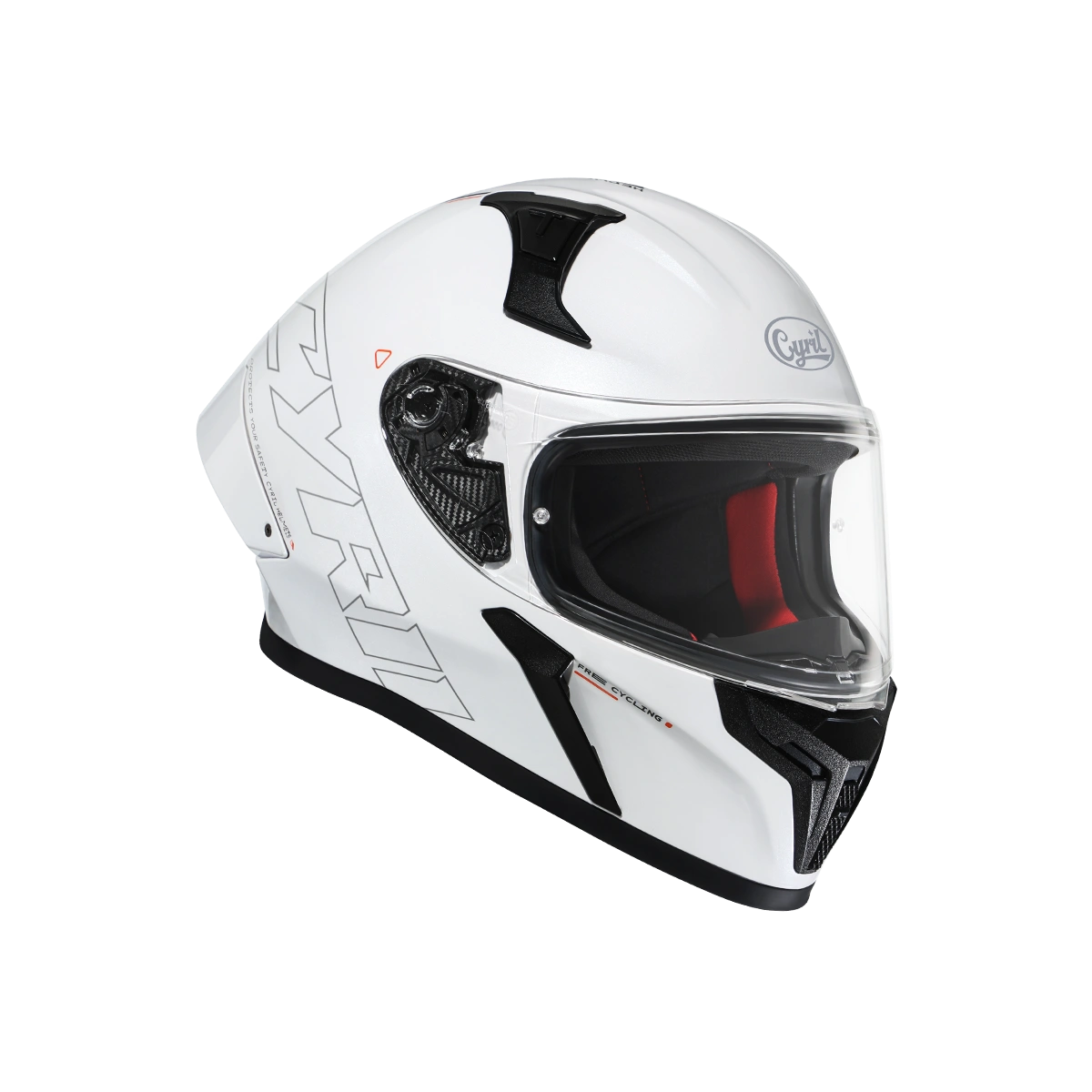
Mad Shark Full Face Helmet
The Mad Shark Full Face Helmet is relevant for riders who want a daily full face option with active ventilation, clear visor view, removable washable liner, ABS shell construction, multi-layer EPS, and stated DOT FMVSS 218 information.
View Mad Shark
A128 Dual Visor Modular Helmet
The A128 Dual Visor Modular Helmet fits riders comparing city convenience with modular flip-up function, a clear outer shield, inner sun visor, wide-view comfort, removable washable liner, and stated DOT FMVSS 218 and ECE 22.06 information.
View A128
R1-PRO Full Face Helmet
The R1-PRO Full Face Helmet suits riders comparing a sport-inspired full face profile with ventilation, magnetic visor release, removable washable liner, stated DOT FMVSS 218 and ECE 22.06 information, and a stable full-face shell profile.
View R1-PROChoose the helmet type for the ride that actually happens, not only the ride you planned. City riding can still include speed, rain, debris, poor visibility, and sudden stops.
Common Questions About Open Face Helmets
Is an open face helmet enough for city riding?
It depends on your route, local rules, speed, weather, and risk tolerance. Open face helmets can feel convenient, but they do not cover the chin and lower face like full face or modular helmets.
Is a full face helmet too much for short rides?
Not necessarily. Short rides can still include sudden stops, rough pavement, rain, and traffic conflicts. The right full face helmet should fit well enough that you are willing to wear it even for short trips.
Is a modular helmet a good city option?
A modular helmet can be practical for riders who want stop-and-go convenience while keeping a full-face style setup when the chin bar is closed. Fit, latch operation, visor view, and certification information still need checking.
Do open face helmets need eye protection?
Yes, riders should think carefully about eye protection because wind, dust, insects, rain, and debris can reach the face more easily than with a full face visor setup.
Why do riders still choose open face helmets?
Many riders like the airflow, easy communication, simple on-off routine, and less enclosed feeling. Those benefits are real, but they come with coverage tradeoffs.
Final Notes
An open face helmet can feel right for certain riders and certain short trips, but it is not the same decision as choosing full face or modular coverage. Before you decide, think about the chin bar, your real route, weather, eye protection, traffic density, and whether convenience is worth the tradeoff for how you actually ride.