
What Is MIPS in a Motorcycle Helmet? Rotational Force Protection and Whether Daily Riders Need It

What Is MIPS in a Motorcycle Helmet? Rotational Force Protection and Whether Daily Riders Need It
You keep seeing the yellow MIPS tag on helmet listings — online, in stores, in reviews — and every description uses the same few phrases: low-friction layer, rotational force, angled impact. But what does a thin plastic slip plane actually do inside a helmet, and is it worth paying extra for if you ride to work and back, not to a track?
MIPS (Multi-directional Impact Protection System) is a low-friction layer inside a helmet that allows the shell to rotate slightly relative to the head during an angled impact — typically 10–15 mm of movement — reducing the rotational force transferred to the brain. Most real-world helmet impacts are angled, not straight-on. For daily commuters, the value depends on your riding environment: urban riders face frequent angled-impact risks from side-street collisions, while long-distance highway riders primarily face linear impact scenarios. MIPS is not a replacement for helmet certifications like DOT or ECE 22.06 — it addresses a different part of the impact equation.
The Label You Keep Seeing
The yellow MIPS circle shows up on bicycle helmets, snow helmets, motocross lids, and increasingly on street motorcycle helmets. It looks like a certification badge, but it is not. MIPS is a technology licensed from a Swedish company to about 150 helmet brands and over 1,000 helmet models as of 2026. The company does not make helmets. It makes the low-friction layer that goes inside them. This distinction matters because MIPS is not an extra certification your helmet passed. It is a physical component — a slip plane — added to address rotational acceleration of the brain during an angled impact. The question riders actually want answered is simpler: for the kind of riding I do, at the speeds I ride, does this thing make a difference worth the extra money?
Rider Persona: Jake — Urban Commuter at Low Speed, High Risk. Jake commutes 25 minutes each way through city traffic, rarely exceeding 45 mph. Most of his close calls happen at intersections — cars turning left across his path, side-street pullouts, lane changes without a signal. These are angled-impact scenarios. If Jake goes down at 30 mph because a car turns into his path from the side, the first contact between his helmet and the pavement is almost certainly at an angle. For Jake, a helmet with MIPS addresses the impact scenario he is most likely to face.
Straight Hit vs Rotational Force: The Physics That Matters
A straight-on impact compresses the helmet's EPS liner, which crushes to absorb energy. This is the impact type that DOT, ECE 22.05, and Snell standards were built around. An angled impact — the more common kind in real crashes — introduces rotation. When a helmet hits the pavement at a 30- or 45-degree angle, the shell grips the road surface and wants to twist. The brain, suspended in cerebrospinal fluid, lags behind the skull's rotation. The resulting shear forces between the brain and the inside of the skull are what cause diffuse axonal injury, concussion, and some forms of brain bleeding.
This is not a niche scenario. Research reviewed by the CDC and the NHTSA motorcycle safety research program indicates that a large proportion of motorcycle head impacts involve an oblique component — the head hits at an angle rather than straight on. Traditional helmet testing, which drops helmets straight down onto flat or shaped anvils, does not capture this rotational component.

How MIPS Actually Works Inside a Helmet
MIPS is a thin, low-friction polycarbonate layer — often yellow — positioned between the comfort liner and the EPS impact layer. It is anchored at a few small attachment points that allow it to slide 10–15 mm in any direction when enough rotational force is applied. During an angled impact, instead of the helmet shell grabbing the road and forcing the head to rotate with it, the MIPS layer allows the shell and EPS to rotate slightly relative to the head. The rotational energy that would have been transferred to the brain is partially dissipated by the slip plane — within the first 5 to 10 milliseconds of impact.
There are now multiple MIPS system variants. The original MIPS — a separate yellow liner visible inside the helmet — is still used. MIPS Integra systems integrate the low-friction function into the EPS molding or the comfort padding itself, making the system invisible from the inside. The mechanical principle is the same: a controlled slip plane that reduces rotational force transfer.
A quick way to understand the difference: Hold a coffee mug by the handle and twist your wrist sharply. The liquid inside does not move immediately — it lags behind the cup's rotation, sloshing against the inside wall a fraction of a second later. That lag, and the shear force it represents, is what MIPS is designed to reduce. The low-friction layer lets the "cup" rotate without dragging the "liquid" as forcefully.

ECE 22.06 Already Tests Rotational Force — Do You Still Need MIPS?
This is the question that generates the most confused forum threads. ECE 22.06, the latest European motorcycle helmet standard mandatory for new helmets sold in ECE-adopting countries, does include an oblique impact test. A helmet is dropped onto an angled anvil at a specified speed, and the resulting rotational acceleration is measured. This is a real improvement over ECE 22.05, which did not test for rotation at all.
But ECE 22.06 tests one specific impact configuration — a single angle, speed, and anvil surface — and sets a pass/fail threshold. A helmet can pass at the threshold level and still transmit more rotational force to the head than a helmet with MIPS would in the same impact scenario. MIPS and the ECE 22.06 rotational test are complementary: the ECE test raises the floor, and MIPS aims to raise the ceiling. For detailed technical information, the MIPS brain protection science overview explains the engineering principles and testing methodology.
In practical terms: an ECE 22.06 helmet without MIPS already offers better rotational protection than an ECE 22.05 helmet with MIPS. But an ECE 22.06 helmet with MIPS combines a rotation-aware shell design with a dedicated slip plane — it addresses the problem from two directions at once.

Who Benefits Most from MIPS
| Rider Type | Typical Impact Scenario | Angled Impact Likelihood | MIPS Value |
|---|---|---|---|
| Urban commuter (25–45 mph) | Side-impact collision, low-side on wet road | High | High |
| Canyon / twisty road (40–70 mph) | Low-side in corner, slide into barrier | High | High |
| Highway touring (65+ mph) | High-speed straight-line impact | Moderate | Moderate |
| Track day / racing | High-side, low-side at high lean angle | Very high | Very high |
| Off-road / ADV (lower speeds) | Low-speed tip-over on uneven ground | Moderate | Moderate |
Rider Persona: Sarah — Canyon Rider Who Values Every Margin. Sarah commutes 30 minutes to work on weekday mornings but lives for Saturday canyon rides — two to four hours of tight corners and variable road surfaces. She has had one low-side at about 45 mph on a decreasing-radius turn. The helmet did its job and she walked away. When she replaced that helmet, she chose one with MIPS — not because she expects to crash the same way again, but because she now knows that if she does, the impact will be at an angle, and every reduction in rotational force matters at the brain level.
Rider Persona: Mike — Touring Rider Who Weighs the Trade-Offs. Mike does long weekends and multi-state trips, six to eight hours in the saddle per day, mostly on highways and sweeping rural roads at 65–75 mph. His helmet priorities are weight, ventilation, and all-day comfort. A MIPS layer adds about 20–40 grams — not noticeable after the first five minutes. For Mike, the decision came down to availability: the helmet model he wanted, in his size, happened to come with MIPS. He did not seek it out, but he did not avoid it either. At highway speeds, straight-line impact is his primary risk, and MIPS offers less benefit there — but angled impacts still happen in multi-vehicle highway collisions.

MIPS Does Not Make Every Helmet Equal
A MIPS sticker does not transform an otherwise poorly constructed helmet into a safe one. The shell material, EPS density, fit accuracy, chin strap design, and visor mechanism all contribute independently to real-world protection. A helmet with MIPS but a poor shell-to-liner fit — too loose in some areas, too tight in others — will not perform as well as a well-fitted non-MIPS helmet in the same impact.
Think of MIPS as one layer in a multi-layer protection system. The shell manages penetration and initial impact distribution. The EPS liner manages energy absorption. The fit manages stability. MIPS manages rotational force transfer. Each layer does something the others cannot, and none can compensate for a failure in another layer. When comparing helmets, do not let the presence or absence of MIPS override the fundamentals: correct fit, appropriate certification for your region, and a helmet design that matches your riding type.
How to Apply This When Choosing a Helmet
- If you ride primarily in urban traffic: Angled impacts from side-street collisions and low-sides are your most likely head-impact scenario. A helmet with MIPS directly addresses this risk profile. The cost premium — typically $30–$80 — is proportional to the benefit.
- If you ride canyons, twisties, or track days: Cornering crashes produce angled impacts almost by definition. MIPS, combined with an ECE 22.06 certified shell, gives you two independent rotational protection systems. This is the highest-value use case.
- If you ride long highway tours: Your primary impact risk is straight-line. MIPS still helps in the angled component of a multi-vehicle collision, but the benefit is smaller relative to the cost. Prioritize fit, weight, and ventilation; take MIPS if it comes on the helmet you want anyway.
- If you are choosing between two helmets that fit equally well: Take the one with MIPS. The premium is small compared to the total helmet cost, and rotational protection is not something you can add later.
- If a non-MIPS helmet fits noticeably better than a MIPS helmet: Buy the one that fits. A poorly fitted helmet with MIPS is less protective than a perfectly fitted helmet without it.
A helmet that fits correctly and stays stable on your head during normal riding is the foundation that every other protection layer — MIPS included — depends on. Choose the helmet you will actually wear, with the fit, certification, and features that match your riding week.
Helmets and the MIPS Question
As of 2026, MIPS adoption in street motorcycle helmets is still growing. The three Cyril helmets below are built to current certification standards with safety-focused shell and EPS designs. When comparing helmets, use the criteria in this guide: fit first, certification second, rotational protection as a tiebreaker.
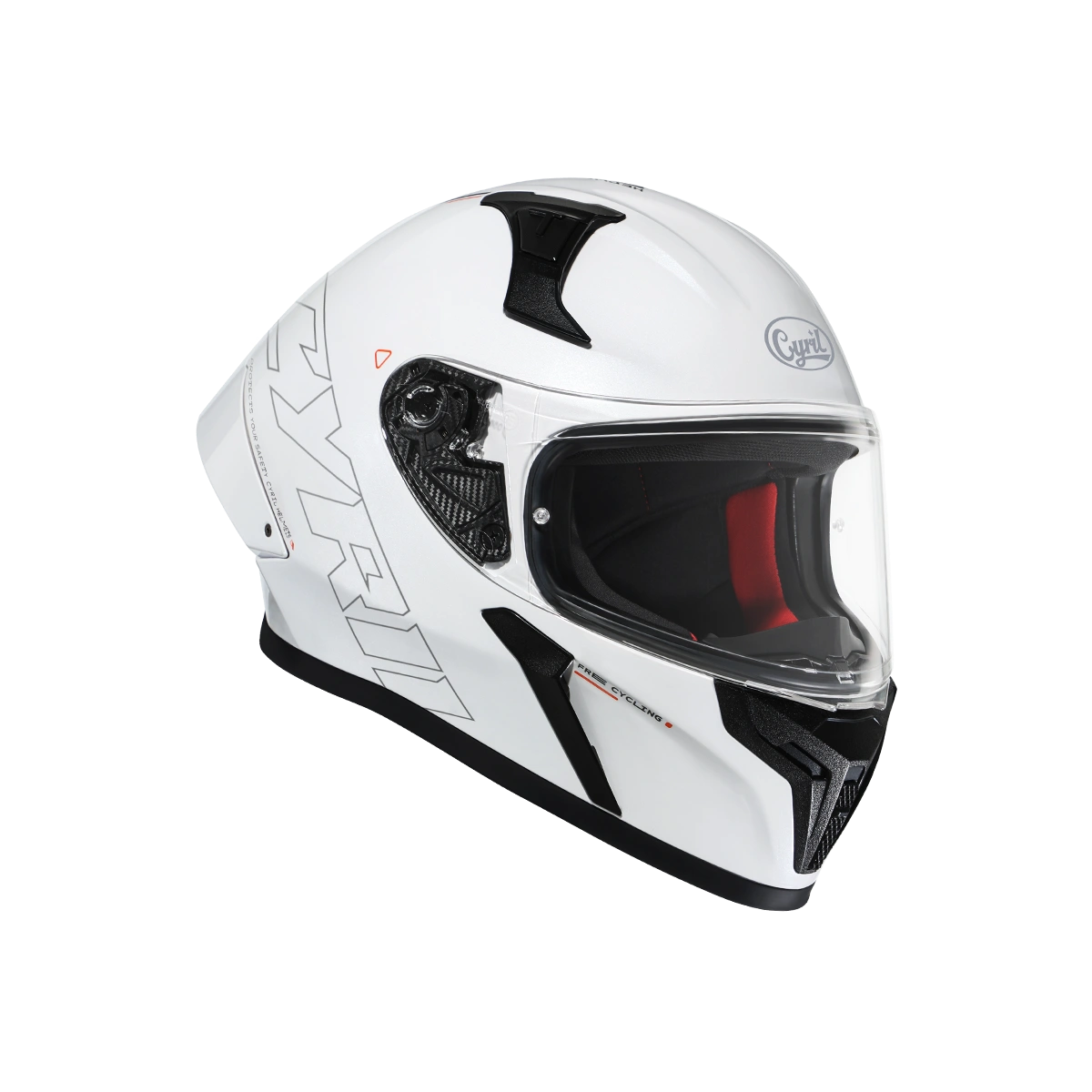
Best for Daily Commuters
The Mad Shark Full Face Helmet is DOT FMVSS 218 compliant with an ABS shell and multi-layer EPS liner. For the urban commuter whose primary risk is angled impacts at intersections, the full-face coverage, secure fit, and energy-absorbing EPS work together as the first line of protection — regardless of whether the helmet carries a MIPS layer.
View Mad Shark
Best for Mixed and Canyon Riding
The R1-PRO Full Face Helmet carries both DOT FMVSS 218 and ECE 22.06 — the newer European standard that already includes oblique impact testing. The sport-inspired stable shell profile and magnetic visor release add practical safety margins that complement any rotational protection system.
View R1-PRO
Best for Versatile Daily Protection
The A128 Dual Visor Modular Helmet meets DOT FMVSS 218 and ECE 22.06. Modular helmets have a more complex structure — the chin bar hinge and locking mechanism add variables to impact performance. The dual certification ensures independent verification of the structural design in both configurations. Wide-view comfort with a built-in sun visor.
View A128Common Questions About MIPS in Motorcycle Helmets
What is MIPS in a motorcycle helmet?
MIPS (Multi-directional Impact Protection System) is a low-friction slip layer — typically a thin polycarbonate sheet — placed between the helmet's EPS impact liner and the comfort padding. During an angled impact, it allows the helmet shell and EPS to rotate 10–15 mm relative to the head, reducing the rotational acceleration transferred to the brain. It was developed by a Swedish company and is now licensed to approximately 150 helmet brands across over 1,000 models as of 2026.
Does MIPS actually make a motorcycle helmet safer?
MIPS addresses a specific injury mechanism — rotational acceleration of the brain during angled impacts — that traditional helmet standards were not designed to test. In laboratory conditions, MIPS-equipped helmets consistently show reduced rotational acceleration compared to identical helmets without the slip plane. In the real world, the benefit depends on the impact type: a straight-on impact sees little to no benefit from MIPS, while an angled impact — the more common type in real crashes — benefits measurably. MIPS is not a guarantee of safety, but it addresses a known and well-studied injury mechanism.
Is MIPS the same as ECE 22.06 rotational testing?
No. ECE 22.06 includes an oblique impact test that sets a minimum performance floor every ECE 22.06 helmet must meet. MIPS is an additional engineered component — a physical slip plane — that continues to reduce rotational force beyond the pass/fail threshold. They are complementary: ECE 22.06 raises the minimum standard, and MIPS can further reduce rotational transfer in a wider range of impact angles and surfaces.
How much more does a MIPS helmet cost?
On motorcycle helmets, the MIPS premium typically ranges from $30 to $80 over an equivalent non-MIPS model. The exact difference varies by brand and helmet category — motocross helmets with MIPS may carry a smaller premium than premium street helmets because MIPS integration is further along in the off-road market. For context, this is roughly 10–20 percent of the helmet's total price.
Can I add MIPS to an existing helmet?
No. MIPS is a factory-integrated component. It is molded or anchored into the helmet during manufacturing and cannot be retrofitted by a consumer. Adding an aftermarket slip layer is not recommended — it can interfere with the helmet's fit stability, potentially making the helmet less safe by allowing unwanted movement during normal riding.
Do all full-face motorcycle helmets have MIPS?
No. As of 2026, MIPS is present in a minority of street motorcycle helmets — roughly 5 percent of MIPS-equipped helmets are motorcycle helmets, with most of those in the motocross and enduro categories. The company is actively working with motorcycle helmet manufacturers to increase adoption, but the average helmet development cycle is about three years.
Is MIPS worth it for city commuting?
Yes — urban commuting is one of the riding scenarios where MIPS provides the most relevant benefit. City crashes frequently involve angled impacts: cars turning across your path, low-sides on wet intersections, side-impact collisions at moderate speeds (25–45 mph). At these speeds, the impact energy is within the range where a helmet's protective systems are most effective, and the marginal benefit of rotational protection is meaningful.
Does MIPS affect helmet weight or ventilation?
Minimally. The MIPS layer adds approximately 20 to 40 grams to a helmet — about the weight of a couple of AA batteries. This is not noticeable in normal riding. Ventilation can be affected if the MIPS layer design blocks or partially obstructs internal airflow channels, but modern MIPS Integra systems are designed to integrate with the helmet's ventilation layout. If ventilation is a priority, check reviews for the specific helmet model.
Final Notes
MIPS is not magic, and it is not marketing. It is a specific physical solution to a specific physical problem — one that traditional helmet standards ignored for decades. The newest standards, particularly ECE 22.06, have started to address rotational force at the regulatory level, which means the baseline for every new helmet is improving regardless of whether it carries a MIPS sticker.
For riders shopping today, the decision tree is straightforward. If you ride in environments where angled impacts are the primary risk — cities, canyons, track days — and you are choosing between two helmets that both fit well, take the one with MIPS. If the best-fitting helmet for your head does not have MIPS, buy it anyway. A helmet that fits correctly and stays stable on your head during normal riding is the foundation that every other protection layer depends on.