
Are Red Marks After Wearing a Motorcycle Helmet Normal?

Are Red Marks After Wearing a Motorcycle Helmet Normal?
Red marks on your forehead or cheeks after removing a helmet are common, but not all red marks are the same. Some indicate normal snugness. Others signal a helmet that is too tight or the wrong shape. This guide shows you how to tell the difference.
Mild red marks on your forehead and cheeks that fade within 10 to 20 minutes of removing your helmet are normal. They indicate the helmet is making sufficient contact to stay stable. Marks that persist for an hour or more, are accompanied by numbness, or appear as concentrated spots rather than even impressions indicate excessive pressure. The location and duration of the marks tell you more than their presence.
Because this topic touches skin pressure, the article was checked against NHTSA motorcycle helmet fit guidance, general rider training resources from MSF, MedlinePlus information on sustained skin pressure, and official Cyril product information. The final edit separates normal temporary helmet marks from persistent pressure signs and avoids diagnosing skin conditions.
What Normal Red Marks Look Like
A properly fitted helmet leaves mild impressions on your skin. These marks are even, light pink to red, and cover the areas where the helmet makes consistent contact — typically the forehead, cheeks, and sometimes the crown.
Normal marks share these characteristics:
- They are evenly distributed, not concentrated on one sharp point.
- They are light to medium red, not deep purple or accompanied by broken skin.
- They fade within 10 to 20 minutes of removing the helmet.
- They are not accompanied by numbness, tingling, or ongoing discomfort.
- They appear consistently after each ride, not worsening over time.

The NHTSA guidance on helmet fit describes proper fit as snug all around. Snug means contact. Contact leaves a temporary impression. This is not a problem. It is evidence that the helmet is doing its job of staying in place.
Rider Persona: Jake — Normal Marks. Jake notices faint red lines across his forehead and cheeks after every ride. They fade by the time he reaches his office. They do not hurt. They do not itch. They are simply evidence that his helmet was in contact with his skin. This is normal.
Marks That Signal a Problem
Some red marks are not normal. They suggest pressure that is too concentrated or lasts too long for comfortable helmet wear. Medical resources such as MedlinePlus skin pressure information are not helmet-fit instructions, but they support the general principle that sustained pressure should not be ignored.
- Deep red or purple marks that persist for over an hour.
- Marks concentrated on a single point rather than spread across a contact area.
- Marks accompanied by numbness or tingling.
- Marks that worsen with each ride rather than staying consistent.
- Marks that are painful to the touch after the helmet is removed.
- Broken skin, irritation, or acne flare-ups in the marked area.

If three or more apply, the helmet is exerting excessive pressure on your skin. This can be caused by a helmet that is too small, a shape mismatch, overly thick padding, or the helmet sitting in the wrong position.
Rider Persona: Sarah — Problem Marks. Sarah develops a deep red circle on her forehead after every ride. It persists for over an hour and is tender to the touch. The mark is concentrated at one point, not spread evenly. This indicates the helmet's interior shape is pressing on her forehead rather than distributing contact around her head.
What the Location Tells You
Where the marks appear tells you what kind of fit problem you have.
| Location | What It Means | Likely Cause |
|---|---|---|
| Forehead only | Concentrated front pressure | Helmet too low, shell too round, or crown too shallow |
| Temples only | Side clamping | Helmet too narrow or wrong shape for your head |
| Cheeks only | Cheek pad pressure | Pads too thick or helmet slightly too small |
| Even all around | Normal distributed contact | Proper fit — no action needed |
| Chin or jaw | Strap or chin bar pressure | Strap too tight, helmet too low, or chin bar too close |
| One side only | Asymmetrical pressure | Helmet shape mismatch or uneven padding |

A quick way to use this information: after removing your helmet, look in a mirror immediately. Note where the marks are darkest and most defined. Compare this to the table above. The darkest marks indicate where the helmet is pressing hardest.
Duration: The Most Important Clue
How long marks persist is the single best indicator of whether they are normal or problematic.
- 0 to 10 minutes: Very mild contact. The helmet may be slightly loose if marks fade this quickly.
- 10 to 20 minutes: Normal. This is the sweet spot for a properly fitted helmet.
- 20 to 60 minutes: Elevated pressure. May be normal for a new helmet during break-in, but monitor for improvement.
- Over 60 minutes: Excessive pressure. The helmet is too tight, the wrong shape, or positioned incorrectly.
If your marks have persisted for over an hour from your very first ride, the problem is not break-in. It is fit. Do not wait for the marks to improve. Address the root cause.
How Skin Type Affects Marks
Some riders naturally mark more easily than others. Fair skin, thin skin, and sensitive skin all show marks more prominently. This does not mean the helmet is too tight. It means you need to evaluate marks by duration and sensation rather than color intensity.
Riders with oily skin or acne-prone skin may notice that helmet pressure triggers breakouts in the contact areas. This is not a fit problem per se, but it can be managed with a clean liner, a thin skull cap, and regular helmet cleaning.
Riders who take medication that affects bruising or have known circulation or skin conditions may see marks differently from other riders. In those cases, treat long-lasting marks conservatively and ask a healthcare professional if the skin reaction seems unusual, painful, or recurrent.
Rider Persona: Mike — Sensitive Skin. Mike has fair, sensitive skin that marks easily. His helmet leaves red impressions that look dramatic but fade within 15 minutes. For years he assumed the helmet was too tight because the marks looked severe. When he started timing how long they lasted, he realized the duration was normal. The color intensity was a skin trait, not a fit problem.
What to Do About Problem Marks
- Check helmet position. A helmet that sits too low concentrates pressure on the forehead. Raise it so the front edge sits one finger-width above your eyebrows.
- Check strap tension. An overly tight strap can pull the helmet downward, increasing forehead and cheek pressure. Two fingers flat between strap and chin.
- Verify size. If marks are deep and persistent across multiple areas, the helmet may be too small. Try a larger size or a model with a wider interior.
- Check for shape mismatch. Marks on the forehead with gaps at the temples, or vice versa, indicate the helmet shape does not match your head.
- Keep the liner clean. Dirt and oils on the liner can irritate skin that is already under pressure. Wash removable liners regularly.
- Try a thin skull cap. A thin moisture-wicking layer can distribute pressure more evenly and reduce marking.

Use red marks as a fit clue. Note where they appear, how dark they are, and how long they last. Normal marks are light, even, and brief. Problem marks are deep, concentrated, and persistent. A helmet that leaves normal marks is usually making stable contact. A helmet that leaves problem marks needs adjustment, a different size, or a different model.
Helmets With Gentle Contact Pressure
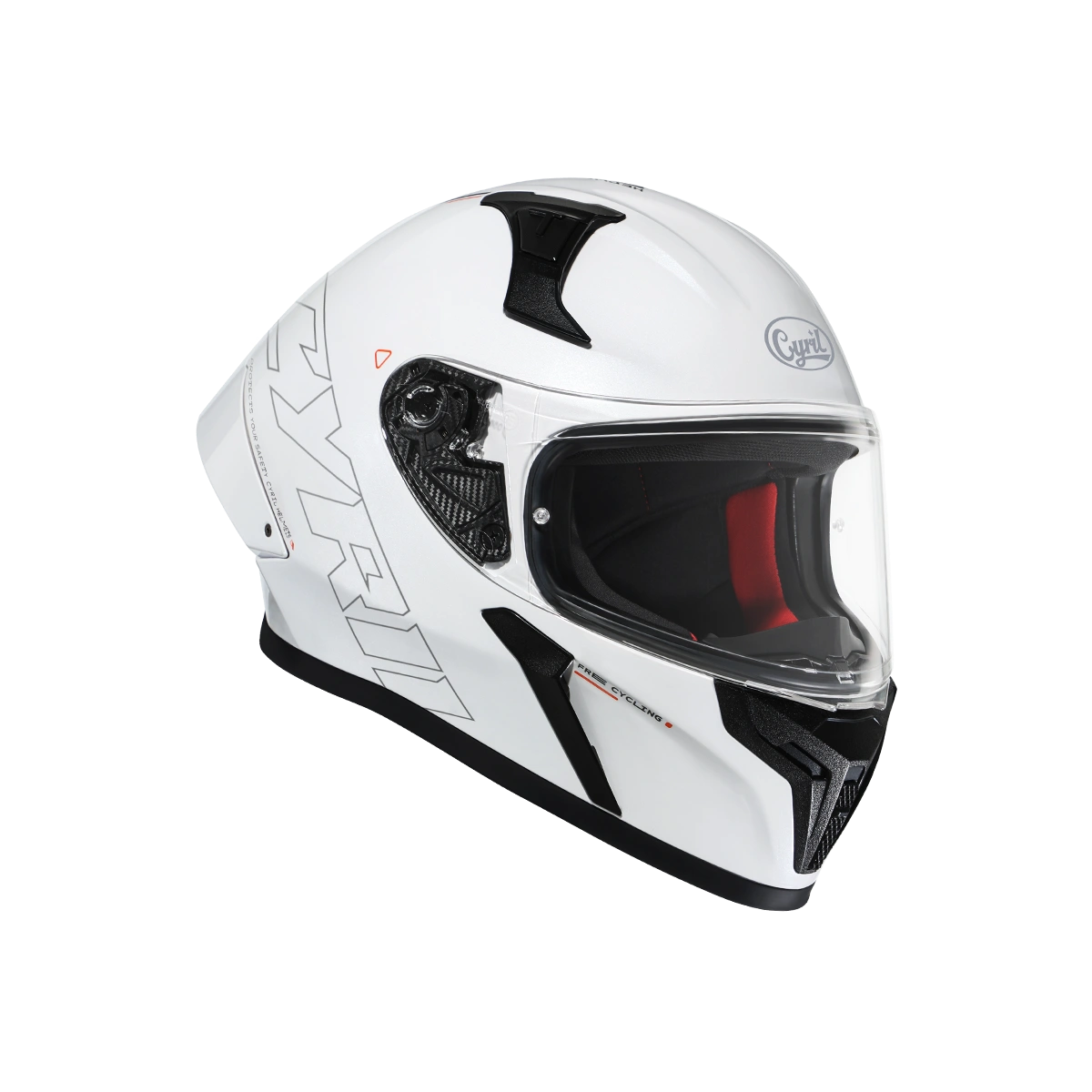
Best for Daily Commuters
With the Mad Shark, red-mark checks should be timed instead of guessed. Its full-face design, DOT / FMVSS 218 information, and removable washable liner make it easy to pair a fit test with clean liner care.
View Mad Shark
Best for Sport Riders
The R1-PRO is a sport-profile full-face option with DOT / FMVSS 218 and ECE 22.06 information. Riders should inspect forehead, temple, and cheek marks after a 15-minute test because sportier profiles can make pressure location easier to notice.
View R1-PRO
Common Questions About Red Marks
Is it normal to have red marks after wearing a helmet?
Yes, mild red marks that fade within 10 to 20 minutes are normal. They indicate the helmet is making proper contact. Deep marks that persist for over an hour are not normal and indicate excessive pressure.
How long should red marks last after removing a helmet?
10 to 20 minutes is normal. Up to an hour may be acceptable during the break-in period of a new helmet. Over an hour suggests the helmet is too tight or the wrong shape.
Can red marks cause skin damage?
Normal temporary marks should fade quickly and should not break the skin. Persistent, deep pressure can irritate skin and should be treated as a fit problem. If you notice broken skin, repeated soreness, or unusual irritation, stop using that fit setup and consider medical advice.
Why do my red marks get worse in hot weather?
Heat and sweat can make skin more sensitive and make helmet contact marks more visible. A clean liner and a thin skull cap can help. Also check ventilation, take breaks on hot days, and avoid assuming every hot-weather mark is a size problem.
Should I size up if I get red marks?
Not automatically. First check helmet position, strap tension, and whether the marks are normal or problematic. Sizing up to fix marks can create a loose helmet that compromises safety. Only size up if the marks indicate genuine tightness beyond normal contact.
Can a dirty liner make red marks worse?
Yes. Dirt, oils, and bacteria on the liner can irritate skin under pressure. A dirty liner turns normal contact marks into irritated, inflamed skin. Wash removable liners regularly according to the manufacturer's instructions.
Do red marks mean my helmet is too tight?
Not necessarily. Light, even marks that fade quickly are normal. Deep, concentrated, or persistent marks indicate excessive pressure. Use duration and location to judge, not just the presence of marks.
Will break-in reduce red marks?
Yes, if the marks are caused by firm new liner foam. As the foam compresses over 10 to 20 hours, normal marks may become lighter and fade faster. Marks caused by a shape mismatch or excessive tightness will not improve with break-in.
Final Notes
Red marks are data, not defects. They tell you where your helmet contacts your head and how much pressure it applies. Learn to read them by location and duration. Normal marks are the signature of a helmet that fits. Problem marks are a warning that something needs adjustment. Pay attention to what your skin is telling you.