
Is My New Helmet Breaking In or Just the Wrong Shape?

Is My New Helmet Breaking In or Just the Wrong Shape?
Every new helmet owner faces the same uncertainty: will this snugness turn into a perfect fit, or am I waiting for something that will never happen? Knowing the difference between normal break-in and a shape mismatch saves you from weeks of discomfort and a costly return mistake.
A helmet that is breaking in feels evenly snug all around, with mild pressure that gradually lessens over 10 to 20 hours of wear. A helmet that is the wrong shape causes concentrated pressure on specific points — forehead, temples, or crown — that does not improve with time. Break-in affects liner foam compression. It cannot change the shell's internal shape.
To keep the break-in versus shape distinction accurate, this guide uses NHTSA motorcycle helmet fit guidance, general rider training resources from MSF, and official Cyril product information. The final edit separates comfort-liner break-in from fixed shell shape, avoids unverified claims about Cyril interior profiles, and keeps return-window advice practical for online buyers.
What Breaking In Actually Does
Break-in is the settling of the comfort liner and cheek pads over time. When you wear a new helmet, the soft contact padding starts to conform to your face and head contact points. This can make a slightly snug helmet feel more natural after regular use.
The key limitation: break-in only affects the liner. It does not change the shell shape, the ear pocket position, the chin bar proximity, or the overall internal profile. If the shell is too round for your head, the liner compressing slightly will not make the shell rounder. If the crown is too shallow, the liner cannot add vertical space that does not exist.

Break-in is most noticeable in the cheek pads, where the most consistent pressure occurs. A cheek pad that feels firm on day one may feel comfortably supportive by day ten. The brow band also compresses, relieving mild forehead pressure. Crown padding changes the least because the top of your head applies less sustained pressure than the sides.
Rider Persona: Jake — Normal Break-In. Jake's helmet felt snug at the cheeks and forehead on day one. Not painful, but present. After two weeks of commuting, the cheek pads compressed just enough that the snugness became a secure, comfortable hold. The helmet did not feel loose. It felt like it was made for his head.
What a Shape Mismatch Looks Like
A shape mismatch occurs when the helmet's internal profile does not match your head shape. The three common helmet interior shapes are round oval, intermediate oval, and long oval. Most helmets sold in North America and Europe use the intermediate oval. Riders with rounder or longer heads experience pressure at the contact points.
A round helmet on a long head presses the forehead while leaving the temples loose. A long helmet on a round head clamps the temples while leaving a gap at the forehead. Neither problem improves with break-in because the shell shape is fixed.
Signs of a shape mismatch:
- Pressure on one specific point that never shifts or improves.
- Gaps at the forehead or temples while other areas feel tight.
- The helmet feels fine for the first few minutes, then the pressure point intensifies.
- Red marks that persist for over an hour after removal.
- Numbness or tingling at the pressure point.

Rider Persona: Sarah — Shape Mismatch. Sarah bought a popular intermediate oval helmet. Her head is slightly rounder than average. The helmet clamped her temples from the first wear, leaving deep red marks. She waited two weeks for break-in. The marks persisted. The helmet was the wrong shape, not the wrong size. She returned it and found a rounder interior model.
Side-by-Side Comparison
| Symptom | Breaking In | Wrong Shape |
|---|---|---|
| Pressure location | Even around entire head | Concentrated on one or two points |
| Pressure sensation | Snug, like a firm handshake | Sharp or burning at contact points |
| Over time | Gradually improves over 10-20 hours | Does not improve; may worsen |
| Red marks | Fade within 10-20 minutes | Persist for an hour or more |
| Gaps | No significant gaps | Gaps at forehead or temples with pressure elsewhere |
| After removal | Comfortable; no lingering sensation | Numbness, tingling, or headache persists |
How Head Shapes Differ From Helmet Interiors
Head shape is described in three categories. Knowing yours helps you choose a helmet that matches.
- Round oval: Nearly equal front-to-back and side-to-side measurements. Common in some Asian and African populations.
- Intermediate oval: Slightly longer front-to-back than side-to-side. The most common shape in North America and Europe. Most helmets are designed for this shape.
- Long oval: Significantly longer front-to-back than side-to-side. Less common but not rare.

To check your head shape, look down at the top of your head in a mirror or have someone take a photo from above. A round head looks like a circle. An intermediate oval looks like a mild egg shape. A long oval looks like a more stretched egg.
When a helmet's interior shape does not match your head, the contact points bear all the pressure. A round head in a long helmet gets temple pressure. A long head in a round helmet gets forehead pressure. Neither problem resolves with break-in because the shell itself is the wrong shape.
Quick Checks to Tell the Difference
- Wear the helmet for 15 minutes indoors. Note where pressure appears first and whether it worsens.
- Remove the helmet and check for red marks. Marks that fade within 20 minutes suggest normal break-in. Marks that persist suggest a problem.
- Run your fingers around the interior while wearing the helmet. Feel for gaps at the forehead or temples. Gaps combined with pressure elsewhere indicate shape mismatch.
- Try the helmet on after 10 to 15 hours of wear. Has the pressure point improved? If not, it is a shape issue.
- Shake your head. The helmet should move with your skin, not slide over it. Sliding indicates looseness, not break-in.

Rider Persona: Mike — The 15-Minute Test. Mike put his new helmet on and set a timer for 15 minutes. By minute 8, he felt a burning point on his forehead. By minute 12, he wanted to take it off. The pressure was concentrated, not distributed. He did not wait for break-in. He returned the helmet the same day.
What to Do in Each Case
If the helmet is breaking in normally:
- Continue wearing it for 30 to 60 minutes daily.
- Expect improvement within 10 to 20 hours of total wear.
- Do not force break-in with heat, moisture, or pressure.
If the helmet is the wrong shape:
- Return it within the retailer's window.
- Note your head shape for future purchases.
- Look for helmets that specify your head shape in the product description.
- Contact support and ask which models match your shape.
The hardest part of this decision is admitting that a helmet you like — or one you already bought — is not going to work. Break-in has limits. It cannot turn a fundamentally mismatched helmet into a comfortable one. A helmet on a shelf is a helmet that does not protect you.
Before buying, know your head shape. Try the helmet on for at least 15 minutes and check for even pressure. A helmet that distributes contact evenly is breaking in. A helmet that concentrates pressure on one point is the wrong shape. Choose accordingly.
Helmets With Shape Options
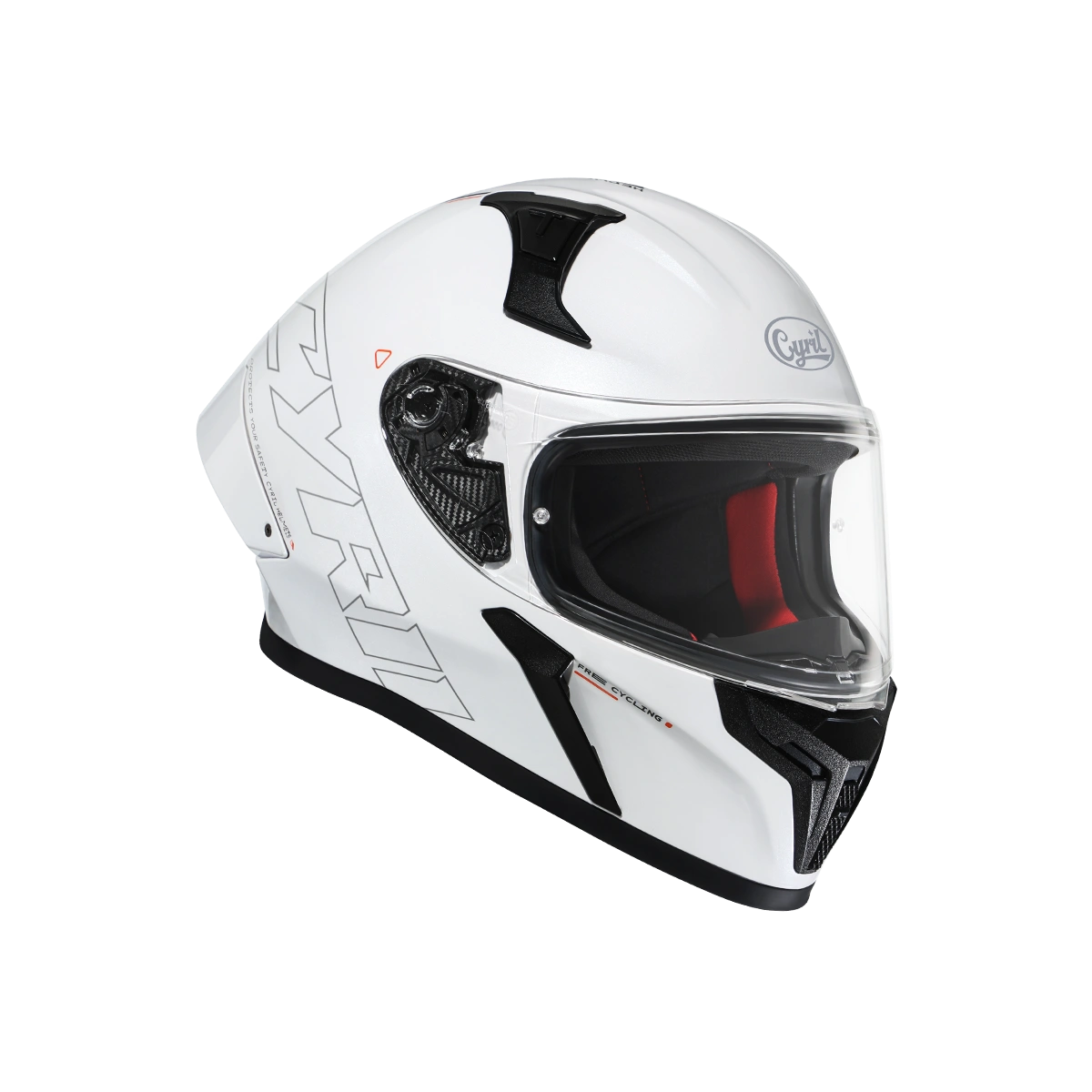
Best for Daily Commuters
The Mad Shark is a full-face helmet with DOT / FMVSS 218 information and a removable washable liner. Use it as a simple break-in test case: even pressure that improves is acceptable, but one sharp pressure point means the model may not match your head shape.
View Mad Shark
Best for Sport Riders
The R1-PRO is a sport-inspired full-face option with DOT / FMVSS 218 and ECE 22.06 information. Riders who already know they get forehead or temple hot spots should wear-test it long enough to separate normal snugness from a repeating shape mismatch.
View R1-PRO
Common Questions About Break-In vs. Shape
Can break-in fix a shape mismatch?
No. Break-in only compresses liner foam. It cannot change the shell's internal shape. If the helmet's interior is too round or too long for your head, no amount of wear will make it match your shape.
How do I know my head shape?
Look at the top of your head in a mirror or have someone photograph it from above. A nearly circular shape is round oval. A mild egg shape is intermediate oval. A stretched egg shape is long oval. Most helmets are designed for intermediate oval heads.
Should I wait longer if the helmet hurts?
No. Pain within the first 10 minutes or concentrated pressure on one point indicates a problem that break-in will not fix. Waiting longer wastes time and may cause you to miss the return window. Trust your body's signals.
Can I measure my head shape?
Measure your head front-to-back and side-to-side at the widest points. If the measurements are nearly equal, your head is round. If front-to-back is longer by more than a centimeter, your head is intermediate to long oval. This helps when shopping for helmets that specify interior shape.
Do different brands have different shapes?
Yes. Some brands run rounder, others longer. Even within a brand, different models may have different interior profiles. Always verify fit with a test wear rather than assuming a brand's sizing applies uniformly across all models.
What if my head is between two shapes?
Try both shapes and see which feels better. Some riders have heads that fall between standard categories. In that case, prioritize the helmet that distributes pressure most evenly, even if it is not a perfect shape match. Comfort and even pressure matter more than fitting a category.
Can a custom-fit liner solve a shape mismatch?
A custom or aftermarket liner can improve comfort but cannot change the fundamental shell shape. If the shell is severely mismatched, even the best liner will not eliminate pressure points. A properly shaped helmet is the better investment.
Should I buy online if I do not know my shape?
Only if the retailer has a generous return policy. Helmet fit is highly personal and shape-dependent. Try the helmet on for at least 15 minutes before deciding. If buying online, order from a retailer that allows returns after test wear.
Final Notes
The break-in versus shape mismatch question is one of the most important decisions a new helmet owner makes. Get it right, and you end up with a helmet that feels custom-made. Get it wrong, and you endure weeks of discomfort or miss your return window.
Remember the simple rule: evenly distributed snugness that improves over time is break-in. Concentrated pressure that persists or worsens is a shape mismatch. Trust this distinction, act early, and you will find a helmet that fits your head as well as it protects it.