
How Do I Tell If a Helmet Pressure Point Is Normal?

How Do I Tell If a Helmet Pressure Point Is Normal?
Every new helmet feels tight somewhere. The question is whether that pressure will ease into a comfortable fit or stay sharp and painful. Here is how to tell the difference before you commit to keeping—or returning—a helmet.
A normal pressure point feels snug and even, eases over 10-20 hours of wear, and leaves red marks that fade within 30 minutes. An abnormal pressure point feels sharp or stabbing, gets worse with time, causes numbness or headaches, and leaves lasting indentations on your skin. The key test is a 30-minute continuous wear trial: if the pressure is still uncomfortable at the end, the helmet is the wrong shape or size.
This guide is based on NHTSA helmet fit guidance, the public FMVSS 218 motorcycle helmet standard, and official Cyril product pages. Before publication, the article was checked for source-backed fit claims, verified product details, practical rider relevance, and clear warnings against unsafe liner modification.
What Normal Pressure Feels Like
A new motorcycle helmet should feel evenly snug around your entire head. The liner foam is fresh and has not yet compressed to match your head shape, so some pressure is expected. The important difference is whether the pressure feels broad and tolerable or sharp and distracting.
Normal pressure has these qualities: it feels even across the contact area, not like a single sharp spot. It does not cause you to change your riding posture or head position. After you remove the helmet, any red marks fade within 20-30 minutes. You are aware the helmet is there during the ride, but you are not counting down the minutes until you can take it off.
Rider Persona: Tom — City Commuter. Tom rides 20 minutes each way, five days a week. His new helmet felt snug on his forehead and cheeks for the first week. By week two, the pressure had settled into a comfortable hold. The red marks faded within 15 minutes of removing the helmet. That was break-in, and it was worth waiting through.
Warning Signs the Fit Is Wrong
Not all pressure is break-in. Some pressure points are your helmet telling you it is the wrong shape, size, or sitting position. The key is recognizing the difference early, before the return window closes.
| Normal Break-In | Wrong Fit |
|---|---|
| Even pressure across a broad area | Sharp, focused pressure at one spot |
| Red marks fade within 30 minutes | Red marks or indentations last over an hour |
| Pressure eases over days/weeks | Pressure gets worse or stays the same |
| No numbness or tingling | Numbness, tingling, or headaches during or after riding |
| You forget the helmet is there | You are constantly aware of the pressure point |
| No change in riding posture | You adjust head position to relieve pressure |
The single most reliable warning sign is numbness. If a pressure point cuts off blood flow enough to cause tingling or numbness in your scalp, forehead, or face, the helmet is too tight at that spot. No amount of break-in will fix a pressure point that is compressing nerves or blood vessels.
Rider Persona: Jen — Weekend Rider. Jen bought a helmet that felt fine for the first 10 minutes of her test ride. At minute 20, she felt a sharp spot on her left temple. By minute 30, her forehead was numb. She returned the helmet the next day. The replacement, same size but different internal shape, caused no numbness at all.
The Break-In Timeline: What to Expect
Helmet liners compress gradually with wear. The foam cells collapse slightly where pressure is highest, creating a custom fit. Here is what most riders experience:
- First ride (0-1 hour): Helmet feels snug everywhere. You notice the pressure most on the forehead and cheeks. This is normal.
- First week (1-10 hours): Snugness remains but starts to feel less foreign. Red marks still appear but fade faster. Some riders notice the helmet is slightly easier to put on.
- Weeks 2-4 (10-30 hours): The liner has compressed noticeably. The helmet feels secure but no longer tight. Pressure points from break-in should be gone or nearly gone.
- After 30+ hours: The helmet should feel like a natural extension of your head. Any remaining pressure is not break-in; it is a fit problem.
If you are a daily commuter, you will reach 30 hours in under two weeks. If you ride only on weekends, it may take a month or two. The timeline varies, but the principle does not: pressure that persists beyond 30 hours of wear is not going away.
The 30-Minute Test
This is the fastest way to separate break-in pressure from a bad fit. Put the helmet on at home, fasten the chin strap snugly, and wear it for 30 minutes while doing normal things—walking around, sitting, looking up and down.
- At minute 5, note where you feel pressure. Is it even, or is there one sharp spot?
- At minute 15, ask yourself: is this getting better, worse, or staying the same?
- At minute 30, remove the helmet and check your skin. Are there red marks? Do they fade within 20-30 minutes? Any numbness or tingling?
- If the pressure was still uncomfortable at minute 30, repeat the test a day or two later. If the result is the same, the helmet is wrong for your head.
A helmet that passes the 30-minute test should feel snug but tolerable. A helmet that fails will make you want to take it off before the time is up. Trust that feeling.
Rider Persona: Carlos — New Rider. Carlos did the 30-minute test with his first helmet. At minute 12, he wanted to take it off. He forced himself to finish the test, confirmed the pressure was still sharp at minute 30, and returned the helmet within the return window. His second helmet passed the test with only mild snugness. He still rides with it two years later.
Why Location Matters
Where the pressure point sits on your head tells you a lot about the cause:
Helmet Too Low or Wrong Shape
Forehead pressure usually means the helmet is sitting too low, the brow band is too tight, or the helmet shape does not match your head. Check that the helmet sits one finger-width above your eyebrows.
Size or Glasses Issue
Temple pressure often comes from a helmet that is too narrow, glasses frames pushing against the liner, or a round head in an oval helmet. Remove glasses to test if the pressure eases.
Helmet Too Small or Too Round
Crown pressure means the helmet is too small vertically or the crown shape is too round for your head. This rarely improves with break-in and usually requires a different helmet.
Normal for Most Helmets
Cheek pad pressure is the most common break-in sensation. Cheek pads are intentionally firm to keep the helmet stable. They compress significantly over the first 10-20 hours and are usually not a reason to return a helmet.
Strap Angle or Shape Mismatch
Pressure at the back often means the helmet is too round for a long-oval head, or the chin strap is pulling the helmet down and back at the wrong angle. Adjust the strap D-rings first.
Manufacturing Defect
Pressure on only one side of the head is almost never a sizing issue. It usually means a liner defect, seam, or hard spot in the EPS. Check the interior for bumps and return the helmet if you find one.
Quick Fixes to Try First
Before returning a helmet for pressure points, run through this checklist:
- Adjust helmet position: Make sure it is not sitting too low. The brow band should be just above your eyebrows.
- Check strap angle: The chin strap should form a V under each ear. A strap that is too far forward pushes the helmet into your forehead.
- Wear it without glasses: If you wear glasses, try the helmet without them to see if the frames are creating artificial pressure.
- Check your hair: A ponytail, bun, or thick hair bunched under the helmet can create pressure that has nothing to do with the helmet itself.
- Wear it around the house: 15-20 minutes at a time for several days. Some liners need more compression time than a single test ride provides.
- Check the liner interior: Look for seams, stitching bumps, or hard spots that align with your pressure point. These are manufacturing issues and warrant a return.
If you have tried all of these and the pressure point is still sharp after 30 minutes of wear, the helmet is not going to break in correctly. Return it and try a different shape or size.
Do the 30-minute test. If the pressure is still sharp at the end, the helmet is the wrong fit. A properly fitted helmet should feel snug on day one and comfortable within the first few weeks—not painful.
How to Apply This When Choosing a Helmet
When you are shopping with pressure-point concerns, focus on even contact, return-window testing, and a liner you can inspect or clean. Any pad change should be manufacturer-approved; do not try to solve a painful pressure point by cutting or reshaping helmet padding yourself. Here are three Cyril options to compare by how and where the pressure appears.
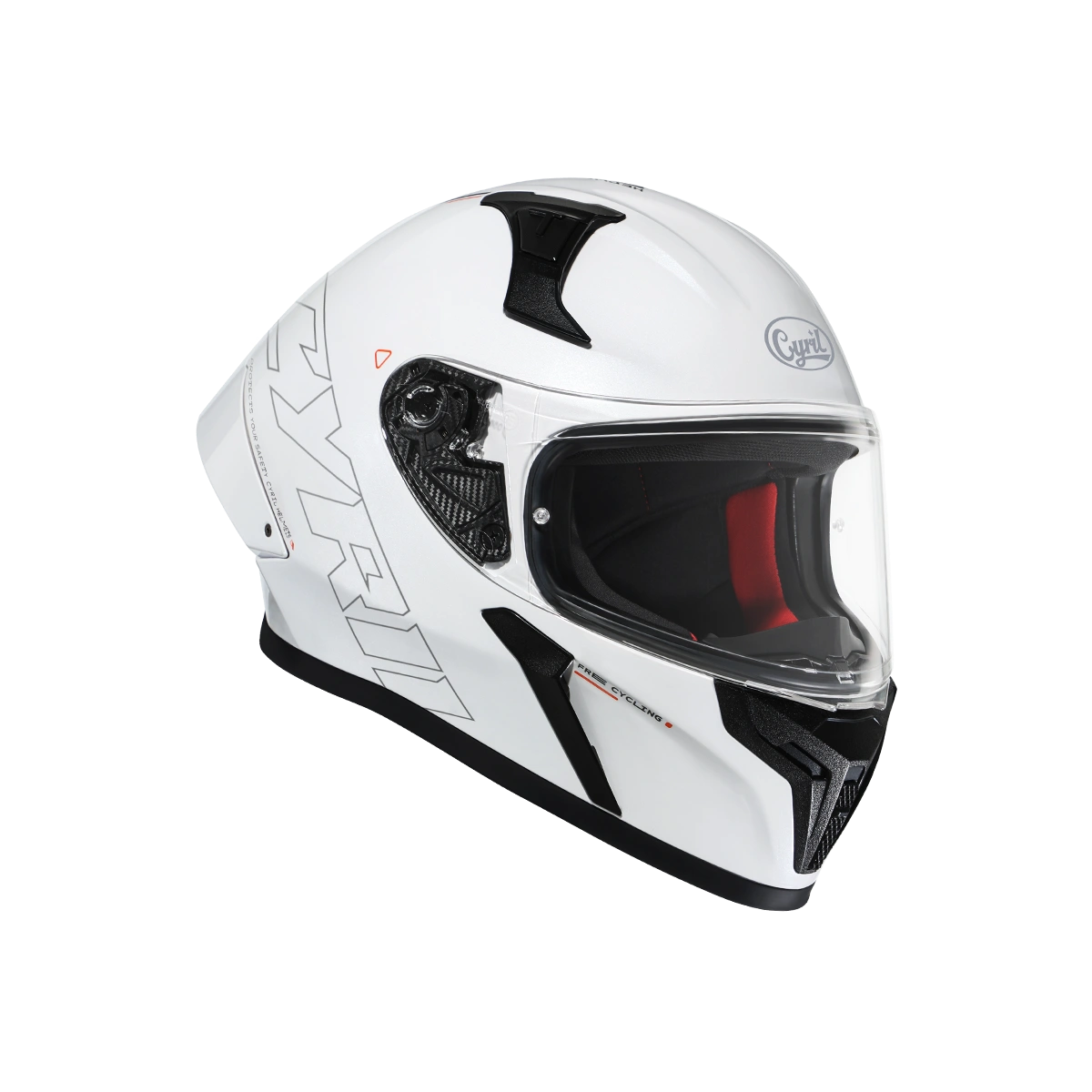
Best for Commuters Testing Break-In
The Mad Shark has a removable washable liner and active ventilation. For commuters, the useful test is simple: does pressure become more even after several short rides, or does one spot keep demanding attention? The removable liner helps with cleaning and inspection after repeated sweaty use.
View Mad Shark
Best for Pressure That Appears at Speed
The R1-PRO features a sport-inspired profile with DOT / FMVSS 218 and ECE 22.06 information. Riders who feel fine at home but notice pressure at speed should test whether posture and heat are changing the fit. Its ventilation and removable liner help with heat management and post-ride inspection, but the 30-minute test still decides whether the fit works.
View R1-PRO
Best for Repeated At-Home Fit Trials
The A128 modular helmet with flip-up design makes repeated try-ons easier because you can position the helmet without forcing it over your face each time. The wide-view comfort design and removable washable liner help riders inspect where pressure develops during the 30-minute test.
View A128Common Questions About Helmet Pressure Points
How tight should a new motorcycle helmet feel?
A new helmet should feel snug—like a firm handshake around your entire head. It should not slide around when you shake your head, but it should not cause sharp pain, numbness, or headaches. If you cannot fit one finger between your forehead and the helmet's brow band, or if the helmet leaves deep red marks that last over an hour, it is too tight.
Do all helmets have a break-in period?
Yes, most helmets with foam liners have a break-in period of 10-30 hours of wear. During this time, the liner compresses to match your head shape. The helmet should feel progressively more comfortable, not less. If pressure increases with wear, the helmet is the wrong fit.
Can cheek pads be too tight?
Cheek pads are intentionally firm to keep the helmet stable and prevent rotation. They are the most common source of "new helmet tightness." Most cheek pads compress significantly during break-in. If you can speak clearly and the pressure does not cause facial numbness, the cheek pads are likely fine. If you cannot close your mouth or feel numbness in your cheeks or jaw, the pads may be too thick or the helmet too small.
Is it okay to wear a tight helmet for short rides?
A helmet that is uncomfortably tight for a 30-minute ride will not become comfortable for longer rides. Wearing a too-tight helmet can cause headaches, distract you while riding, and in extreme cases restrict blood flow. If the 30-minute test reveals sharp or worsening pressure, do not plan to "get used to it." Return the helmet.
Can I stretch or break in a helmet faster?
Wearing the helmet around the house for short sessions is the least risky way to evaluate early break-in. Some riders wear a thin skull cap or balaclava to help the liner compress. Do not use heat, water, or force to stretch a helmet—this can damage the liner foam and compromise safety. Never remove liner padding to make a too-small helmet fit.
What if the helmet fits everywhere except one spot?
A single pressure point on an otherwise well-fitting helmet is usually a liner defect, seam, or hard spot in the EPS foam. Check the interior of the helmet at that location. If you feel a bump, ridge, or unusually hard area, the helmet has a manufacturing issue and should be returned or exchanged. Do not try to modify the liner to fix a defect.
How do I know if I need a different helmet shape?
If you have tried multiple helmets in the right size and all of them create pressure at the same locations—forehead and back with loose sides, or sides with forehead and back gaps—your head shape does not match the helmet's internal shape. Look for helmets labeled "round," "intermediate oval," or "long oval" to match your head. Most manufacturers list the internal shape in their product specifications.
Should a helmet feel loose after break-in?
A properly broken-in helmet should feel secure, not loose. The liner compresses enough to feel comfortable but should still hold the helmet firmly in place. If the helmet rotates when you move your head, slides forward when you look up, or feels wobbly at speed, it has broken in too much—or it was too large to begin with. A helmet that becomes loose after break-in may need replacement.
Final Notes
The hardest part of helmet fit is knowing when to wait and when to return. A new helmet should feel snug—that is normal. But snug is not the same as painful. If you do the 30-minute test and the pressure is sharp, focused, or getting worse, the helmet is not going to break in correctly.
Use the checklist in this guide. Check the location of the pressure. Look at the timeline. Try the quick fixes. If the same sharp pressure remains after all of that, return or exchange the helmet while you still can. A proper fit should feel secure enough to ride in, not painful enough to distract you.