
Why Does My Helmet Press on My Temples?

Why Does My Helmet Press on My Temples?
Pressure on the temples is one of the most common helmet fit complaints. It can come from the helmet being too narrow, your glasses pushing against the liner, or a head shape mismatch. Here is how to find the cause and fix it.
Helmet pressure on the temples is usually caused by a helmet that is too narrow for your head, glasses frames pushing the liner inward, or a round head wearing an oval-shaped helmet. Start by removing your glasses to see if the pressure eases. If it does, your frames are the problem. If the pressure remains, check whether the helmet feels tight at the sides while loose at the forehead and back—this indicates a shape mismatch. Sizing up rarely fixes temple pressure caused by shape; you likely need a helmet with a rounder internal shape.
This guide is based on NHTSA helmet fit guidance, the public FMVSS 218 motorcycle helmet standard, and official Cyril product pages. Before publication, the article was checked for source-backed fit claims, verified product details, practical rider relevance, and safe wording around glasses, liner pressure, and return decisions.
Why Temples Are Vulnerable
The temples sit at the sides of your forehead, where the skull is thin and the skin has little padding. Unlike the back of the head, which has more muscle and fat, the temple area has only skin and a thin layer of tissue over the bone. This means pressure there is felt directly and sharply.
Inside the helmet, the EPS liner is designed to distribute force across the entire surface. But if the helmet's internal width is too narrow for your head, the sides of the liner press against your temples on both sides. Every head movement, every bump in the road, and every gust of wind pushes the helmet slightly, concentrating force at those two points. Riders who wear glasses have an additional problem: the temple arms of the frames sit exactly where the helmet liner presses, creating a sandwich effect.
Rider Persona: Amy — Urban Commuter. Amy rides 25 minutes each way through city traffic. Her new helmet felt fine in the store, but by day three she noticed a dull ache at both temples. She thought it was eye strain from the sun. When she removed her sunglasses mid-ride, the pressure disappeared. Her helmet was not too small—the glasses were pushing the liner inward.
Common Causes of Temple Pressure
Temple pressure usually comes from one of four sources. Identifying which one applies to you is the fastest way to find a solution:
| Cause | What It Feels Like | Quick Check |
|---|---|---|
| Helmet too narrow | Pressure on both temples, helmet feels tight at the sides, may have gaps at forehead | Wear helmet without glasses for 15 minutes; if pressure remains, helmet is too narrow |
| Glasses frames | Pressure exactly where temple arms sit, worse with thicker frames, may ease when glasses removed | Remove glasses while wearing helmet; if pressure drops significantly, frames are the cause |
| Round head in oval helmet | Temple pressure with loose forehead and back; helmet feels "pinched" at the sides | Look at your head from above; if round, you need a helmet with rounder internal shape |
| Liner seam or defect | Sharp pressure at one temple only, feels like a ridge or hard spot inside | Run finger along liner at pressure point; if you feel a seam or bump, it's a defect |
A quick way to narrow it down: put the helmet on without glasses. If the temple pressure is still there after five minutes, the helmet is either too narrow or the wrong shape. If the pressure disappears, your glasses are the primary cause.
Glasses and Temple Pressure
Glasses are the most common and most fixable cause of temple pressure. The temple arms of your frames sit between your skin and the helmet liner, compressing the padding at exactly the wrong spot. Thicker frames create more pressure than thin wire frames. Frames with straight temple arms press harder than those with curved arms that wrap around the ear.
Wire or Titanium Temples
Thin wire frames create the least interference. If you need to wear glasses under your helmet, look for frames with thin, flexible temple arms that do not add bulk between your head and the liner.
Plastic or Acetate Temples
Thick plastic frames are the worst offenders. The wide temple arms push the liner inward at the temples, creating concentrated pressure. If you must wear these, look for helmets with glasses-friendly liner channels.
Put the Helmet On First
Put the helmet on and position it correctly before inserting your glasses. This prevents the glasses from shifting the helmet's position and creating artificial pressure points.
If your glasses are causing the pressure but you cannot ride without them, try these adjustments: slide the temple arms forward so they sit in front of the helmet padding rather than under it; switch to frames with thinner temples; or consider contact lenses for longer rides. Some helmets have small cutouts or softer liner areas designed for glasses—these can help but will not fix a helmet that is fundamentally too narrow.
Rider Persona: David — Weekend Rider. David has worn thick-framed glasses for years. His first two helmets always hurt his temples after an hour. He switched to thin wire frames and the problem vanished. He now keeps a pair of thin "riding glasses" specifically for helmet use.
Helmet Shape vs. Head Width
If you have ruled out glasses and the temple pressure is still there on both sides, the helmet's internal shape is likely the problem. Most helmets are built with an intermediate oval shape—slightly longer front-to-back than side-to-side. If your head is rounder, the sides of an oval helmet will press on your temples while the forehead and back feel loose.
To check your head shape, take a photo looking straight down at the top of your head, or have someone look from above. A round head looks almost circular. An intermediate oval looks slightly egg-shaped. A long oval looks noticeably longer front-to-back. If your head is round and your helmet is intermediate or long oval, you will feel temple pressure no matter what size you try.
Sizing up does not fix this. A larger oval helmet will be looser at the forehead and back, but the sides will still press on your temples because the helmet's internal width relative to its length has not changed. You need a helmet designed for a rounder head shape.
When to Adjust and When to Return
Before you return a helmet for temple pressure, try these quick fixes:
- Remove glasses: Test the helmet without glasses to confirm they are not the cause.
- Check helmet position: Make sure the helmet is not sitting too far forward, which can push the sides inward.
- Adjust strap angle: The chin strap should pull the helmet down and back. A strap that is too far forward can shift the helmet and concentrate pressure at the temples.
- Wear it around the house: Some liners compress at the sides over the first few wears. Give it 10-20 hours of cumulative use.
- Check for liner defects: Run your finger along the inner liner at the temple area. A seam, stitch bump, or hard spot indicates a manufacturing defect.
Return the helmet if: the pressure is sharp or painful, it causes headaches or numbness, it persists after a 30-minute test without glasses, or you have a round head and the helmet is clearly oval-shaped. Temple pressure rarely improves with break-in if it is caused by shape mismatch.
Rider Persona: Jen — New Rider. Jen tried two weeks of break-in with a helmet that pinched her temples. She told herself it would get better. It didn't. On her third helmet, she checked the internal shape description before ordering and chose a round-fit model. The temple pressure was gone on the first ride.
If you have tried adjusting position, strap angle, and glasses, and the temple pressure is still there after a 30-minute test, the helmet is the wrong shape or size for your head. The best next step is to identify your head shape and width, then choose a helmet that matches both.
Helmets Worth Considering
If temple pressure is your main concern, look for helmets that do not pinch the side of your head during a 30-minute test, and pay close attention to how your glasses sit inside the liner. Removable liners are useful for cleaning and inspection, but padding changes should be manufacturer-approved. Here are three Cyril options to compare by fit scenario.
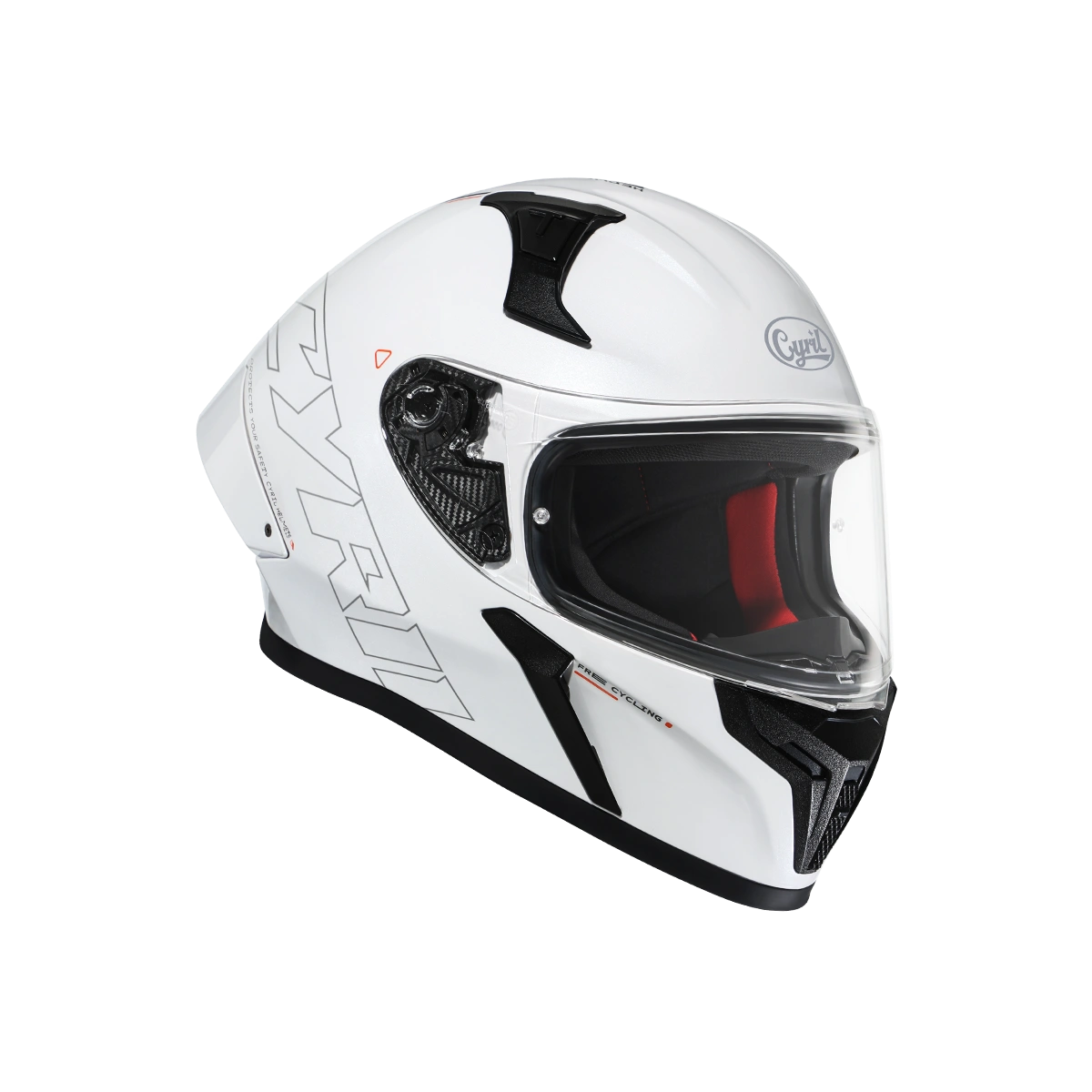
Best for Glasses Wearers Testing Daily Fit
The Mad Shark is a full-face helmet with DOT / FMVSS 218 information, a removable washable liner, and active ventilation. If glasses are causing temple pressure, use the removable liner for inspection and cleaning, then test with thin riding frames before deciding whether the helmet shape is the real issue.
View Mad Shark
Best for Side Pressure at Speed
The R1-PRO carries DOT / FMVSS 218 and ECE 22.06 information with a sport-inspired profile. Riders who only feel temple pressure after leaning forward should test whether posture changes are pushing frames or liner pressure into the temples during longer rides.
View R1-PRO
Best for Frequent On-and-Off Checks
The A128 modular helmet with flip-up design makes repeated fit checks easier for riders who wear glasses. The clear outer shield, inner sun visor, and wide-view comfort design are useful to evaluate, but the key test is still whether the side pressure remains after removing your frames.
View A128Common Questions About Temple Pressure
Is some temple pressure normal in a new helmet?
Mild, even pressure on the sides of the head is normal during break-in. Sharp or focused pressure at the temples is not. The temples are a sensitive area with thin skin over bone. If the pressure feels painful or causes headaches, the helmet is too narrow or the wrong shape.
Can I wear glasses with a motorcycle helmet?
Yes, but glasses are a common cause of temple pressure. Thin wire frames cause the least interference. Thick plastic frames push the liner inward and create concentrated pressure. Put the helmet on first, then slide the glasses in. If pressure is severe, consider thinner riding glasses or contact lenses.
Will a larger helmet fix temple pressure?
Not if the pressure is caused by shape mismatch. Sizing up makes the helmet looser at the forehead and back, but the internal width relative to length stays the same. If you have a round head in an oval helmet, you need a different helmet shape, not a larger size.
How do I know if my head is round or oval?
Take a photo of the top of your head looking straight down, or have someone look from above. A round head looks almost circular. An intermediate oval looks slightly egg-shaped. A long oval looks noticeably longer front-to-back. Match this to the helmet manufacturer's internal shape description.
Should I try to break in a helmet that hurts my temples?
Temple pressure caused by shape mismatch rarely improves with break-in. Do the 30-minute test: if the pressure is still sharp after 30 minutes without glasses, the helmet is wrong for your head. Break-in helps with normal snugness, not with fundamental shape incompatibility.
Can I modify the liner to reduce temple pressure?
Removing or thinning liner padding is risky. The liner is part of the helmet's safety system, and modifying it can affect fit and protection. If you are considering liner modifications, the helmet is probably the wrong size or shape. Return it and find one that fits correctly from the start.
What if only one temple hurts?
Pressure on only one side is usually a liner defect, seam, or manufacturing irregularity. Check the interior liner at that spot for bumps, hard areas, or misaligned padding. One-sided pressure is almost never a sizing issue and warrants a return or exchange.
Do modular helmets have less temple pressure?
Not necessarily. Modular helmets flip up at the chin, but the side structure and internal shape vary by model. Some modular helmets have rounder internal shapes that suit wider heads better. The key is still matching the helmet's internal shape to your head shape, regardless of helmet type.
Final Notes
Temple pressure is uncomfortable, distracting, and in some cases a sign that your helmet does not fit safely. Start by ruling out glasses as the cause. Then check your head shape against the helmet's internal shape. If the pressure is sharp, persistent, or one-sided, do not wait for break-in to fix it.
A helmet that fits well should feel secure all around, with no single point that demands your attention. If your temples are telling you something is wrong, listen to them.