
Why Does My Motorcycle Helmet Hurt My Forehead?

Why Does My Motorcycle Helmet Hurt My Forehead?
A helmet that presses on your forehead can turn a 20-minute commute into a test of endurance. The pain usually comes from one of three places: shape mismatch, sizing error, or how the helmet is sitting on your head. Here is how to find the cause and what to do about it.
Forehead pain from a motorcycle helmet is most often caused by a helmet shape that does not match your head shape, a size that is too small, or the helmet sitting too low and pushing the brow band into your skin. Some pressure is normal during break-in, but sharp pain, red marks that last more than 30 minutes, or numbness are signs of a poor fit. Before returning a helmet, check your head shape against the helmet's internal shape, verify sizing with a soft tape measure, and adjust how the helmet sits on your head. If the pain persists after a proper 30-minute test ride, the helmet is likely the wrong shape for you.
This guide draws on NHTSA helmet fit guidance, the public FMVSS 218 motorcycle helmet standard, and official Cyril product pages. Before publication, the article is checked for source-backed fit claims, verified product details, practical rider relevance, and clear limits on what fit adjustments can and cannot safely change.
Why the Forehead Takes the Most Pressure
The forehead sits at the front of the helmet's brow band, the reinforced edge that runs around the opening. When you push a helmet onto your head, this is the first point of contact. The forehead also has relatively little flesh padding compared to the back or sides of the head, so pressure there is felt more directly against the bone.
Inside the helmet, the EPS liner distributes impact force evenly, but during normal riding it simply sits against your skin. If the helmet's internal shape creates a pressure point at the forehead, every bump and head movement pushes that spot harder. Daily commuters often notice the pain at the end of the first week, not the first ride, because the liner has not yet compressed and the skin has not adapted.
Rider Persona: Marcus — Daily Commuter. Marcus rides 30 minutes each way, five days a week. His new full-face helmet felt fine in the store but started pressing on his forehead after day three. By Friday, he had a red line across his brow that took an hour to fade. He considered returning the helmet but first checked whether it was sitting too low on his head.
Common Causes of Forehead Pain
Forehead pressure rarely has one cause. Most riders are dealing with a combination of factors. Here are the most common ones, ranked by how often they appear in fit complaints:
| Cause | What It Feels Like | How to Check |
|---|---|---|
| Helmet too small | Tight pressure all around, not just the forehead; cheeks squeezed; hard to get on | Measure head circumference with soft tape; check size chart |
| Helmet sitting too low | Brow band presses into forehead; visor sits low over eyebrows | Helmet should sit about one finger-width above eyebrows |
| Round head in oval helmet | Forehead and back of head press hard; sides feel loose | Look at your head from above; round vs. long-oval shape |
| Oval head in round helmet | Sides of head press hard; forehead and back have gaps | Check for gaps at forehead when helmet is on |
| Brow band too tight | Sharp line of pressure right at the brow; feels like a strap | Press finger between brow and helmet edge; should be snug, not painful |
| Helmet not broken in | Even pressure everywhere that lessens over 10-20 hours of wear | Wear for short rides; if pressure eases, it's likely break-in |
A quick way to narrow it down: if you can slide one finger between your forehead and the helmet's inner padding and it feels tight but not painful, you are probably in break-in territory. If you cannot fit a finger in, or the pressure feels sharp rather than snug, the helmet is likely too small or the wrong shape.
Helmet Shape vs. Head Shape
This is the most overlooked cause of forehead pain. Helmets are built in three general internal shapes: round, intermediate oval, and long oval. Most adult heads are intermediate oval—slightly longer front-to-back than side-to-side. But some riders have rounder heads, and others have noticeably long-oval heads.
When a round-headed rider puts on a long-oval helmet, the forehead and back make contact first while the sides float. The forehead takes the brunt because the helmet's front is designed for a longer head shape. A long-oval head in a round helmet feels the opposite: side pressure with forehead and back gaps.
Rider Persona: Sarah — Weekend Rider. Sarah has a round head shape she never thought about until her third helmet purchase. The first two long-oval models always hurt her forehead after an hour. Her third helmet, with a rounder internal shape, sat evenly all around from day one. She now checks helmet shape before size.
To check your head shape, take a photo of the top of your head looking straight down, or have someone look from above. A round head will look almost circular. An intermediate oval will look slightly egg-shaped. A long oval will look noticeably longer front-to-back. Match this to the helmet manufacturer's shape description before buying.
When It's Normal and When It's Not
Not all forehead pressure means a bad helmet. A new helmet should feel snug—some riders describe it as "hugging" the head. This is the liner doing its job. The question is what happens after 20-30 minutes of wear.
- Normal during break-in: Even pressure that does not sharpen over time; red marks that fade within 20-30 minutes; pressure that eases after 10-20 hours of cumulative wear.
- Not normal: Sharp or stabbing pain; numbness or tingling; red marks that last over an hour; headaches that start during the ride and persist after; pressure that gets worse, not better, with wear.
- Return it: Pain that makes you want to remove the helmet mid-ride; pressure so strong it changes how you hold your head; visible indentations on the skin that do not fade by the next day.
The 30-minute test is the practical standard: wear the helmet with the strap fastened for 30 minutes of normal activity. If forehead pressure is still uncomfortable at minute 30, the helmet is unlikely to break in to a comfortable state.
Rider Persona: David — New Rider. David bought his first helmet online and assumed the forehead pressure was normal. He rode with it for two weeks, developing headaches he blamed on road noise. When he finally tried a different helmet shape, the headaches stopped. The first helmet was simply too round for his oval head.
Quick Fixes to Try Before Returning
If the helmet is close to the right fit but the forehead pressure is just slightly off, there are a few adjustments worth trying before giving up on it:
Check How Low It Sits
Slide the helmet up slightly so the brow band sits just above your eyebrows, about one finger-width. Many riders push the helmet down too far, forcing the brow band into the forehead.
Verify Strap Angle
The chin strap should pull the helmet down and back, not just down. If the strap is too far forward, it can push the helmet's front into your forehead. Adjust the side D-rings so the strap forms a V under each ear.
Break In the Liner
Wear the helmet around the house for 15-20 minutes at a time over several days. The liner foam will compress slightly where pressure is highest. Do not force it—if sharp pain persists, stop.
One more thing to check: your hairstyle. A ponytail, bun, or thick hair pushed forward under the helmet can create artificial pressure at the forehead. Try the helmet with your hair in its normal riding state. If you wear a thin balaclava or skull cap, make sure it is not bunching at the front.
What a Properly Fitted Forehead Should Feel Like
A correctly fitted helmet should feel like a firm handshake around your entire head—not a squeeze, not a float. At the forehead specifically:
- The brow band touches your skin evenly across the width of your forehead.
- You can fit one finger between the brow band and your skin, but it takes a light push.
- When you shake your head side to side, the helmet moves with your head, not after it.
- The helmet does not slide down over your eyebrows when you look up.
- After 30 minutes of wear, you are aware the helmet is there, but you are not thinking about your forehead.
If you are adjusting the helmet at stoplights, loosening the strap for relief, or tilting your head back to shift weight off your forehead, the fit is wrong. A helmet that fits well disappears during the ride. One that fits poorly becomes the only thing you think about.
If you have tried adjusting position and strap angle and the forehead pain is still there after a 30-minute test, the helmet is likely the wrong internal shape or size for your head. The best next step is to measure your head shape and circumference, then choose a helmet that matches both. A helmet that fits correctly from day one will only get more comfortable as the liner breaks in.
How to Apply This When Choosing a Helmet
Use the fit checks above before deciding. If forehead pressure is your main issue, first verify the internal shape and size. A removable liner is useful for cleaning and inspection, but pad thickness changes should come from manufacturer-approved parts or support guidance. Here are three Cyril options to compare by riding situation.
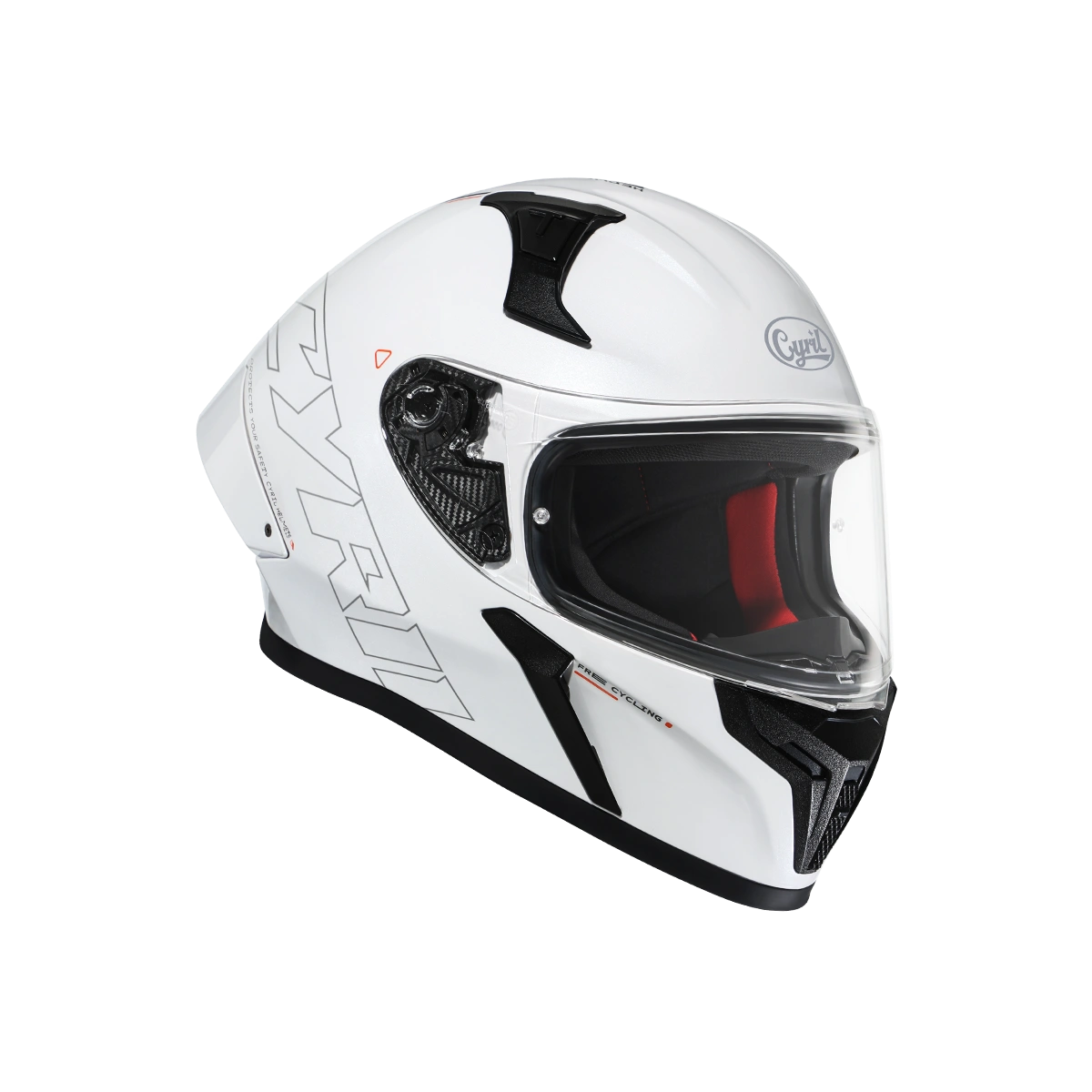
Best for Short Commute Fit Checks
The Mad Shark is a full-face helmet with a removable washable liner and active ventilation. For riders who notice forehead pressure during 20- to 40-minute commutes, the venting helps manage sweat while the liner can be removed for cleaning and inspection if a pressure mark keeps appearing in the same place.
View Mad Shark
Best for Riders Testing Sport Posture
The R1-PRO has a sport-inspired profile with DOT / FMVSS 218 and ECE 22.06 information. Riders who lean forward at speed should pay close attention to whether the brow area stays even or starts pressing after 20 minutes. Its ventilation and removable liner help with heat management and post-ride fit inspection.
View R1-PRO
Best for Easier Try-On Checks
The A128 is a dual-visor modular helmet with a flip-up design. The modular construction can make repeated on-and-off fit checks easier before a return window closes, while the wide-view comfort design and removable washable liner support practical inspection during forehead-pressure troubleshooting.
View A128Common Questions About Helmet Forehead Pain
Is some forehead pressure normal in a new helmet?
Yes, a new helmet should feel snug all around, including the forehead. This is the liner making contact with your head. The pressure should feel even, not sharp, and should ease over 10-20 hours of cumulative wear. If the pressure intensifies during a ride or leaves lasting red marks, the helmet is too small or the wrong shape.
How long should I wait before deciding a helmet hurts too much?
Do a 30-minute continuous wear test at home. Put the helmet on, fasten the strap, and wear it while doing normal activities. If the forehead pressure is still uncomfortable at minute 30, it is unlikely to improve enough with break-in. Some liners compress more than others, but sharp pain rarely resolves with time.
Can a helmet liner be modified to reduce forehead pressure?
Do not cut, grind, thin, or remove protective liner material to make a painful helmet fit. The EPS liner is part of the impact-management structure, and even comfort padding can affect how the helmet sits on your head. If the pressure is minor, check whether the manufacturer offers approved replacement pads or support guidance. If not, the safer answer is usually a different size or internal shape.
Does head shape really matter, or is size enough?
Head shape matters as much as size. A helmet that is the right circumference but the wrong shape will create pressure points where your head is widest relative to the helmet's interior. Most helmets are intermediate oval. If your head is round or long oval, you need a helmet designed for that shape. Check manufacturer shape descriptions before buying.
Why does my helmet hurt more in hot weather?
Heat causes your skin to swell slightly and increases blood flow to the surface, making pressure points feel sharper. Sweat also reduces the liner's ability to distribute pressure evenly. If your helmet has poor ventilation, heat and sweat buildup at the forehead can turn mild pressure into noticeable pain during summer rides. This is a sign to check both fit and vent design.
Can wearing glasses make forehead helmet pain worse?
Yes. Glasses temples can press into the sides of your head, shifting how the helmet sits and concentrating pressure at the forehead or temples. If you wear glasses, put them on after the helmet is positioned correctly. Look for helmets with glasses-friendly liner channels, and make sure the helmet is not sitting too low, which pushes the brow band against both your forehead and the top of your glasses frames.
Should I size up if my helmet presses on my forehead?
Not automatically. Forehead pressure is often caused by shape mismatch, not size. Sizing up can create a helmet that is too loose at the sides and back, reducing safety. First check if the helmet is sitting too low, if the strap angle is wrong, or if the internal shape does not match your head. Only size up if the helmet is clearly too small all around and the next size fits snugly everywhere else.
What does it mean if only one spot on my forehead hurts?
A single hot spot usually means a manufacturing irregularity in the liner or a pressure point from a seam, vent channel, or sticker on the inside of the helmet. Check the interior lining for bumps, seams, or hard spots at the location of the pain. If you find one and it is part of the removable liner, try repositioning or replacing that pad. If the hard spot is in the EPS foam, the helmet is defective and should be returned.
Final Notes
Forehead pain is one of the most common helmet complaints, and it is also one of the most solvable. In most cases, the helmet is either too small, sitting too low, or the wrong internal shape for your head. The key is to diagnose which one before you either suffer through it or return a helmet that might have worked with a simple adjustment.
Do the 30-minute test. Check your head shape. Verify the helmet is sitting at the right height. Adjust the strap angle. If you have done all of this and the forehead pressure is still there, the helmet is not the right match. A helmet that fits well should make you forget it is there—not remind you every time you hit a bump.