
How to Measure Your Head Correctly for a Motorcycle Helmet in Under 5 Minutes

How to Measure Your Head Correctly for a Motorcycle Helmet in Under 5 Minutes
Measuring your head for a motorcycle helmet takes five minutes and a soft tape measure — but most people do it slightly wrong, and a half-inch error is the difference between a helmet that fits and one you return. This guide covers exactly where to place the tape, what number to use, and how to handle the edge cases that size charts do not explain.
Wrap a soft tailor's tape measure around your head about one inch (2.5 cm) above your eyebrows — this is the widest circumference of your skull. Keep the tape level front-to-back, snug but not tight. Take the measurement three times and use the largest number. Match that measurement in centimeters to the manufacturer's size chart for your specific helmet model — do not assume a Medium in one brand equals a Medium in another. If you land exactly on the boundary between two sizes, try both and choose by fit stability, not first comfort.
What You Need to Measure Correctly
A soft tailor's tape measure is the right tool — the flexible cloth kind, not a metal construction tape. If you do not have one, use a piece of string or a phone charging cable, mark the meeting point, then lay it flat against a ruler. Do not use a metal tape measure — it will not conform to your head shape and will give you a smaller number than your actual circumference.
A mirror helps but is not required. What is required: the measurement must be taken at the widest point of your head, which is approximately one inch (2.5 cm) above your eyebrows, running horizontally above your ears and around the back of your skull at its widest point. This is the circumference that helmet manufacturers use in their size charts.

Step-by-Step: Measure Your Head in Under 5 Minutes
- Position the tape. Place the end of the tape measure at the center of your forehead, roughly one inch (2.5 cm) above your eyebrows — about where a helmet's brow line would sit. This is not your hairline; it is slightly higher.
- Wrap around. Bring the tape around the side of your head, passing just above your ears. Continue around the back of your skull, keeping the tape at the widest point — the occipital bone at the rear of your head. Bring it back around the other side to meet the starting point.
- Keep it level. The tape should run parallel to the floor all the way around. A common mistake is letting the tape sag at the back or tilt at the front. Use a mirror or have someone check from the side.
- Snug, not tight. Pull the tape until it sits firmly against your skin all the way around — the same tension a well-fitting helmet liner would apply. If the tape digs in or leaves a mark, it is too tight. If it slides freely, it is too loose.
- Measure three times. Take the measurement, write down the number in centimeters, relax, and repeat twice more. Use the largest of the three measurements. Most people tighten the tape slightly without realizing it on the first attempt.
- Measure with your riding hair. If you always ride with your hair down, or tied in a specific style, measure with that hairstyle. A bun or thick ponytail can add half a centimeter to your effective circumference and change how the helmet fits at the rear.
| Measurement (cm) | Typical Helmet Size | Notes |
|---|---|---|
| 53 – 54 | XS | Verify against the brand's specific chart. |
| 55 – 56 | S | Common for riders who find M too roomy. |
| 57 – 58 | M | The most common adult helmet size range. |
| 59 – 60 | L | If you land exactly on 59, try both M and L. |
| 61 – 62 | XL | Check crown fit carefully — XL often means a wider shell, not just more padding. |
| 63 – 64 | XXL | Not all models are available in this size range. |
Important: This table is a general reference only. Every helmet brand and model has its own size chart based on its shell shape and liner design. Always use the specific chart for the helmet you are buying — a Medium in one brand can measure like a Small or Large in another.

Measurement Mistakes That Cost You a Return
These are the errors that send helmets back. Each one is easy to fix once you know about it.
| Mistake | Result | Fix |
|---|---|---|
| Measuring too high on the forehead | Undermeasures — helmet arrives too small | Place the tape one inch above the eyebrows, not near the hairline. |
| Measuring too low (across the eyebrows) | Undermeasures — helmet arrives too small | The tape should be above the brow ridge, not on it. |
| Tape not level front-to-back | Undermeasures — misses the widest rear point | Use a mirror or have someone check from the side. |
| Using a metal tape measure | Undermeasures by 1–2 cm | Use a soft tailor's tape or string + ruler method. |
| Measuring once and trusting it | Single measurement may be off | Measure three times, use the largest number. |
| Not accounting for hairstyle | Helmet fits at home, too tight on the road | Measure with your riding hairstyle in place. |
| Converting cm to inches and back | Rounding errors accumulate | Use centimeters. Every helmet size chart uses metric. |

What to Do If You Land Exactly Between Two Sizes
This happens more often than not. If your measurement lands on the boundary — say exactly 59 cm, which sits between Medium and Large on many charts — do not guess and do not default to the larger size for comfort. Here is the practical approach.
Order both sizes if the return policy allows. Try each one indoors for at least 15 minutes with the strap fastened. The smaller size will feel tight at the cheeks — that is normal. The larger size will feel easier to put on — that does not mean it fits better. Compare crown stability, cheek contact, and whether the helmet rotates when you turn your head.
If you can only order one: choose the smaller size if the size chart's upper bound for that size is within 0.5 cm of your measurement. Choose the larger size if you are above the upper bound. Comfort padding settles slightly with break-in — a helmet that feels snug out of the box will feel right after a few weeks. A helmet that feels roomy out of the box will only get looser.
If both sizes feel wrong for different reasons — the smaller one hurts in one spot, the larger one moves — the issue is head shape, not size. A different helmet model is the answer, not a different size in the same model.
Head Shape Matters as Much as the Measurement Number
A helmet size chart gives you circumference. It does not tell you whether your head is round oval, intermediate oval, or long oval — which is the other half of fit. Two people with the same 58 cm measurement can need completely different helmet models because their head shapes differ.
Intermediate oval is the most common head shape and the one most helmets are designed for — slightly longer front-to-back than side-to-side. Round oval heads are closer to equal in both directions and often feel pressure at the forehead and sides in an intermediate oval helmet. Long oval heads are significantly longer front-to-back and often feel pressure at the forehead and rear crown, with gaps at the sides.
A rough self-check: have someone take a photo of the top of your head from directly above. If the shape looks closer to a circle, you lean round. If it looks closer to an elongated oval, you lean long. If it is somewhere in between, you are intermediate — and most helmets will fit. If you have a history of helmets feeling tight at the forehead regardless of size, you may be long oval and need a model known to accommodate that shape.

How to Apply Your Measurement When Choosing a Helmet
Once you have your measurement in centimeters, use it with the manufacturer's size chart for the specific helmet model you are considering. Do not skip this step — guessing your size from past helmets is the most common reason for returns. Here are helmets with clear size chart guidance to compare.
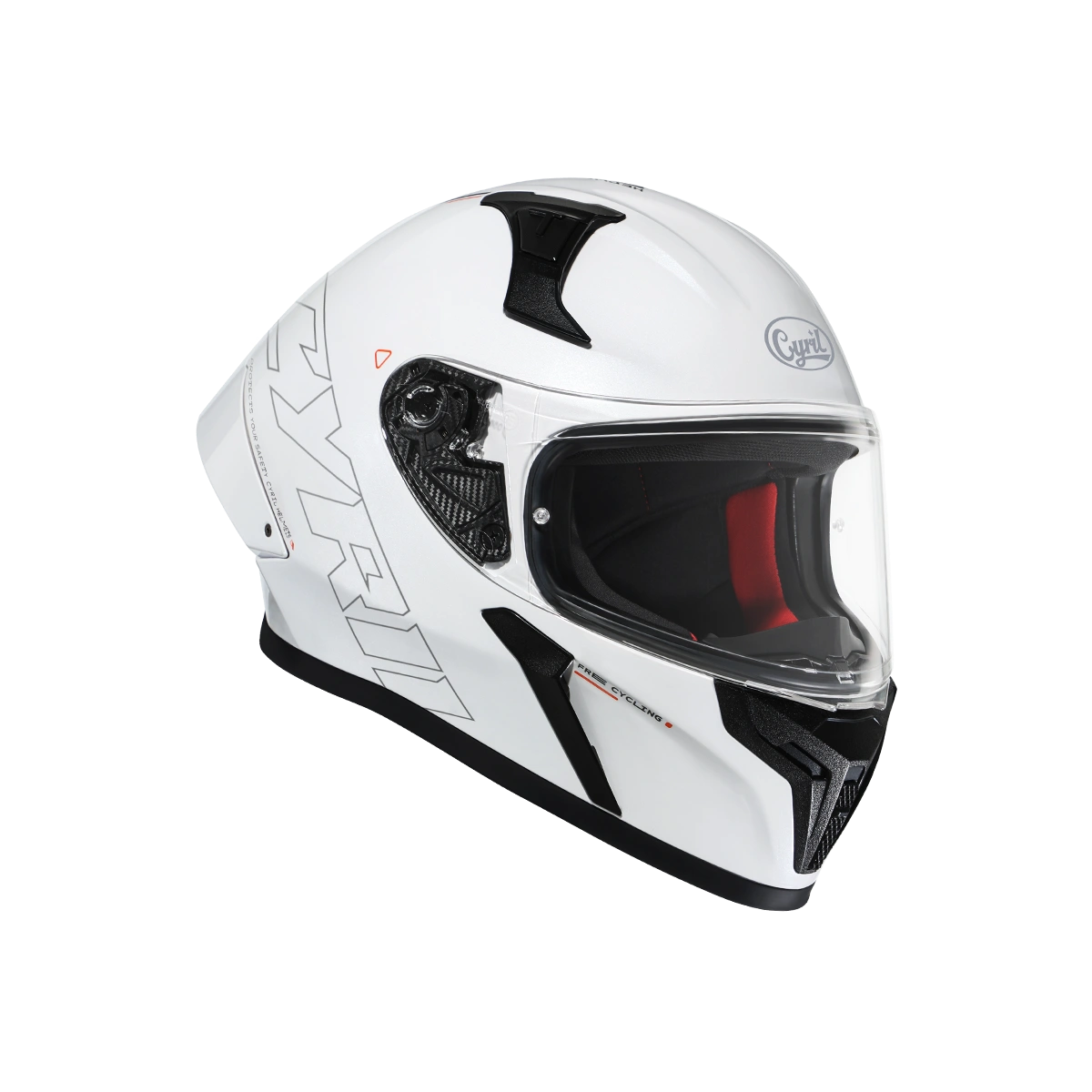
Best for First-Time Online Buyers
The Mad Shark Full Face Helmet is an approachable starting point for riders measuring at home for the first time. ABS shell, intermediate oval fit profile, multi-layer EPS, DOT-certified. If your measurement lands cleanly in one size on the chart and this is your first time buying a helmet online, the Mad Shark's fit consistency makes it a lower-risk choice.
View Mad Shark
Best for a Sport-Focused Fit
The R1-PRO Full Face Helmet has a sport-inspired shell profile that tends to fit more snugly through the cheeks — worth knowing if your measurement is near a size boundary. DOT FMVSS 218 and ECE 22.06 certified, magnetic visor release. If you prefer a firmer cheek fit with less movement, the R1-PRO's profile suits that preference.
View R1-PRO
Best for Modular Flexibility
The A128 Dual Visor Modular Helmet offers a modular chin bar and dual visor design — features that affect how the helmet sits on your head and how the size chart translates to real fit. DOT FMVSS 218 and ECE 22.06 certified. If your measurement is near a size boundary, the modular design may feel different than a fixed full-face in the same nominal size. Worth comparing both if you are unsure.
View A128Five minutes with a tape measure is the difference between a helmet that fits and one that goes back in the box. Measure three times, use the largest number, check the brand's specific size chart — not a generic table — and if you land on the boundary, try both sizes while the return window is open. A helmet that fits your measurement but not your head shape is a shape mismatch, not a sizing error. Try a different model before you try a different size.
Common Questions About Helmet Sizing and Measurement
Can I measure my head with a metal tape measure?
No. A metal tape measure is rigid and will not conform to your head shape, typically undermeasuring by 1–2 cm. Use a soft tailor's tape measure. If you do not have one, wrap a piece of string or a phone charging cable around your head, mark the meeting point, then lay it flat against a ruler.
How tight should the tape be when measuring?
Snug but not tight — the same pressure a well-fitting helmet liner would apply. The tape should make full contact with your skin all the way around without digging in or leaving a mark. If it slides freely, it is too loose and you will get a number that is larger than reality. If it dents your skin, you are over-tightening and will get a number that is too small.
Should I measure in centimeters or inches?
Centimeters. Every motorcycle helmet manufacturer's size chart uses metric measurements. Converting between inches and centimeters introduces rounding errors that can push you into the wrong size. If your tape measure only shows inches, multiply by 2.54 and round to the nearest 0.5 cm.
My measurement puts me between sizes. Which do I choose?
If the return policy allows, order both and compare fit indoors for at least 15 minutes each. If you can only order one: choose the smaller size if you are within 0.5 cm of that size's upper bound, choose the larger if you are above it. Comfort padding settles slightly with break-in — a snug helmet becomes comfortable; a roomy helmet becomes looser.
Does hair affect helmet size measurement?
Yes, especially thick hair, ponytails, buns, or braids. Measure with your hair in the style you ride with. A bun can add 0.5–1 cm to your effective circumference and change where the helmet sits at the rear. If you switch between hairstyles, measure both ways and use the larger number.
Why does a Medium in one brand fit differently than a Medium in another?
There is no universal helmet sizing standard. Each manufacturer uses its own shell molds and liner densities, and the shell shape — intermediate oval, round oval, long oval — determines how the circumference measurement translates to fit. A Medium in a round-oval helmet may feel tight at the sides on an intermediate-oval head, even if the circumference measurement matches. Always use the specific size chart for the helmet model you are buying.
Can I measure my head by myself or do I need help?
You can measure by yourself with a mirror. The key is keeping the tape level front-to-back — this is where a second pair of eyes helps. If you are measuring alone, use a mirror to check from the side that the tape runs parallel to the floor. Take the measurement three times and use the largest number to catch any positioning errors.
Final Notes
Five minutes with a soft tape measure is the single highest-return thing you can do before ordering a helmet online. It will not guarantee a perfect fit — head shape, cheek pad density, and liner design all affect how a helmet feels — but it eliminates the most common reason for returns: ordering the wrong size based on a guess.
Measure in centimeters. Measure three times. Use the specific size chart for the helmet you are buying. If you land between sizes, try both. And if a helmet that should fit by the numbers feels wrong, trust the feeling — it is more likely a shape mismatch than a measurement error.