
How to Replace a Motorcycle Helmet Visor: Step-by-Step for Quick-Release and Screw-Type Systems

How to Replace a Motorcycle Helmet Visor: Step-by-Step for Quick-Release and Screw-Type Systems
Replacing a helmet visor should take under two minutes, but the first time you try it — with the wrong technique, a stuck mechanism, or uncertainty about how much force is safe — it can turn into twenty minutes of frustration and a scratched shield. This guide walks through both quick-release and screw-type visor systems so you can swap your visor confidently without damaging the mechanism or the new shield.
Motorcycle helmet visors use one of two mounting systems: quick-release (a lever or button that detaches the visor without tools) or screw-type (a small screw on each side plate). Quick-release is faster but the release angle matters — forcing the visor at the wrong position can snap the plastic tabs. Screw-type is simpler but requires a well-fitting screwdriver and care not to strip the screw head. For both systems: work on a soft surface, support the visor with your free hand, and never force anything. If the visor does not release smoothly, you are likely in the wrong position — not applying enough force. If a side plate or mechanism breaks, contact the manufacturer before riding with an unsecured visor.
Identify Which Visor System You Have
Before touching anything, figure out which type of mechanism your helmet uses. The approach is completely different for each.
Quick-release system: Look at the side plate — the plastic cover where the visor attaches to the helmet shell. If you see a lever, a slider button, or a tab that moves, you have a quick-release system. Most modern full-face and modular helmets use this design. The visor pops off when the mechanism is moved to the release position and the visor is lifted to the correct angle — usually fully open or slightly beyond.
Screw-type system: If the side plate has a visible screw head (typically Phillips or flathead, sometimes hex), your visor is held on by screws. This is common on older helmets, some budget models, and certain off-road helmets. You will need the correct size screwdriver and a steady hand.
A quick way to tell without touching anything: if there is a visible lever or slider on the outside of the side plate, it is quick-release. If all you see is a small screw in the center of the pivot point, it is screw-type. When in doubt, check the owner's manual or the manufacturer's website before proceeding — guessing wrong can break the mechanism.

Quick-Release Visor: Removal and Installation
Removal
- Place the helmet on a stable, soft surface — a towel on a table works. You need both hands free.
- Lift the visor to the fully open position. Most quick-release systems only release when the visor is fully up, or slightly past the fully open detent.
- Locate the release mechanism on each side plate. This is usually a lever you push outward, a button you press, or a tab you pull down. Some systems require you to do both sides simultaneously; others release one side at a time.
- While holding the release in the open position, gently pull the visor outward and upward. It should come free with moderate pressure. If it resists, do not pull harder — check that you are at the correct angle and that the mechanism is fully engaged.
- Repeat for the other side if your system releases one side at a time.
Installation
- Hold the new visor at roughly the same angle used for removal — usually fully open or just past.
- Line up the visor's mounting tabs with the slots or pivot points on each side plate.
- Press the visor firmly into the pivot point on one side until you hear or feel it click into place. Do the same on the other side.
- Cycle the visor up and down through its full range a few times to confirm it moves smoothly and locks at each detent position.
- If the visor binds, pops out, or does not seat flush, remove it and re-seat — one of the tabs is likely not fully engaged.
The most common failure point: forcing the visor at the wrong angle and snapping a plastic mounting tab. If the visor does not release with moderate pressure, pause and check the angle — not the force.

Screw-Type Visor: Removal and Installation
Removal
- Use a screwdriver that fits the screw head precisely. A slightly undersized Phillips driver will strip the head — this is the most common screw-type failure. If the screw has been in place for years, a drop of penetrating lubricant on the threads can help, but keep it away from the visor and EPS liner.
- Remove the screw from one side plate. Keep your free hand supporting the visor so it does not drop or twist as the screw comes out.
- Set the screw and any washer or spacer aside in a small dish — these parts are easy to lose. Note the order they came off: screw head, sometimes a plastic washer, side plate, visor.
- Remove the screw from the other side, then lift the visor away.
Installation
- Position the new visor so its mounting holes align with the pivot points on both sides.
- Place any washers or spacers back in their original order — these control how tightly the visor pivots against the side plate.
- Thread each screw by hand for the first few turns to avoid cross-threading. Once both screws are hand-tight, use the screwdriver to snug them — but do not overtighten. The visor should move smoothly, not bind.
- If the visor is too tight after tightening, back the screw off an eighth of a turn. If it is too loose and flops down on its own, tighten slightly.
If a screw head is already stripped before you start, take the helmet to a shop or use a screw extractor. Drilling out a stripped side-plate screw on a helmet is possible but risks damaging the shell or EPS if you are not careful.

Mistakes That Damage Visors and Mechanisms
These are the ones that show up in forums and repair shops repeatedly. Most are avoidable with one extra second of attention.
| Mistake | What Happens | How to Avoid |
|---|---|---|
| Forcing the visor at the wrong angle | Snapped mounting tabs — the visor is now unusable | Check the manual for the correct release angle. It is almost always fully open or just past. |
| Using the wrong screwdriver size | Stripped screw head — cannot remove without extraction tools | Test the screwdriver fit before turning. It should seat snugly with no wobble. |
| Working on a hard surface | Scratched visor or shell from contact with the table | Always use a towel or soft mat underneath the helmet. |
| Losing washers or spacers | Visor binds, rattles, or does not seal | Place small parts in a dish immediately. Note the order they came off. |
| Overtightening screw-type visor | Cracked side plate or visor pivot hole | Snug is enough. The visor should move smoothly, not bind. |
| Touching the inside of the new visor with bare fingers | Fingerprint oils attract dust and are hard to clean from the inner surface | Hold the visor by the edges. Clean with a microfiber cloth before installing. |
When to Replace a Visor vs the Whole Helmet
Visor replacement is normal maintenance. But there are times when a damaged visor points to a larger problem.
Replace just the visor when: it is scratched, hazy, or pitted from road debris; the anti-fog coating has worn off; you want a different tint or a mirrored finish for summer riding; the visor no longer seals tightly against the eye port gasket.
Inspect the helmet more carefully when: the visor was knocked off in a drop or crash — check the side plates, pivot points, and shell around the mechanism for cracks. If the side plate mount is cracked or the pivot point is deformed, a new visor will not seat correctly, and the helmet may need replacement. The visor is part of the helmet's impact system — if it cannot stay in place during a ride, the helmet is not protecting you as designed.
Replace the helmet when: the shell around the side plate is cracked, the EPS liner is compressed near the mounting points, or the helmet has taken any significant impact regardless of whether the visor survived. The visor mechanism is one of the first places impact damage shows up — cracks radiating from the side plate screws or pivot points are a clear sign.

Helmets Built for Easy Visor Changes
If you swap visors regularly — clear for night, tinted for day, mirrored for summer — a helmet with a well-designed quick-release system saves real time and frustration. Here are helmets with visor mechanisms that make the process straightforward.

Best for Frequent Visor Swaps
The R1-PRO Full Face Helmet features a magnetic visor release system — one of the fastest quick-release designs available. If you routinely swap between a clear and tinted visor for day and night riding, the magnetic mechanism makes the process genuinely tool-free and under 30 seconds. DOT FMVSS 218 and ECE 22.06 certified, sport-inspired profile, active ventilation.
View R1-PRO
Best for Less Frequent Swaps
The A128 Dual Visor Modular Helmet reduces the need to swap visors entirely — its internal drop-down sun visor handles changing light conditions without touching the outer shield. For riders who rarely need to change the main visor but value sun protection on demand. DOT FMVSS 218 and ECE 22.06 certified.
View A128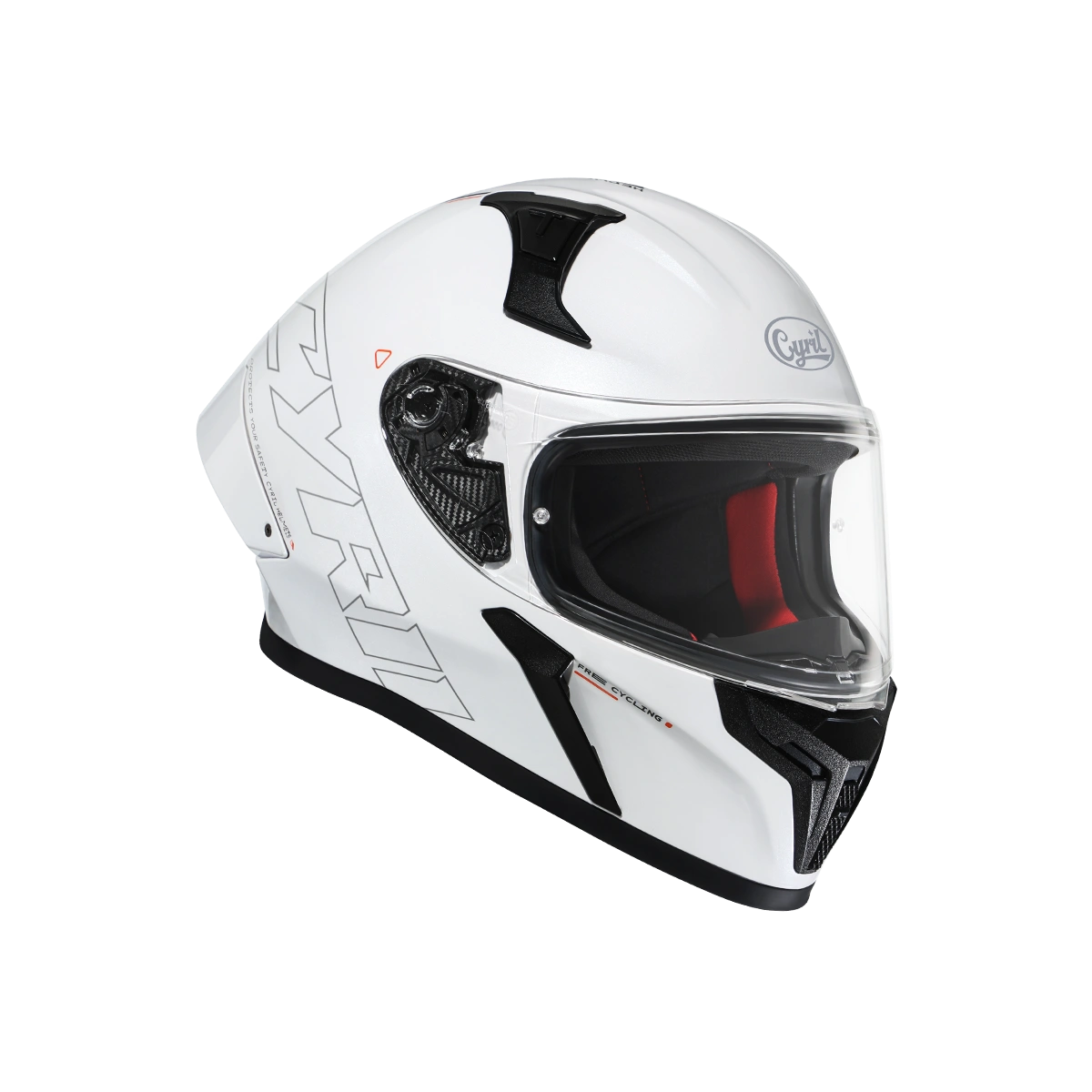
Best for Set-It-and-Forget-It Riders
The Mad Shark Full Face Helmet uses a standard quick-release visor system that works reliably for the once-or-twice-a-season visor change most riders need. ABS shell, multi-layer EPS, active ventilation, DOT-certified, removable washable liner. If you are not swapping visors weekly, a simple system that works every time is all you need.
View Mad SharkA visor swap should be routine, not stressful. Work on a soft surface, identify your mechanism type before touching anything, use the correct angle for quick-release or the correct screwdriver for screw-type, and never force a part that resists. A scratched visor is annoying. A broken side plate mechanism can mean replacing the helmet.
Common Questions About Helmet Visor Replacement
How do I know if my visor is quick-release or screw-type?
Look at the side plate. If there is a lever, slider, or button on the outside surface, it is quick-release. If all you see is a visible screw head at the pivot point, it is screw-type. When in doubt, search your helmet model on the manufacturer's website — they almost always have a visor replacement video or diagram.
My quick-release visor is stuck. How do I get it off without breaking it?
First, confirm the visor is at the correct release angle — this is almost always fully open, and sometimes slightly past the fully open detent. Second, make sure you are engaging the release mechanism fully: press the button, pull the lever, or slide the tab all the way to its release position before pulling the visor. If it still resists, apply a small amount of silicone spray lubricant to the pivot points, let it sit for a minute, and try again. Do not use WD-40 or petroleum-based lubricants near EPS foam or the visor itself.
Can I replace a visor myself or should I take it to a shop?
For quick-release systems, you can absolutely do it yourself — the mechanism is designed for tool-free swaps. For screw-type, you can also do it yourself as long as you have the correct screwdriver and the screw heads are not stripped. The only time a shop is necessary: the screw is stripped and you need extraction, the side plate is cracked, or you are uncomfortable applying force to a stuck mechanism near expensive helmet parts.
How often should I replace my helmet visor?
Replace when the visor is scratched enough to affect your vision — especially at night when scratches scatter oncoming headlights. Also replace when the anti-fog coating has worn off (if applicable), when the visor no longer seals against the eye port gasket, or when you want a different tint for seasonal riding. There is no fixed replacement interval for visors — it depends entirely on use and care.
Can I use a tinted visor at night?
No. Tinted, mirrored, and dark smoke visors are not safe for night riding — they reduce visible light transmission enough to delay your reaction to hazards, pedestrians, and road debris. Most tinted visors are labeled for daytime use only. If you ride at both ends of the day, either carry a clear visor and swap before dark, or use a helmet with an internal drop-down sun visor that retracts for night riding.
My new visor does not seal properly. What did I do wrong?
Check that both sides are fully seated in the pivot points — an unseated tab on one side will tilt the visor and leave a gap. On screw-type visors, check that the washers or spacers went back in the correct order. If the visor is the correct model for your helmet and it still does not seal, the side plates or pivot points may have been damaged in a previous drop or impact.
Do I need to buy a visor from the same brand as my helmet?
Yes. Helmet visors are model-specific — a Shoei visor does not fit an HJC helmet, and often visors do not even fit across different models from the same brand. Always buy the visor made for your exact helmet model. Universal or aftermarket visors that claim to fit multiple brands rarely seal correctly and can detach in a crash or at speed.
Final Notes
Replacing a helmet visor is one of those tasks that takes two minutes once you know how, and twenty minutes the first time you try. The difference is almost always the release angle — not the amount of force you apply. Work on a soft surface, keep track of small parts, and if something resists, pause and check the mechanism position before pulling harder.
A scratched or hazy visor is a safety issue, not just a cosmetic one — especially at night. If you have been putting off a visor replacement because the mechanism intimidates you, this guide covers what you need. Once you have done it once, the next swap takes under a minute.