
What Should I Check If My Motorcycle Helmet Gives Me a Headache?

What Should I Check If My Motorcycle Helmet Gives Me a Headache?
A headache from your helmet is not something you should tolerate. It usually means fit, strap tension, weight, or head shape is working against you. This guide shows you exactly what to check, in what order, so you can fix the problem or know when the helmet itself is the wrong choice.
If your helmet gives you a headache, check these four things in order: (1) whether the helmet is too tight or pressing on specific points, (2) whether the strap is pulling your jaw upward, (3) whether the helmet weight is mismatched to your ride duration, and (4) whether the internal shape matches your head shape. Most helmet headaches are fixable with adjustment or liner replacement. Some signal the helmet is simply the wrong model for your head.
This guide was built from NHTSA motorcycle helmet fit guidance, the public FMVSS 218 motorcycle helmet standard, MedlinePlus headache information, and official Cyril product pages. Before publication, the article was checked for source-backed fit claims, verified product details, and clear medical boundaries: helmet fit troubleshooting is not a diagnosis, and persistent or severe headaches need professional care.
Quick Checks Before You Ride
Run through this five-point checklist in order. Each check takes under a minute.
- Can you fit two fingers flat between the strap and your chin? If not, the strap is too tight.
- Does the helmet shift more than an inch when you push it with the strap fastened? If yes, it is too loose and you may be over-tightening the strap to compensate.
- Is the pressure on one specific spot or spread across your whole head? One spot means shape mismatch. Spread pressure means overall tightness.
- Does the headache start immediately or only after twenty to thirty minutes? Immediate pain means fit or strap. Delayed pain means weight or fatigue.
- Does removing the helmet relieve the headache within five to ten minutes? If not, the cause may be unrelated to the helmet.
If the headache is severe, unusual for you, continues after the helmet is removed, or comes with dizziness, vision changes, weakness, confusion, vomiting, or injury, stop riding and seek medical guidance. This article helps isolate helmet-related fit causes; it should not be used to explain away symptoms that may have another cause.
A quick way to separate strap problems from fit problems: fasten the strap normally, loosen it one notch, and ride for ten minutes. If the headache lessens, the strap was the culprit. If nothing changes, the problem is inside the helmet.
Fit and Pressure Points
Helmet interiors are shaped as round oval, intermediate oval, or long oval. Most helmets sold in North America and Europe use the intermediate oval. If your head shape differs, you get pressure at the contact points.
A helmet that is too round for your head leaves a gap at the forehead and clamps the temples. A helmet that is too long presses the forehead while feeling loose at the temples. Either way, the headache builds steadily during the ride. The forehead is the most common pressure point. Temple pressure feels sharper and riders who wear glasses feel it more because the temple arms add extra compression.
To find your pressure points, wear the helmet indoors for ten minutes without riding. Note where discomfort appears first. Remove the helmet and check for red marks. A mark that fades within thirty minutes is normal snugness. One that persists for an hour, or comes with numbness, indicates excessive pressure that break-in will not fix.
Rider Persona: Jake — Urban Commuter. Jake rides twenty-five minutes each way, five days a week. He bought an intermediate oval helmet using the size chart, but after two weeks he noticed a dull forehead ache starting fifteen minutes into every ride. A faint red mark remained after removal. Jake's head is slightly longer than average, so the rounder interior pressed his forehead while leaving his temples loose.
Helmet Weight and Riding Duration
Helmet weight becomes a problem when ride duration exceeds what your neck muscles can support. The headache starts at the base of the skull or upper neck and radiates forward. Heavier helmets accelerate this on long rides.
| Riding Duration | Weight Sensitivity | Typical Symptom |
|---|---|---|
| Under 30 minutes | Low | Rarely causes weight headaches unless helmet is exceptionally heavy |
| 30 minutes to 1 hour | Moderate | Neck stiffness begins; headache appears toward the end |
| 1 to 3 hours | High | Base-of-skull headache common; rest stops help temporarily |
| Over 3 hours | Very high | Headache often persists after ride; neck fatigue is primary |
If your headache only appears on rides over an hour and never on your commute, weight is the likely cause.
Rider Persona: Sarah — Weekend Canyon Rider. Sarah commutes thirty minutes with no discomfort, but her Saturday rides stretch two to four hours. Around ninety minutes, a dull pressure starts at the base of her skull and radiates to her temples. By her second rest stop, the headache makes her consider cutting the ride short. Her budget full-face has a thick ABS shell. The weight is not extreme, but over hours of active riding it exceeds what her neck can sustain.
Strap Position and Tension
The chin strap causes more discomfort than many riders realize. A strap that is too tight can push the jaw upward and create soreness around the jaw muscles and joint area. A strap that is too loose forces you to compensate by tightening the helmet or choosing a smaller-feeling setup, which hides the real fit problem.
Correct strap tension allows you to open your mouth for a yawn. The strap should sit flat against the throat, not the point of the chin. When the strap rides forward onto the chin, it can push the jaw backward and upward, creating discomfort that feels like it is coming from inside the helmet when it is actually from strap position.
Rider Persona: Mike — New Rider. Mike bought his first helmet online after measuring his head. It arrived at the upper end of his size range. It felt loose when he shook his head, so he tightened the strap an extra notch. After thirty minutes of riding, a temple and jaw headache appeared. He assumed the helmet was too small. It was actually too large, and the extra strap tension was compressing his jaw to compensate. A smaller helmet with proper strap adjustment eliminated the problem.
When the Headache Means Wrong Size or Shape
These signs indicate the helmet itself is the wrong choice:
- The headache starts within five to ten minutes of every ride, without exception.
- You have worn the helmet for more than twenty hours and the discomfort has not improved.
- The pressure is concentrated on one point that never shifts.
- You feel pain at the forehead and looseness at the temples, or vice versa.
- The headache is accompanied by numbness, tingling, or a burning "hot spot."
- You find yourself loosening the strap at stoplights or removing the helmet during fuel stops.
If three or more apply, the helmet will not break in favorably. This is the moment many riders bargain with themselves: the shell looks new, the visor works, and returning it is a hassle. But a helmet that gives you a headache every ride is a helmet you will eventually stop wearing. A helmet on a shelf provides no protection.
Practical Fixes Riders Can Try
Try these fixes from least to most invasive before replacing the helmet.
Adjust the Strap
Loosen until two fingers fit flat between strap and chin. Ensure it sits against the throat, not the chin point. Test ride for fifteen minutes.
Break In the Liner
Wear the helmet around the house for thirty to sixty minutes daily. This accelerates liner compression without the added stress of riding.
Swap the Pads
If your helmet has removable cheek or crown pads, check whether thinner or thicker replacements are available. Swapping pad thickness can shift pressure away from hot spots.
For glasses wearers, try riding without glasses briefly. If the headache disappears, the temple arms are adding compression. Try thinner temple arms, a helmet with glasses channels, or position the glasses so temples sit above the helmet's pressure band.
For weight-related headaches, the only reliable fix is a lighter helmet or shorter rides. Neck exercises help marginally but do not change the load your neck carries. If you regularly ride over ninety minutes and your helmet is on the heavier side, a lighter shell material is the most reliable solution.
When to Replace vs. Adjust
| Problem | Try Adjustment First | Replace the Helmet |
|---|---|---|
| Strap too tight | Loosen one notch, reposition | If helmet becomes unstable |
| New helmet feels tight | House wear for break-in | If pain persists after 15-20 hours |
| Single pressure point | Pad swap or foam shim | If point is from shell shape |
| Shape mismatch | Different pad thickness | If forehead/temple gap persists |
| Weight fatigue | Shorter rides, rest stops | If you ride over 90 minutes regularly |
| Numbness or tingling | Immediate strap check | If symptom returns after adjustment |
If you replace the helmet, use the headache experience as a filter. You now know whether your issue was fit, weight, strap, or shape. A helmet that solves your specific problem is a better investment than one with more features in areas that do not affect you.
Use your headache history as a shopping guide. If your last helmet caused forehead pressure, look for models with a longer internal oval. If weight was the issue, prioritize lighter shell materials. If the strap was the problem, pay attention to strap routing and chin cup design during fitting. The right helmet is not the most expensive or feature-rich. It is the one that disappears during your ride.
Helmets That Match Common Headache Scenarios
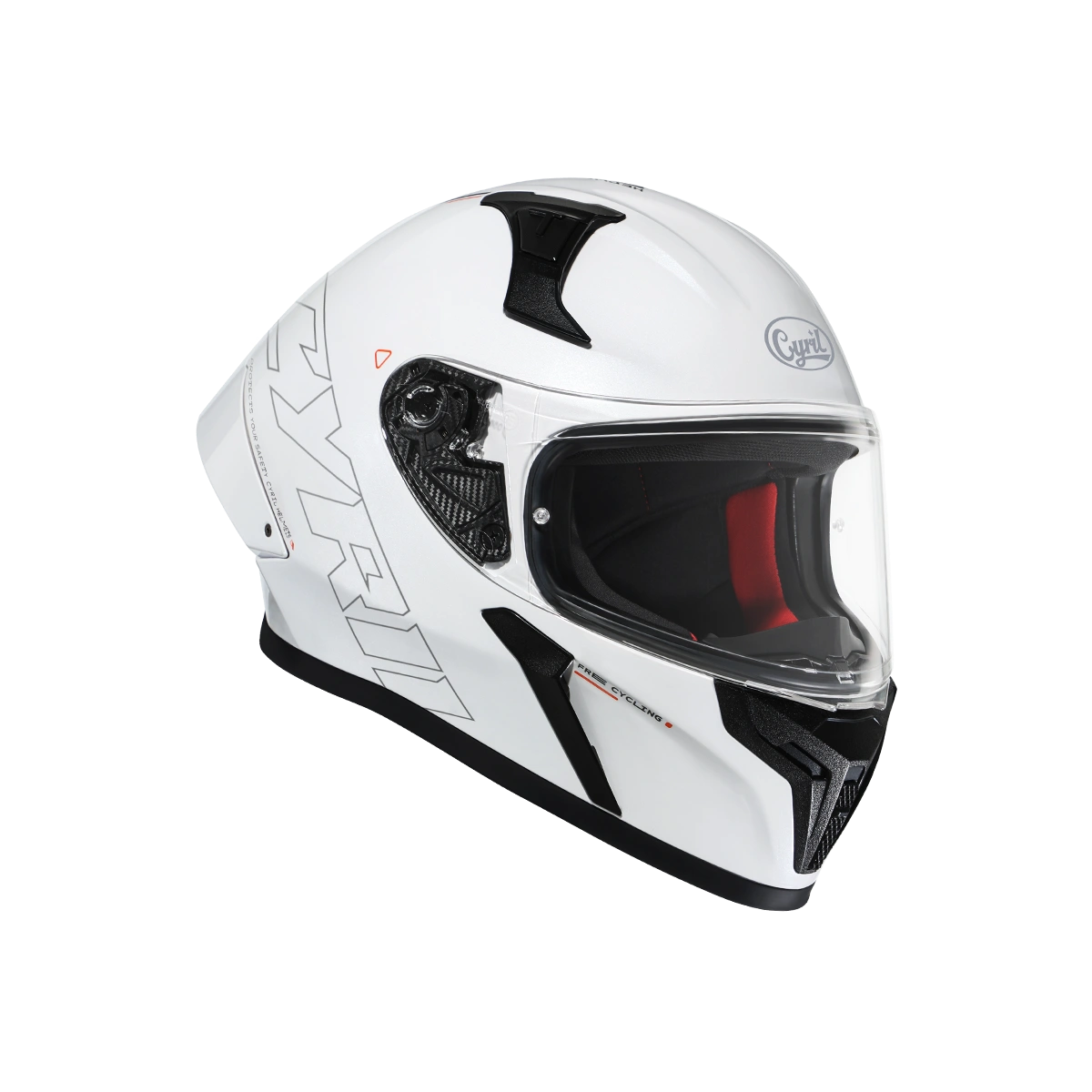
Best for Short-Ride Pressure Checks
The Mad Shark is a full-face helmet with an ABS shell, multi-layer EPS, active ventilation, and a removable washable liner. For commuters with headaches that start within 10-20 minutes, the practical test is whether pressure stays even during a short ride and whether heat or sweat makes one spot worse.
View Mad Shark
Best for Heat and Highway Fit Checks
The R1-PRO carries DOT / FMVSS 218 and ECE 22.06 information with a sport-inspired profile and magnetic visor release. It is worth comparing if your headache appears after highway posture, heat buildup, or repeated visor adjustments rather than immediately during an at-home fit test.
View R1-PRO
Best for Rest-Stop Troubleshooting
The A128 is a dual-visor modular helmet with DOT / FMVSS 218 and ECE 22.06 information, a flip-up chin bar, a clear outer shield, and an inner sun visor. The modular design can make rest-stop checks easier, but any recurring headache still needs fit, strap, posture, hydration, and medical red flags reviewed rather than ignored.
View A128Common Questions About Helmet Headaches
Is it normal for a new helmet to cause headaches?
Mild pressure during the first few rides is normal as liner foam compresses. A headache that builds during the ride and forces you to think about the helmet is not. If the headache starts within ten to fifteen minutes and worsens, the helmet is likely too tight, the wrong shape, or improperly positioned. Most liners compress within ten to twenty hours. If the headache persists beyond that, the problem is fit, not break-in.
How tight should a motorcycle helmet feel?
Snug enough that it does not shift when you shake your head, but not so tight that it causes discomfort within minutes. NHTSA guidance describes it as "snug all around, with no gaps." You should feel even pressure around your entire head, not concentrated on one point. When you try to rotate the helmet with the strap fastened, your skin should move with it. If you need to over-tighten the strap to prevent movement, the helmet is too large.
Can the weight of a helmet cause headaches?
It can. Helmet weight can contribute to neck fatigue, and some riders feel that fatigue as pressure at the base of the skull or upper neck. The effect depends on duration, posture, wind, and rider conditioning more than weight alone. A helmet that feels fine for a fifteen-minute commute may feel tiring after several highway hours. If pain continues after rest or feels unusual, treat it as a health concern, not just a helmet feature issue.
Why does my helmet only give me a headache on long rides?
This pattern points to weight, neck fatigue, or sustained strap tension. Short rides do not give neck muscles enough time to fatigue. The headache typically appears after thirty to sixty minutes and worsens as the ride continues. Wind resistance at speed adds load to your neck. If your helmet feels fine during commutes but causes headaches on weekend rides, the weight is likely mismatched to your longest typical ride.
Can wrong strap tension cause a headache?
Yes, and it is one of the most overlooked causes. A strap that is too tight can push the jaw upward and create soreness around the jaw muscles and joint area. That discomfort can feel like it is coming from inside the helmet when the trigger is actually strap position. Correct tension allows two fingers flat between strap and chin. The strap should sit against the throat, not the point of the chin. If your headache comes with jaw soreness or difficulty opening your mouth fully, check strap fit first and seek medical guidance if symptoms persist.
Should I return a helmet that gives me a headache?
Return it if you have tried reasonable adjustments and the headache persists. Most retailers accept returns within thirty days if the helmet is undamaged. Before returning, verify that the problem is the helmet and not strap tension or positioning. If you have worn it for more than fifteen to twenty hours and the headache has not improved, the helmet will not break in favorably. Returning it and choosing a model that matches your head shape is the practical decision.
Can glasses make helmet headaches worse?
Yes. Glasses temple arms add compression between the liner and your skull. If the helmet is already snug at the temples, the glasses turn snugness into pressure. The effect is worse with thicker temple arms and helmets without glasses channels. If you wear glasses and get temple headaches, try removing them during a short test ride. If the headache disappears, the temple arms are the trigger. Solutions include thinner temple arms, a helmet with glasses channels, or positioning glasses so temples sit above the helmet's pressure band.
How long does it take to break in a new helmet?
Most liners compress enough within ten to twenty hours of wear. This can be accelerated by wearing the helmet around the house for thirty to sixty minutes daily. Break-in relieves general snugness and minor pressure from new foam. It does not fix a helmet that is fundamentally the wrong size or shape. If you still have concentrated pressure points or headaches starting within ten minutes after fifteen to twenty hours of use, the helmet needs replacement, not more time.
Final Notes
A helmet headache is not something you should power through. It is a signal that something about the helmet, the fit, or the setup is working against your body. The good news is that most causes are identifiable and many are fixable. Run through the quick checks, isolate whether the problem is pressure, weight, strap, or shape, and apply the fix that matches your symptom pattern.
If you find yourself loosening the strap at every stoplight, taking the helmet off during fuel stops, or dreading the second half of your ride, those are signs the helmet is the wrong match. The best helmet is the one you forget you are wearing. If yours keeps reminding you, it is time to make a change.