
Why Does My Helmet Press on the Top of My Head?

Why Does My Helmet Press on the Top of My Head?
Pressure on the crown of your head is one of the most specific helmet fit problems a rider can experience. Unlike general tightness, crown pressure is localized, relentless, and often misdiagnosed as a sizing issue when it is actually a shape or shell depth problem. This guide shows you what causes it, how to tell it apart from normal snugness, and what you can do about it.
A helmet pressing on the top of your head usually means one of four things: the crown padding is too thick for your head height, the shell is too shallow, your head shape is taller than the helmet's internal profile, or hair volume is reducing the available vertical space. Crown pressure does not improve with break-in because the shell itself limits how much the liner can compress. If the pressure persists after twenty minutes of wear, the helmet is likely the wrong internal shape or shell depth for your head.
This guide was built from NHTSA motorcycle helmet fit guidance, the public FMVSS 218 motorcycle helmet standard, and official Cyril product pages. Before publication, the article was checked for source-backed fit claims, verified product details, safe wording around liner and padding changes, and clear limits: persistent pain or neurological symptoms should not be treated as a normal helmet fit issue.
Why Helmets Press on the Crown
The crown of your head is the highest point when the helmet sits level. For the helmet to rest securely without pressing, there needs to be enough vertical clearance between the crown padding and the top of your skull. When that clearance is insufficient, the padding presses downward continuously, creating a headache that feels like someone is pushing on the top of your head.
This is different from forehead or temple pressure. Many riders assume the "top of the head" feeling means the helmet is sitting correctly. In reality, a properly fitted helmet should feel supported around the head rather than concentrated at one crown point. The NHTSA guidance on helmet fit describes proper fit as snug around the entire head with no gaps and no excessive pressure on any single point. A helmet that concentrates discomfort on the crown is a sign to reassess shape, size, or liner position.
Crown Gap vs. Crown Pressure: What Is the Difference?
Some riders have the opposite problem: a gap at the crown. Their helmet feels snug at the forehead and temples but floats above the top of their head. Both problems stem from the same mismatch — the helmet's internal vertical profile does not match the rider's head height.
| Symptom | Crown Gap | Crown Pressure |
|---|---|---|
| How it feels | Helmet feels loose on top; you can slide a finger under the liner at the crown | Constant downward pressure on the highest point of the head |
| What causes it | Helmet shell is too deep or crown padding is too thin for the rider's head height | Helmet shell is too shallow or crown padding is too thick |
| Rider head shape | Shorter head profile, flatter crown | Taller head profile, more pronounced crown |
| Fix potential | May improve with thicker crown pads or different liner | Rarely fixable; usually requires a helmet with more shell depth |
A quick test: put the helmet on, fasten the strap, and press gently on the top of the shell. If the helmet rocks forward and backward, you have a crown gap. If the helmet does not move and crown pressure increases, you have crown pressure.
Common Causes of Crown Pressure
Crown pressure is almost always caused by a mismatch between the helmet's internal vertical space and the rider's head height. Here are the specific scenarios that produce it.
Shell Depth Too Shallow
Some helmet models are designed with a shallower internal profile to reduce overall size and weight. Riders with taller head profiles find the crown padding pressing against the top of the skull immediately.
Crown Padding Too Thick
A thick crown pad reduces the vertical clearance inside the shell. Even if the shell itself is deep enough, an overly thick pad can consume the space your head needs.
Hair Volume Reducing Space
Long hair, braids, buns, or thick curly hair adds height that the helmet was not designed to accommodate. The hair compresses somewhat, but not enough to eliminate the pressure.
Another less common cause is wearing the helmet too far forward or backward. A helmet that is tilted back can shift the crown contact point to a more sensitive area of the skull. A helmet that is tilted forward can cause the forehead band to ride high, leaving the crown to absorb more pressure than it should. The MSF guidance on helmet positioning recommends that the front edge of the helmet sit about one finger-width above the eyebrows. If the helmet sits higher, crown pressure is more likely.
Rider Persona: Jake — Tall Crown Profile. Jake has a head shape that is slightly taller than average. He measured his circumference and ordered a medium helmet that matched the chart. The helmet felt snug at the sides and forehead, which he thought was correct. But after twenty minutes of riding, he felt a burning pressure on the top of his head that made him want to take the helmet off at every stoplight. The problem was not the circumference. It was that the helmet's internal shell profile was too shallow for his crown height.
Quick Checks to Diagnose the Problem
Before you blame the helmet, run through these checks to confirm crown pressure is the real issue and not a positioning or strap problem.
- Is the helmet level on your head? The front edge should sit about one finger-width above your eyebrows.
- Can you slide a finger between the crown liner and the top of your head with the helmet on? If not, there is no clearance.
- Does the pressure disappear if you tilt the helmet slightly forward or backward? If yes, positioning is the problem.
- Does the pressure feel worse when you tighten the strap? If yes, the strap may be pulling the helmet downward onto your crown.
- Does removing your hair from under the helmet reduce the pressure? If yes, hair volume is a factor.
- Does the pressure start immediately or after twenty minutes? Immediate pressure means a structural mismatch. Delayed pressure may mean the liner is compressing unevenly.
Rider Persona: Sarah — Hair Volume and Crown Pressure. Sarah wears her hair in a thick braid that adds about two centimeters to her crown height. The size chart said medium for her fifty-seven-centimeter measurement. The helmet felt fine for the first ten minutes, then the braid compressed enough to let the helmet settle, and crown padding began pressing on her skull. She solved it by switching to a low ponytail and a helmet with removable crown padding.
Practical Fixes for Crown Pressure
The fixes depend on what is causing the pressure. Not every cause is fixable, but some are.
| Cause | Fix to Try | Likelihood of Success |
|---|---|---|
| Helmet positioned too high | Adjust helmet position so front edge sits one finger-width above eyebrows | High |
| Strap pulling helmet down | Loosen strap one notch; ensure it sits against throat, not chin point | Moderate to high |
| Crown padding too thick | Check if thinner crown pads are available; some helmets have interchangeable pad sets | Moderate |
| Hair adding crown height | Change hairstyle to reduce volume at the crown; try a low ponytail, thin braid, or skull cap | High |
| Shell too shallow for head profile | Replace the helmet with a model known for deeper internal profile | Only reliable fix |
For crown padding that is too thick, some manufacturers offer approved liner kits with different pad thicknesses. A thinner crown pad may add a small amount of vertical clearance, but only use parts and instructions approved for that helmet model. If your helmet does not have approved removable crown pads, your options are limited. You cannot safely cut or thin the padding yourself without affecting fit and potentially affecting the helmet's protective structure.
Rider Persona: Mike — Online Return After Diagnosis. Mike ordered a medium helmet based on his fifty-eight-centimeter measurement. After three rides, he realized the pressure was not general tightness but a single burning point on his crown. The helmet was level, the strap was correct, and his hair was short. The problem was the shell profile. He returned it and found a model with a deeper internal shape. The new helmet distributed pressure around his head instead of concentrating it on top.
When Crown Pressure Means Wrong Helmet
Some crown pressure problems cannot be fixed with adjustment, pad swaps, or hairstyle changes. These signs indicate the helmet itself is structurally mismatched to your head.
- The pressure starts within the first five minutes of every ride, without exception.
- You have tried adjusting position, strap tension, and pad thickness with no improvement.
- You have short hair or no hair, so hair volume is not a factor.
- The helmet fits well at the forehead, temples, and cheeks but presses relentlessly on the crown.
- You feel a burning or "hot spot" sensation at the crown rather than general pressure.
- Other helmets of the same size from different brands do not cause the same problem.
If four or more of these apply, the helmet's internal vertical profile is simply wrong for your head shape. Crown pressure from shell depth mismatch is one of the least fixable helmet fit problems because the shell itself cannot be modified. The practical solution is replacement with a model that has a deeper internal profile or one designed for taller head shapes.
When shopping for a replacement, look for product pages that mention internal head shape or shell depth. Contact support and ask specifically about crown clearance for riders with taller head profiles. A brand that cannot answer that question may not have the product knowledge you need for a confident purchase.
If crown pressure has been your problem, prioritize helmet models with deeper internal profiles or adjustable crown padding. Ask support specifically about crown clearance before ordering. If you have thick or long hair, factor in the extra height when choosing size. The right helmet feels supported around the head, not focused on one single point at the top.
Helmets for Riders With Crown Fit Concerns
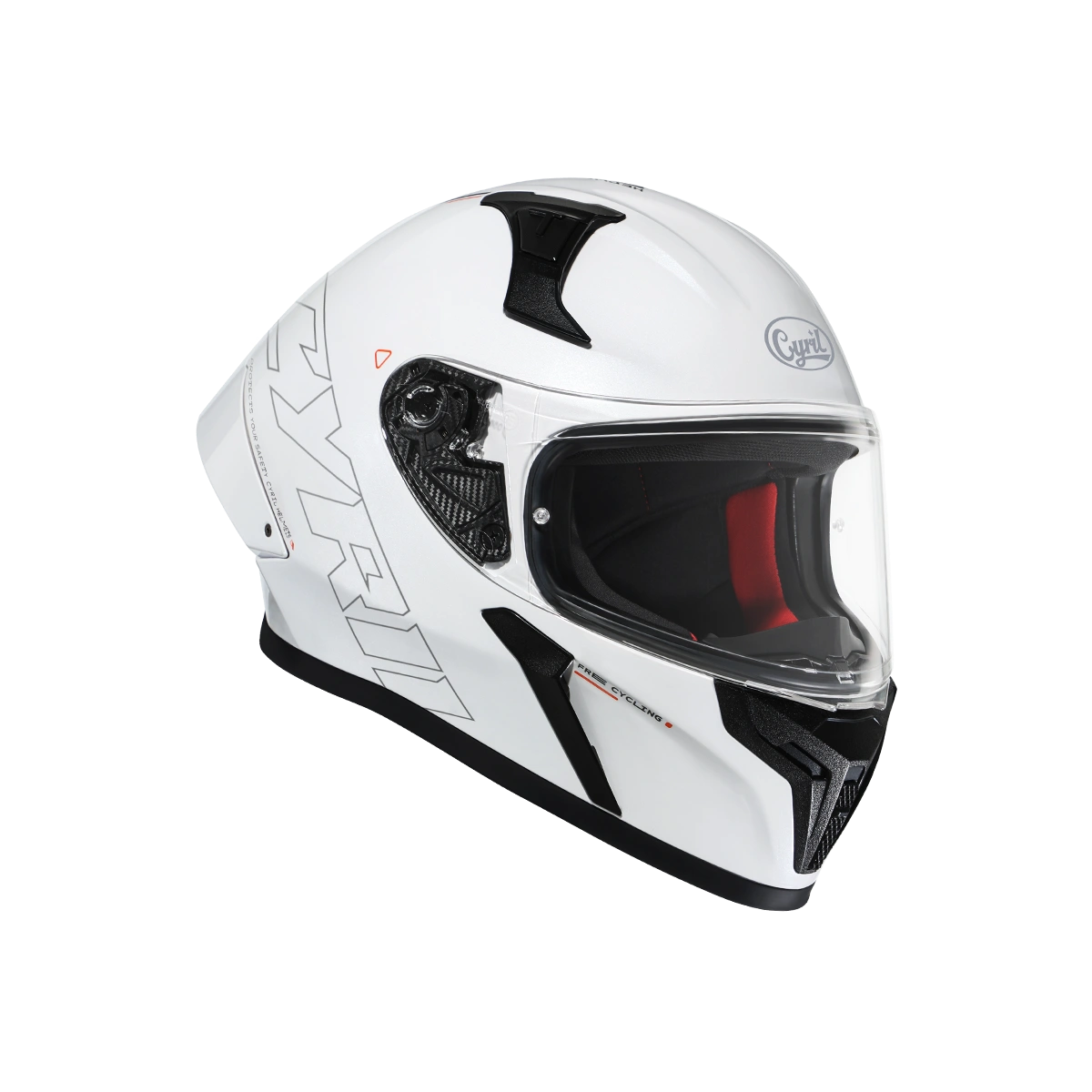
Best for Commuters Checking Crown Marks
The Mad Shark is a full-face helmet with DOT / FMVSS 218 information and a removable washable liner. For riders diagnosing crown pressure, the useful step is inspecting the liner position and pressure mark after a short commute, then asking support about approved fit options if the same crown spot keeps hurting.
View Mad Shark
Best for Crown Pressure in Riding Posture
The R1-PRO carries DOT / FMVSS 218 and ECE 22.06 information with a sport-inspired profile and removable liner. Riders should test whether crown pressure appears only when they lean forward; if it does, posture and shell profile both need to be evaluated before keeping the helmet.
View R1-PRO
Best for Long-Ride Stop Checks
The A128 is a dual-visor modular helmet with DOT / FMVSS 218 and ECE 22.06 information, a flip-up chin bar, and a removable liner. For riders who notice crown pressure only on longer rides, the modular design can make rest-stop checks easier, but recurring crown pain still means fit and shell depth need to be reassessed.
View A128Common Questions About Crown Pressure
Is it normal for a helmet to press on the top of my head?
No. A properly fitted helmet should feel supported around the sides, brow band, and back of the head. The crown should have minimal downward pressure. If you feel concentrated pressure on the top of your head, the helmet's internal vertical profile is likely mismatched to your head shape.
Will crown pressure go away after break-in?
Unlikely. Crown pressure is caused by insufficient vertical clearance inside the shell. Liner foam compresses horizontally around the circumference of your head, but the crown pad has limited room to compress vertically because the shell itself is a fixed barrier. If the pressure is immediate and sharp, break-in will not solve it. If the pressure is mild and appears only after extended wear, a thin pad swap might help.
Can I fix crown pressure by buying a larger size?
Not reliably. A larger size increases circumference, not necessarily crown depth. If your head is the correct circumference for the helmet but too tall for the shell profile, sizing up may make the helmet loose at the sides without fixing the crown pressure. The solution is a helmet with a deeper internal profile, not just a larger size in the same model.
Does hair affect crown pressure?
Yes. Thick, long, or styled hair adds height at the crown. Braids and buns can add two centimeters or more. When you put the helmet on, the hair compresses slightly but often not enough to eliminate the pressure. Riders with voluminous hair may need to size up or choose a helmet with more internal depth. Switching to a lower-profile hairstyle can also help.
How do I know if my helmet is too shallow for my head?
Wear the helmet level with the front edge one finger-width above your eyebrows. Fasten the strap normally. If you feel immediate downward pressure on the crown and cannot slide a finger between the liner and the top of your head, the shell is too shallow. Another test: tilt the helmet slightly forward. If the crown pressure decreases but forehead pressure increases, the shell depth is the limiting factor.
Can I remove or thin the crown padding myself?
No. Crown padding is part of the helmet's impact absorption system. Modifying it yourself compromises the helmet's protective ability and may void any warranty. If the crown pad is too thick, check whether the manufacturer offers replacement pads in different thicknesses. If not, the helmet is not adjustable enough for your needs and should be replaced.
Why does my helmet only hurt at the crown on long rides?
On short rides, the crown pad may compress just enough to feel tolerable. On long rides, the sustained pressure causes localized tissue compression and the sensation intensifies. Sweat can also reduce the pad's ability to distribute pressure evenly. If crown pain appears after thirty to sixty minutes but not immediately, a thinner pad or a helmet with more clearance may solve it.
What should I look for when buying a helmet to avoid crown pressure?
Look for product pages that mention internal head shape or shell depth. Contact support and ask specifically about crown clearance for riders with taller head profiles. Try the helmet on for at least twenty minutes before committing. If you feel crown pressure during the test wear, return it within the window. Do not assume the problem will resolve with break-in.
Final Notes
Crown pressure is one of the most specific and least forgiving helmet fit problems. Unlike general snugness that may improve with break-in, crown pressure is usually structural. The shell itself limits how much the liner can compress vertically, and no amount of patience will change the shell's shape.
If you have tried adjusting position, strap tension, and pad thickness and the crown pressure persists, the helmet is the wrong model for your head. Return it if you are within the window, and use what you have learned to choose a helmet with a deeper internal profile. The helmet that fits your head correctly is the one you will actually wear every time you ride.