
Why Does My Helmet Hurt More When I Wear Glasses?

Why Does My Helmet Hurt More When I Wear Glasses?
Wearing glasses with a motorcycle helmet should not be a choice between clear vision and comfort. If your helmet hurts more when you wear glasses, the problem is usually temple arm pressure, glasses position, or a helmet without adequate glasses channels. This guide shows you how to fix it.
Glasses make helmet discomfort worse when the temple arms add compression at the sides of your head, the glasses sit at the wrong angle under the helmet, or the helmet liner lacks glasses channels. Solutions include adjusting glasses position, choosing thinner temple arms, using a helmet with dedicated glasses channels, or switching to contact lenses for riding.
This guide was reviewed using NHTSA motorcycle helmet fit guidance, general rider training resources from MSF, and official Cyril product information. The edit focused on real glasses-fit scenarios, avoiding unsupported claims about specific liner channels, and keeping product advice tied to fit testing with the rider's actual frames.
Temple Arm Pressure
The most common cause of glasses-related helmet pain is temple arm compression. Glasses temple arms add a rigid layer between the helmet liner and your skull. When the helmet is already snug at the temples, the glasses turn snugness into pressure.
The pressure is worse with thick temple arms. Fashion frames, acetate frames, and frames with spring hinges often have thick arms that do not compress. Thin metal temple arms create less bulk and less pressure.

The pain usually appears at the temples and radiates toward the forehead or ears. It builds over time — ten minutes may feel fine, but an hour becomes uncomfortable. Removing the glasses during a fuel stop often brings immediate relief, which confirms the temple arms are the cause.
Rider Persona: Jake — Thick Frames and Temple Pain. Jake wears thick acetate frames with wide temple arms. His helmet felt fine without glasses but caused a sharp pressure at both temples when he wore them. After thirty minutes of riding, the pain made him consider pulling over. Switching to thin metal frames eliminated the problem without changing helmets.
Glasses Position Under the Helmet
How you put your glasses on relative to the helmet matters. Most riders put the helmet on first, then slide the glasses in through the visor opening. This pushes the glasses upward, compressing the temple arms against the liner.
A better method: put the glasses on first, then pull the helmet over them. The helmet liner settles around the glasses naturally, and the temple arms find their own space. This works best with helmets that have glasses channels or flexible liner padding.

Some riders find that positioning the temple arms above the helmet's primary pressure band helps. Instead of letting the arms sit where the helmet naturally grips, slide them slightly higher on the temple. This moves them out of the main compression zone.
Helmet Design and Glasses Channels
Some helmets are designed with glasses channels — recessed grooves in the liner foam that accommodate temple arms. These channels create space for the arms without adding pressure to the sides of your head. Not all helmets have them, and the quality varies.

A helmet with well-designed glasses channels has:
- Recessed grooves in the temple area of the liner.
- Flexible foam that compresses around the arms without creating pressure points.
- Smooth liner fabric that allows the arms to slide during helmet installation.
- Enough internal width that the arms do not force the liner outward.
If your helmet does not have glasses channels, the liner foam presses directly on the temple arms, which press on your skull. This is not a defect — it is a design limitation. Riders who wear glasses regularly should prioritize helmets with glasses-friendly liner design.
Rider Persona: Sarah — Glasses Channels Made the Difference. Sarah tried three helmets before finding one with proper glasses channels. The first two caused temple pain within twenty minutes. The third had recessed grooves in the liner that her temple arms settled into naturally. She now rides for hours with no discomfort.
Frame Types That Work Best
Not all glasses frames are equal under a helmet. The best frames for motorcycling share these characteristics:
- Thin metal or flexible temple arms that do not add bulk.
- Arms that curve gently around the ear without protruding outward.
- Lightweight frames that do not slide down your nose when the helmet presses on them.
- Non-slip nose pads that keep the glasses in position despite helmet pressure and vibration.
Frames to avoid:
- Thick acetate or plastic temple arms that add significant bulk.
- Wide frames that extend beyond the natural width of your face.
- Heavy frames that slide down your nose when the helmet pushes on them.
- Frames with decorative elements on the temple arms that create pressure points.
Quick Checks to Reduce Pain
| Problem | Check | Quick Fix |
|---|---|---|
| Temple pressure | Remove glasses during a short ride | If pain disappears, temple arms are the cause — try thinner frames |
| Glasses sliding down | Check nose pad grip after helmet installation | Adjust nose pads or add non-slip pads |
| Helmet feels tight only with glasses | Compare fit with and without glasses | Look for helmets with glasses channels |
| Pressure at ears | Check if temple arms sit on top of ears | Adjust arm position or switch to curved sport temples |
| General discomfort | Try putting glasses on before the helmet | This changes how the liner settles around the arms |

Practical Solutions
- Switch to thinner frames. The simplest and most effective solution is reducing temple arm bulk.
- Use a helmet with glasses channels. Look for product pages that mention glasses compatibility or try the helmet on with your glasses before buying.
- Put glasses on first. This allows the helmet liner to settle around the arms rather than compressing them.
- Consider contact lenses. For riders who can wear them, contact lenses remove temple-arm pressure from the helmet fit equation.
- Use anti-fog treatment. If you keep your visor closed to protect your glasses from wind, fogging becomes a problem. Use anti-fog spray or a Pinlock insert.
Rider Persona: Mike — Contacts Solved Everything. Mike tried three different frame styles and two helmets. Every combination caused some level of temple pressure or glasses movement. He switched to daily disposable contact lenses for riding and the problem disappeared. He still wears glasses off the bike, but contacts make his rides comfortable and distraction-free.
If you wear glasses and helmet pain has been your problem, prioritize helmets with glasses channels and thin, flexible temple arms. Try the helmet on with your actual riding glasses before buying. A helmet that fits without glasses but hurts with them is not the right helmet for you.
Helmets for Glasses Wearers
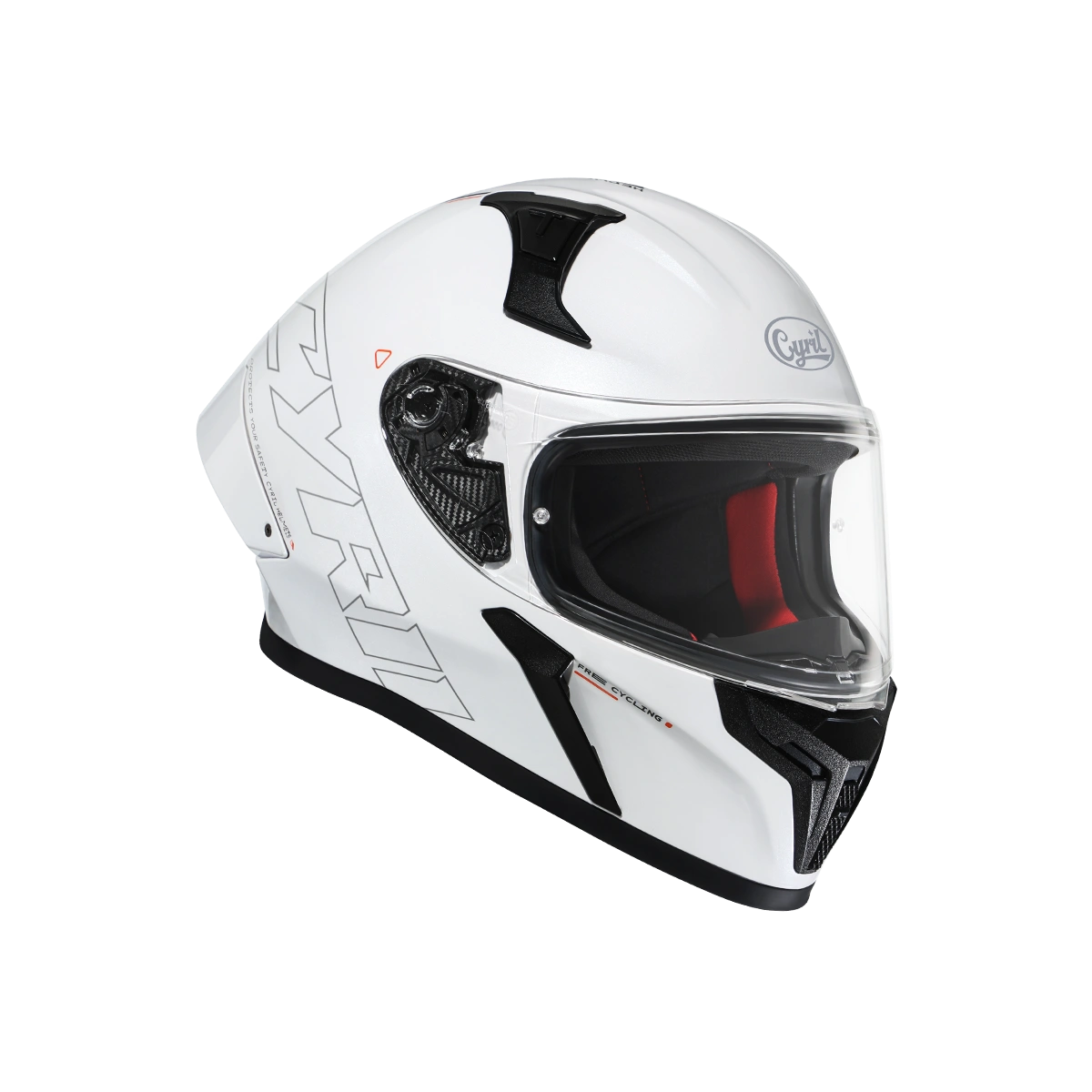
Best for Daily Commuters
For glasses wearers, the Mad Shark should be judged with the actual frames you ride in. It is a full-face helmet with DOT / FMVSS 218 information and a removable washable liner, but the key test is whether the temple arms create pressure after ten to fifteen minutes.
View Mad Shark
Best for Sport Riders
The R1-PRO is a full-face, sport-profile option with DOT / FMVSS 218 and ECE 22.06 information. Riders who wear glasses should test both temple pressure and visor fogging during an indoor fit session before assuming the setup will work on longer rides.
View R1-PRO
Common Questions About Glasses and Helmets
Should I put my glasses on before or after my helmet?
Try both and see what works for your helmet and glasses. Putting glasses on first often works better because the helmet liner settles around the temple arms. Putting the helmet on first and then sliding glasses in can push the arms upward into the compression zone.
Can I wear any glasses with a motorcycle helmet?
Technically yes, but comfort varies significantly. Thin metal frames with flexible temple arms work best. Thick plastic frames create more pressure. The helmet design also matters — helmets with glasses channels accommodate frames more comfortably than those without.
Why do my glasses fog up inside my helmet?
Your breath exits upward toward the visor. With the visor closed, warm moist air gets trapped and condenses on the cooler glass lenses. Solutions include anti-fog spray, a Pinlock insert on the visor, keeping the visor cracked open slightly, or using contact lenses.
Will a larger helmet help with glasses comfort?
Not reliably. A larger helmet may reduce temple pressure but creates other problems like instability and reduced protection. The better solution is a helmet designed with glasses channels or switching to thinner frames. Sizing up should be a last resort.
Are there motorcycle-specific glasses?
Yes. Some manufacturers make glasses specifically designed for helmet use, with thin flexible temple arms, curved sport temples, and impact-resistant lenses. These can be more comfortable than standard prescription frames but require a separate prescription.
Can sunglasses be worn under a helmet?
Yes, with the same considerations as prescription glasses. Sunglasses with thin temple arms work best. Large aviator-style or oversized sunglasses may not fit comfortably. Some riders prefer helmets with integrated sun visors to avoid wearing sunglasses underneath.
What if I need prescription glasses but contacts are not an option?
Choose thin, flexible frames and a helmet with glasses channels. Try multiple helmet models with your actual glasses before buying. Some riders find that adjusting the temple arm position — slightly higher or lower than usual — reduces pressure significantly.
How do I test glasses compatibility before buying a helmet?
Bring your riding glasses to the store or wear them when your helmet arrives. Put the helmet on with the glasses, fasten the strap, and wear it for ten to fifteen minutes. Check for temple pressure, glasses movement, and whether you can see clearly without adjusting the frames. If any of these are problematic, try a different helmet model.
Final Notes
Wearing glasses with a motorcycle helmet does not have to be uncomfortable. The combination of the right frame design, proper glasses position, and a helmet with glasses-friendly features can make the experience as comfortable as riding without glasses. Do not accept temple pain or fogging as inevitable. Test, adjust, and if necessary, switch equipment until you find a combination that works.