
Why Does My Helmet Touch My Nose or Face Shield Area?

Why Does My Helmet Touch My Nose or Face Shield Area?
A helmet that touches your nose or presses on the face shield area is not just uncomfortable. It distracts you while riding, limits your ability to breathe freely, and signals that the helmet's fit or positioning is wrong. This guide explains why it happens and what you can do about it.
A helmet touching your nose usually means the helmet sits too low, the chin bar is too close, the helmet is too large and slides forward, or your face shape is longer than the helmet's internal profile. The fix may be as simple as repositioning the helmet higher on your head. In some cases, the helmet model itself does not match your face length.
This guide was checked against NHTSA motorcycle helmet fit guidance, rider training resources from MSF, and official Cyril product information. Editorial review focused on practical position checks, verified product details, and clear limits: nose contact can signal poor fit, but this article does not make medical or crash-performance claims.
Helmet Position: The Most Common Cause
The most common reason a helmet touches your nose is that it is sitting too low on your head. When the helmet drops below its proper position, the nose guard or chin bar rides up toward your face. The nose contact is a symptom of poor vertical placement, not necessarily a helmet defect.
A properly positioned helmet sits with its front edge about one finger-width above your eyebrows. If the helmet sits lower, your nose will touch the inner padding or the chin bar. The MSF guidance on helmet positioning confirms this placement standard: the helmet should sit level, with the front edge just above the brow line.

Riders often push the helmet down during installation, pulling it low to feel secure. This is especially common with new riders who associate tightness with safety. The result is a helmet that feels stable but presses on the nose.
Rider Persona: Jake — Pushed It Too Low. Jake puts his helmet on by forcing it straight down over his head. He feels the top of the helmet grip his crown and assumes that means a good fit. But the front edge sits half an inch below his eyebrows, and the nose guard presses against the tip of his nose. When he raises the helmet slightly, the nose contact disappears and the fit becomes more comfortable.
When the Chin Bar Is Too Close
Some helmet models are designed with a compact chin bar area for aerodynamics or weight reduction. Riders with longer faces or more prominent noses find the chin bar sits uncomfortably close. This is a design mismatch, not a sizing error.
Signs that the chin bar is the problem:
- Your nose touches the inside of the chin bar even when the helmet is correctly positioned.
- The helmet feels fine at the sides and crown but the front area is cramped.
- You cannot take a deep breath through your nose without the helmet restricting airflow.
- The problem persists across multiple sizes of the same model.
If the chin bar is too close, no amount of repositioning will fix it. The solution is a different helmet model with more front-to-back clearance.

Helmet Too Large: Sliding Forward
A helmet that is too large slides forward during riding, especially under wind pressure or when you look down. As the helmet shifts forward, the chin bar moves toward your face. What starts as a comfortable fit at a standstill becomes nose contact at highway speeds.
This is more than a comfort problem. A helmet that slides forward is not staying in the position it was designed to hold, so treat nose contact from forward movement as a fit warning, not a minor annoyance. The NHTSA guidance on helmet fit emphasizes that a helmet should not shift when the strap is fastened.
A quick test: fasten the strap, place your hands on the sides of the helmet, and try to push it forward. If it shifts enough to touch your nose or cover your brow, it is too loose or sitting incorrectly. The nose contact is a secondary symptom of a primary safety problem.

Rider Persona: Sarah — Sizing Up to Be Safe. Sarah ordered a large helmet because she thought a bigger helmet would be safer and more comfortable. At slow speeds it felt fine. At highway speeds, wind pressure pushed the helmet forward until the chin bar touched her nose. She realized a large was too big and exchanged it for a medium with a snugger fit that stayed in place.
Face Shape vs. Helmet Interior Profile
Helmet interiors are designed around average face dimensions. Riders with longer faces, prominent noses, or higher nasal bridges may find that standard helmets do not provide enough front-to-back clearance.
This is a shape mismatch, not a size problem. A rider with a long face may have the correct circumference but still find the interior too shallow from front to back. If you have tried multiple sizes of the same model and the nose contact persists, the model's interior profile does not match your face length.
Some manufacturers offer models with different internal shapes. Look for product pages that mention "long oval" or "intermediate oval" interior profiles. A long oval interior provides more front-to-back space, which can eliminate nose contact for riders with longer faces.
Quick Checks to Diagnose the Problem
- Is the helmet level? The front edge should sit one finger-width above your eyebrows.
- Does the helmet shift forward when you push it? If yes, it is too large.
- Does the nose touch only when you look down? If yes, the helmet is sliding forward.
- Does the nose touch even with correct positioning? If yes, the chin bar is too close.
- Does the problem persist across different sizes of the same model? If yes, it is a face shape mismatch.
A quick way to separate position from fit: put the helmet on correctly, then consciously tilt it back half an inch. If nose contact disappears, the helmet was sitting too low. If contact remains, the chin bar is too close for your face.

Fixes to Try
- Reposition the helmet. Lift it slightly so the front edge sits at the correct height above your eyebrows.
- Check strap tension. An overly tight strap can pull the helmet downward. Two fingers flat between strap and chin.
- Verify size. If the helmet slides forward, try a smaller size or a model with a more secure fit.
- Try a different model. If the chin bar is too close across multiple sizes, look for a helmet with more front-to-back clearance.
Rider Persona: Mike — Model Swap Fixed It. Mike tried three sizes of the same popular helmet model. Every size caused nose contact even with correct positioning. He switched to a different brand with a longer internal profile and the problem disappeared. The first model's compact design was incompatible with his face length.
If nose contact has been your problem, prioritize helmets with adjustable padding or longer internal profiles. Try the helmet on for at least ten minutes, including looking down and moving your head. A helmet that touches your nose during a test ride will only get worse on the road.
Helmets With Comfortable Front Clearance
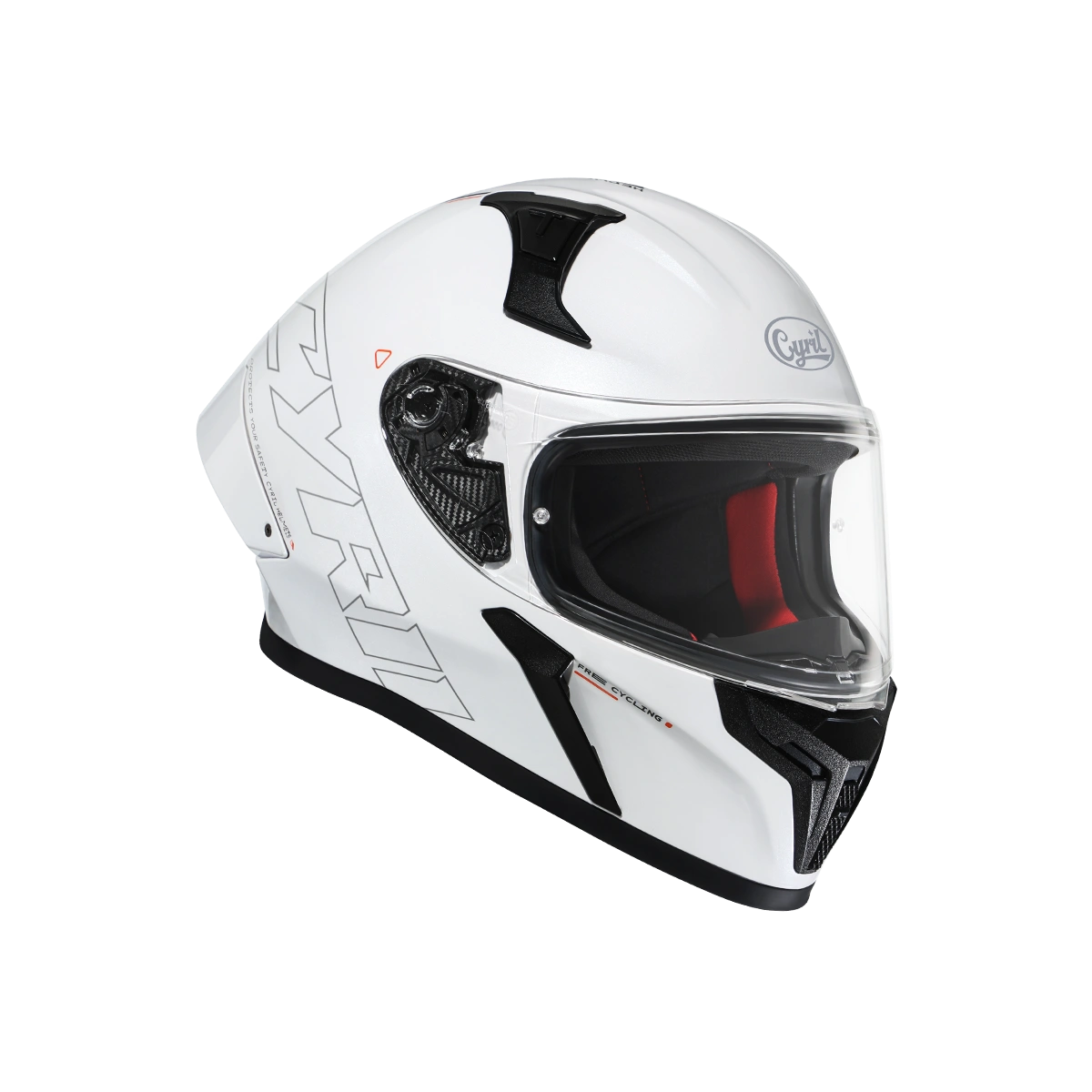
Best for Daily Commuters
Use the Mad Shark as a straightforward full-face fit test: DOT / FMVSS 218 information, a removable washable liner, and no reason to skip the basics. Put it on level, fasten the strap, and test whether the front edge stays one finger-width above the eyebrows before you decide to keep it.
View Mad Shark
Best for Sport Riders
The R1-PRO fits riders comparing full-face options with DOT / FMVSS 218 and ECE 22.06 information, a sport-inspired profile, and magnetic visor release. Because sport profiles can feel different at the chin bar, test nose clearance while looking down and turning your head.
View R1-PRO
Common Questions About Nose Contact
Is it normal for a helmet to touch my nose?
No. A properly fitted helmet should not touch your nose or restrict nasal breathing. If contact occurs, the helmet is sitting too low, is too large, or the chin bar is too close for your face shape.
Should I size up if my helmet touches my nose?
Usually not. Sizing up makes the helmet looser, which can cause it to slide forward and make nose contact worse. First check positioning. If the helmet is correctly positioned and still touches, the model may be incompatible with your face length.
Can raising the helmet fix nose contact?
Often yes. Many riders install the helmet too low. Raising it so the front edge sits one finger-width above the eyebrows can eliminate nose contact immediately. Try this before assuming the helmet is wrong.
Why does my helmet only touch my nose at high speeds?
Wind pressure can push a loose helmet forward. If the helmet is too large or the strap is loose, the chin bar moves toward your face as speed increases. This points to a fit issue beyond simple comfort.
Does a longer face need a special helmet?
Yes. Riders with longer faces may need a helmet with a "long oval" internal profile, which provides more front-to-back space. Standard intermediate oval helmets may not provide enough clearance. Contact support and ask about models designed for longer face shapes.
Can a modular helmet help with nose contact?
Partially. A modular helmet allows you to lift the chin bar at stops for relief. However, the chin bar must still be comfortable in the closed position for riding safety. Do not choose a modular helmet solely to avoid fixing a fit problem.
How do I test for nose clearance before buying?
Put the helmet on correctly, fasten the strap, and sit still for five minutes. Breathe through your nose normally. Look down as if checking your instruments. If your nose touches the helmet at any point, the fit is wrong. Try a different size or model.
Will a breath guard or chin curtain help?
A breath guard may slightly change airflow but will not fix a helmet that is too close to your nose. If the helmet is correctly positioned and the right model for your face, a breath guard can improve comfort. It cannot compensate for a fundamentally wrong fit.
Final Notes
A helmet touching your nose is a signal that something is wrong with fit, position, or model selection. Do not ignore it. Check positioning first, then size, then model compatibility. The helmet that fits your face correctly allows you to breathe, see, and focus on the road without thinking about your nose.