
Why Does My Helmet Make My Jaw Feel Sore?

Why Does My Helmet Make My Jaw Feel Sore?
Jaw soreness from a motorcycle helmet is not a minor inconvenience. It makes eating uncomfortable, talking difficult, and long rides unpleasant. The cause is usually the chin strap, the chin bar position, cheek pad pressure, or a helmet that is simply too small. This guide shows you how to identify the cause and what to do about it.
Helmet-related jaw soreness is usually caused by one of four things: a chin strap that is too tight or positioned wrong, a chin bar that sits too close to your face, cheek pads that compress your jaw from the sides, or a helmet that is too small and forces your jaw into an uncomfortable position. Most cases are fixable with strap adjustment, pad swaps, or helmet repositioning. Some require a different helmet size or model.
For this jaw-comfort topic, the editorial review used NHTSA motorcycle helmet fit guidance, rider training resources from MSF, and official Cyril product information. The final copy focuses on practical fit checks, cautious wording around jaw discomfort, and avoiding claims that any helmet can diagnose or treat a jaw problem.
Chin Strap: The Most Common Cause
The chin strap is one of the most common causes of jaw soreness. When it is too tight, it can push the jaw upward or backward and make the muscles around the jaw work harder than they should. This creates a dull ache that many riders mistake for a fit problem inside the helmet.
Strap position matters as much as tension. A strap that sits on the point of your chin can push the jaw backward. A strap that sits below the chin point, closer to the throat area, usually feels more natural and allows easier jaw movement. Use MSF rider training resources as general fit context, then follow the fastening instructions for your specific helmet.
Correct strap tension allows two fingers to fit flat between the strap and your chin. You should be able to open your mouth for a yawn without the strap digging in. If you cannot, the strap is too tight regardless of how secure the helmet feels.

Rider Persona: Jake — Over-Tightened Strap. Jake noticed his helmet felt loose when he shook his head, so he tightened the chin strap an extra notch. After thirty minutes of riding, his jaw ached and he had trouble opening his mouth fully at fuel stops. He assumed the helmet was too small. In reality, the strap was compressing his jaw to compensate for a slightly loose fit. A smaller helmet with proper strap tension fixed both problems.
When the Chin Bar Sits Too Close
The chin bar is the lower front edge of a full-face or modular helmet. It should sit close enough to protect your chin in an impact but not so close that it presses against your chin or restricts jaw movement. When the chin bar is too close, every bump in the road transfers pressure to your jaw.
Signs that the chin bar is too close:
- Your chin touches the inside of the chin bar when your mouth is closed.
- You cannot open your mouth wide enough to take a drink without the chin bar blocking you.
- The soreness is centered on the front of your jaw, not the sides or temples.
- The discomfort worsens on rough roads or when the helmet bounces.
Chin bar proximity is determined by shell design, not adjustment. Some helmet models have a more compact chin bar area for aerodynamics. Riders with prominent chins or larger jaw structures may find these models uncomfortable. The solution is usually a different helmet model with more chin clearance.

Cheek Pad Pressure on the Jaw
Cheek pads press against the sides of your face to stabilize the helmet. When they are too thick, they compress the masseter muscles — the muscles you use to chew — and force your jaw into a slightly clenched position. Over time, this creates soreness that feels like you have been chewing gum for hours.
A quick test: put the helmet on, fasten the strap, and try to slide your jaw side to side. If the cheek pads block the movement or you feel resistance, they are too thick for your face width. If your jaw moves freely but the helmet shifts, the pads may be too thin.

Riders who clench their teeth while riding feel this pressure more. The clenching combines with cheek pad compression to overwork the jaw muscles. If you notice yourself clenching at stoplights or during stressful traffic, that habit is amplifying whatever pressure the helmet is already applying.
Rider Persona: Sarah — Clencher With Thick Cheek Pads. Sarah commutes in heavy traffic and clenches her jaw without realizing it. Her helmet's thick cheek pads already compressed her jaw slightly. The combination of pad pressure and clenching left her with jaw soreness that lasted into the evening. She switched to thinner cheek pads, which reduced the baseline pressure enough that her clenching habit no longer caused lasting soreness.
Helmet Too Small: The Whole-Picture Problem
When a helmet is too small, the jaw soreness is not isolated. It comes with other symptoms that together paint a clear picture of a size mismatch.
- Pressure at the forehead, temples, and cheeks simultaneously.
- Difficulty getting the helmet on or off — your face does not fit through the opening comfortably.
- The helmet leaves deep red marks that persist for over an hour after removal.
- Numbness in the cheeks, lips, or jaw during or after riding.
- Headaches that start within the first ten minutes of every ride.
If three or more of these apply, the helmet is too small. Jaw soreness in this context is a symptom of the entire shell pressing inward. No amount of strap adjustment or pad modification will make the helmet fit. The solution is a larger size or a different model with a wider internal profile.
Quick Checks to Find the Cause
Run through these checks in order to isolate the cause of your jaw soreness.
| Check | What to Do | What It Tells You |
|---|---|---|
| Strap tension test | Loosen strap one notch and ride for 10 minutes | If soreness lessens, the strap was the cause |
| Strap position test | Move strap from chin point to throat area | If soreness shifts or decreases, position was wrong |
| Chin bar clearance test | Close mouth and note if chin touches the bar | If contact exists, the chin bar is too close |
| Cheek pad test | Try sliding jaw side to side with helmet on | If blocked, pads are too thick for your face width |
| Overall fit test | Check for forehead, temple, and cheek pressure simultaneously | If pressure is everywhere, the helmet is too small |
Fixes to Try Before Returning
If your jaw soreness is caused by adjustment rather than size mismatch, these fixes may solve it.

- Adjust strap tension. Two fingers flat between strap and chin. Open your mouth fully without resistance.
- Reposition the strap. Move it from the chin point to the throat area. The strap should sit below your jaw, not on it.
- Swap cheek pads. If thinner pads are available, they can reduce side pressure enough to eliminate jaw soreness.
- Check helmet position. A helmet that sits too low can push the chin bar against your jaw. Raise it so the front edge sits one finger-width above your eyebrows.
- Notice clenching. If you clench your teeth while riding, consciously relax your jaw at stoplights. This reduces muscle fatigue.
Rider Persona: Mike — Repositioning Solved It. Mike's jaw ached after every ride. He checked the strap tension: fine. Cheek pads: comfortable. Chin bar: not touching. Then he noticed his helmet sat slightly low on his forehead. He raised it one finger-width higher and the jaw soreness disappeared. The low position had shifted the chin bar upward against his jaw without him realizing it.
If none of these fixes help, and the soreness starts within the first ten minutes of every ride, the helmet is likely the wrong size or model for your face structure. Return it within the window and use what you learned to choose a helmet with more jaw clearance or a wider internal profile.
Use your jaw soreness experience as a filter. If the strap was the problem, pay attention to strap routing and chin cup design when shopping. If the chin bar was too close, look for models with more front-to-back clearance. If cheek pads were too thick, prioritize helmets with multiple pad thickness options. The right helmet lets you open your mouth, move your jaw, and speak without thinking about it.
Helmets With Comfortable Jaw Clearance
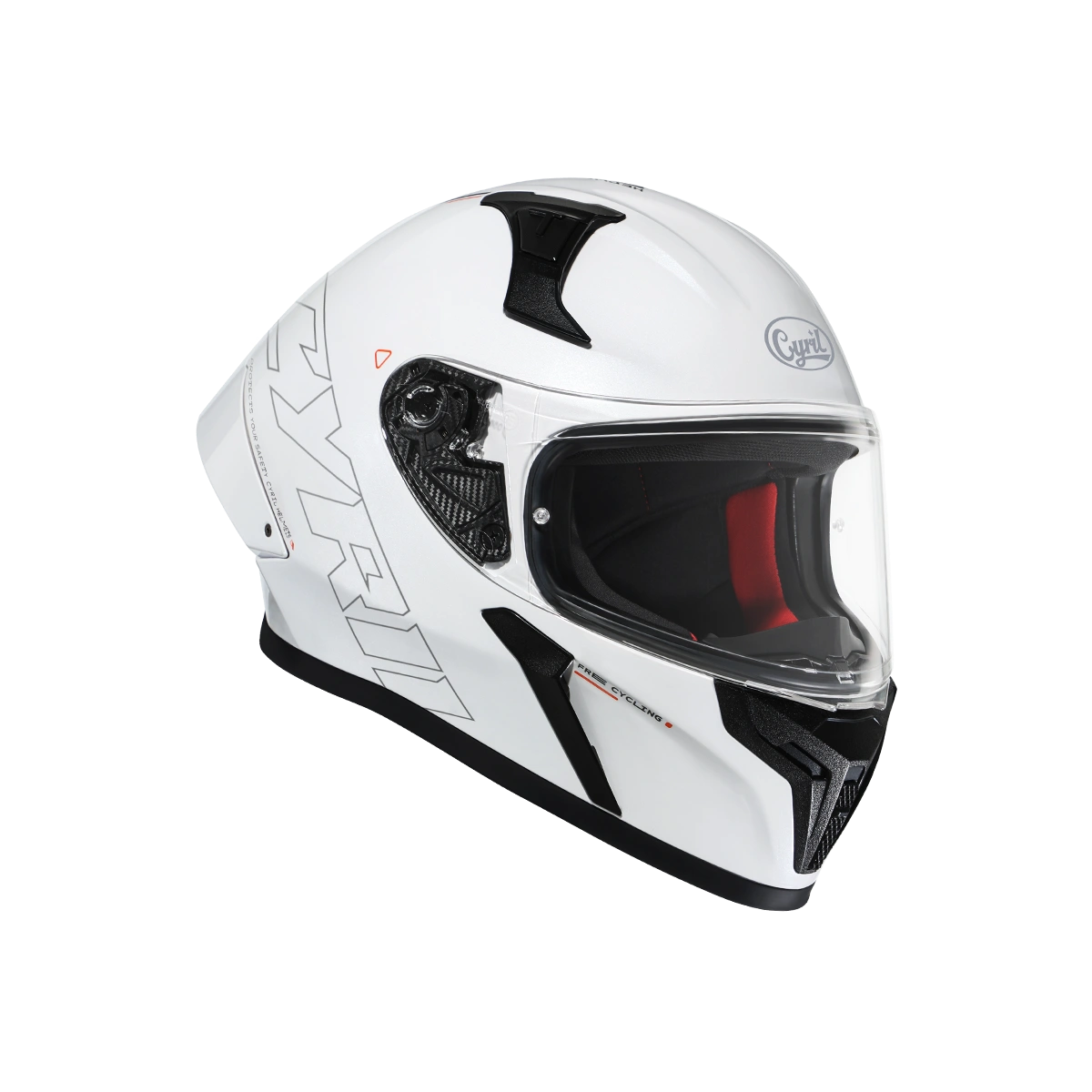
Best for Daily Commuters
The Mad Shark is a full-face commuting helmet with DOT / FMVSS 218 information and removable washable interior parts. If jaw pressure appears during the first indoor wear test, note whether it comes from the strap, cheek area, or chin bar before asking support about next steps.
View Mad Shark
Best for Sport Riders
The R1-PRO is the sport-profile option for riders who want DOT / FMVSS 218 and ECE 22.06 information in a full-face helmet. Use the ten-minute jaw movement test before keeping it: you should be able to yawn, speak, and relax your jaw without fighting the cheek pads or strap.
View R1-PRO
Best for Touring and Long Rides
Touring riders considering the A128 get a dual-visor modular layout with DOT / FMVSS 218 and ECE 22.06 information. The flip-up chin bar can make rest-stop checks easier on long rides, but the helmet still needs to feel comfortable and stable when fully closed.
View A128Common Questions About Helmet Jaw Pain
Is jaw soreness normal with a new helmet?
No. A new helmet may feel snug, but it should not cause jaw soreness. Mild pressure from cheek pads is normal and improves with break-in. Jaw soreness indicates the strap, chin bar, cheek pads, or overall size is wrong for your face. Do not assume you will get used to it.
How tight should the chin strap be?
Tight enough that two fingers fit flat between the strap and your chin. You should be able to open your mouth for a yawn without significant resistance. If the strap sits on the point of your chin and pushes your jaw backward, reposition it according to your helmet manual and use MSF rider training resources as general fit context.
Can a modular helmet reduce jaw soreness?
It can help at rest stops because a flip-up chin bar lets you open the front briefly without removing the helmet. That does not fix an underlying fit issue. If jaw soreness appears while the helmet is closed and fastened, treat it as a fit problem rather than relying on modular convenience.
Why does my jaw hurt more on long rides?
Sustained pressure on the jaw muscles accumulates over time. What feels like mild pressure during a ten-minute test ride becomes significant after an hour or more. Clenching, road vibration, and the natural fatigue of holding your jaw in a fixed position all contribute. If jaw soreness appears after thirty to sixty minutes but not immediately, cheek pad thickness or clenching is the likely cause.
Can thinner cheek pads fix jaw soreness?
Yes, if the soreness is caused by cheek pads that are too thick for your face width. Thinner pads reduce side pressure on the jaw muscles and allow more natural jaw movement. Contact the manufacturer to ask if thinner pads are available for your helmet model. Do not modify the pads yourself because it can alter fit, stability, and warranty coverage.
Should I size up if my jaw hurts?
Not automatically. First determine whether the cause is the strap, chin bar, cheek pads, or overall tightness. If the strap or pads are the problem, adjustment or pad swaps are better than sizing up. Only size up if the helmet is tight everywhere — forehead, temples, cheeks, and jaw. Sizing up to fix one problem can create new problems with stability.
Can grinding or clenching teeth make helmet jaw pain worse?
Yes. Clenching overworks the masseter muscles, which are already under pressure from the cheek pads and strap. The combination creates more soreness than either factor alone. If you catch yourself clenching at stoplights, practice relaxing your jaw. Some riders find a soft mouthguard helps, though this is a personal choice, not a helmet fit solution.
How do I test for jaw fit before buying?
Put the helmet on, fasten the strap, and open your mouth fully. Try a yawn, move your jaw side to side, and speak a few sentences. If any of these actions feel restricted, the helmet is compressing your jaw. Wear it for ten to fifteen minutes and note whether jaw pressure builds over time. A helmet that passes the two-minute test but fails the fifteen-minute test will cause problems on real rides.
Final Notes
Jaw soreness is a signal, not a character flaw. It tells you that something about the helmet's interaction with your face is wrong. The cause may be simple — a strap positioned incorrectly, a helmet sitting too low — or it may be structural, like a chin bar that is too close for your face shape. Either way, the fix is within reach.
Run through the quick checks, try the adjustments, and if the soreness persists, do not settle. A helmet that makes your jaw hurt is a helmet you will eventually avoid wearing. The helmet that fits your face correctly is the one you reach for without a second thought.