
How Do I Find the Exact Hot Spot Inside My Helmet?

How Do I Find the Exact Hot Spot Inside My Helmet?
A hot spot is a single point inside your helmet that creates concentrated pressure, burning, or pain. Unlike general tightness, a hot spot is localized and repeatable. Finding the exact point helps you decide whether the problem is helmet position, a folded liner edge, glasses pressure, a support question, or a helmet that should be exchanged.
To find a hot spot, wear the helmet for 10 to 15 minutes without riding, then remove it and note where discomfort started first. Check for red marks — the deepest, most persistent mark indicates the hot spot location. Run your fingers over the interior liner at that spot to feel for ridges, seams, or firm foam that differs from the surrounding area. Once located, the fix depends on cause: repositioning for helmet placement issues, pad swaps for foam problems, or replacement for shell shape mismatches.
This guide was built from publicly available fit guidance, including NHTSA motorcycle helmet fit guidance, plus official Cyril product information for liner and helmet-feature references. Before publication, the article was checked for source-backed fit claims, no padding-modification advice, verified product details, and avoidance of medical overreach.
What Is a Helmet Hot Spot?
A hot spot is a single point of concentrated pressure inside a helmet. It feels sharper than general snugness — like a fingertip pressing on one spot rather than a hand gently holding your head. Hot spots develop because the helmet liner, shell, or padding makes uneven contact with your skull.
The term comes from how the spot feels: a burning or heated sensation that builds at one specific location. It is different from the even pressure of a properly fitted helmet, which distributes contact around the entire circumference of your head.
Hot spots are significant because they indicate a localized fit problem. A rider might tolerate general tightness, but a hot spot becomes distracting and eventually painful enough to force helmet removal.
Rider Persona: Jake — The Ignored Hot Spot. Jake felt a burning point on his crown after 20 minutes of riding. He assumed it was normal and kept riding. Over the next few commutes, the same point appeared earlier each time. When he finally inspected the liner, he found a firm ridge in the crown padding that aligned with the mark, which gave support a concrete place to evaluate instead of a vague complaint.
How to Find Your Hot Spot
Finding a hot spot requires deliberate testing. The discomfort is easy to feel while riding, but identifying the exact location takes a focused approach.

- Step 1: Time the onset. Put the helmet on and note when the hot spot sensation starts. If it appears within 5 minutes, the pressure is severe. If it takes 20 minutes, the pressure is moderate but sustained.
- Step 2: Map the sensation. While wearing the helmet, trace the discomfort with your finger. Is it on the forehead, crown, temple, or cheek? Be as specific as possible.
- Step 3: Check red marks. Remove the helmet and look in a mirror immediately. The deepest, most defined red mark is your hot spot.
- Step 4: Feel the liner. Run your fingers over the interior liner at the marked location. Feel for differences in foam density, seams, ridges, or foreign objects.
- Step 5: Compare sides. Check if the same spot on the opposite side of the helmet feels the same. Asymmetry indicates a liner or shell irregularity.
Rider Persona: Sarah — Systematic Detection. Sarah timed her hot spot at 12 minutes — left temple. She removed the helmet and found a concentrated red circle at that exact spot. Running her fingers inside the helmet, she felt a firm seam in the liner foam that aligned perfectly with the mark. The seam was stitching from the liner assembly, creating a pressure ridge.
Checking the Interior Liner
The liner interior reveals what your scalp cannot see. Once you have identified the general area of the hot spot, inspect the liner in detail.

- Foam density: Press on the foam around the hot spot area. Does it feel firmer than surrounding foam? Does it spring back more slowly?
- Seams and stitching: Liner seams can create ridges under pressure. Check whether a seam runs through the hot spot area.
- Foreign objects: Small debris, dried adhesive, or manufacturing residue can create pressure points. These are rare but possible.
- Wear patterns: In a worn helmet, compressed foam may have created a flat spot that now presses unevenly.
- Pad alignment: Removable pads that have shifted or twisted can create pressure at the edges.
If the liner at the hot spot feels identical to the surrounding area, the problem is likely the shell shape rather than the liner. Shell shape issues cannot be fixed by liner inspection — they require helmet replacement.
Common Hot Spot Locations

| Location | Typical Cause | What to Check |
|---|---|---|
| Forehead center | Helmet too low or crown too shallow | Helmet position; shell depth at front |
| Temples | Helmet too narrow or glasses arms adding pressure | Interior width; glasses compatibility |
| Crown | Shell too shallow for head height | Vertical clearance; crown padding thickness |
| Cheekbones | Cheek pads too thick or misaligned | Pad thickness; pad positioning |
| Behind ears | Ear pocket too shallow or liner ridge | Ear pocket depth; liner seam placement |
| Back of head | Occipital pad too firm or misaligned | Rear pad placement and density |
What Causes Hot Spots
Understanding the cause helps determine whether the hot spot is fixable.
Liner Defect
A firm spot in the foam, a raised seam, or uneven compression creates a pressure ridge. Fixable by pad replacement if removable.
Shell Shape Mismatch
The shell contacts your head at one point instead of distributing pressure. Not fixable — requires a different helmet model.
Helmet Position
A helmet sitting too low or tilted concentrates pressure on the forehead or crown. Fixable by repositioning.
Rider Persona: Mike — Shell Shape Hot Spot. Mike felt a sharp point on his crown with every helmet he tried from one brand. Different sizes, same spot. The brand's shell profile was simply too shallow for his head height. He switched to a different manufacturer with deeper crown clearance and the hot spot disappeared.
Fixes for Different Hot Spot Types

- Liner defect: If the pad is removable, try repositioning it. If that fails, contact the manufacturer for a replacement pad.
- Helmet position: Adjust so the front edge sits one finger-width above eyebrows and the helmet is level.
- Strap tension: A too-tight strap can pull the helmet down onto a hot spot. Check two-finger clearance.
- Pad thickness: If the hot spot is in a padded area, thinner replacement pads may help.
- Shell shape mismatch: No fix available. Return the helmet and choose a model with a different internal profile.
When shopping for a helmet, wear it for 15 minutes specifically checking for hot spots. A good fit feels broad and stable enough that no single point becomes the only thing you notice. If you feel a burning or concentrated point during the test, that helmet has a hot spot waiting for you.
Helmets With Even Pressure Distribution
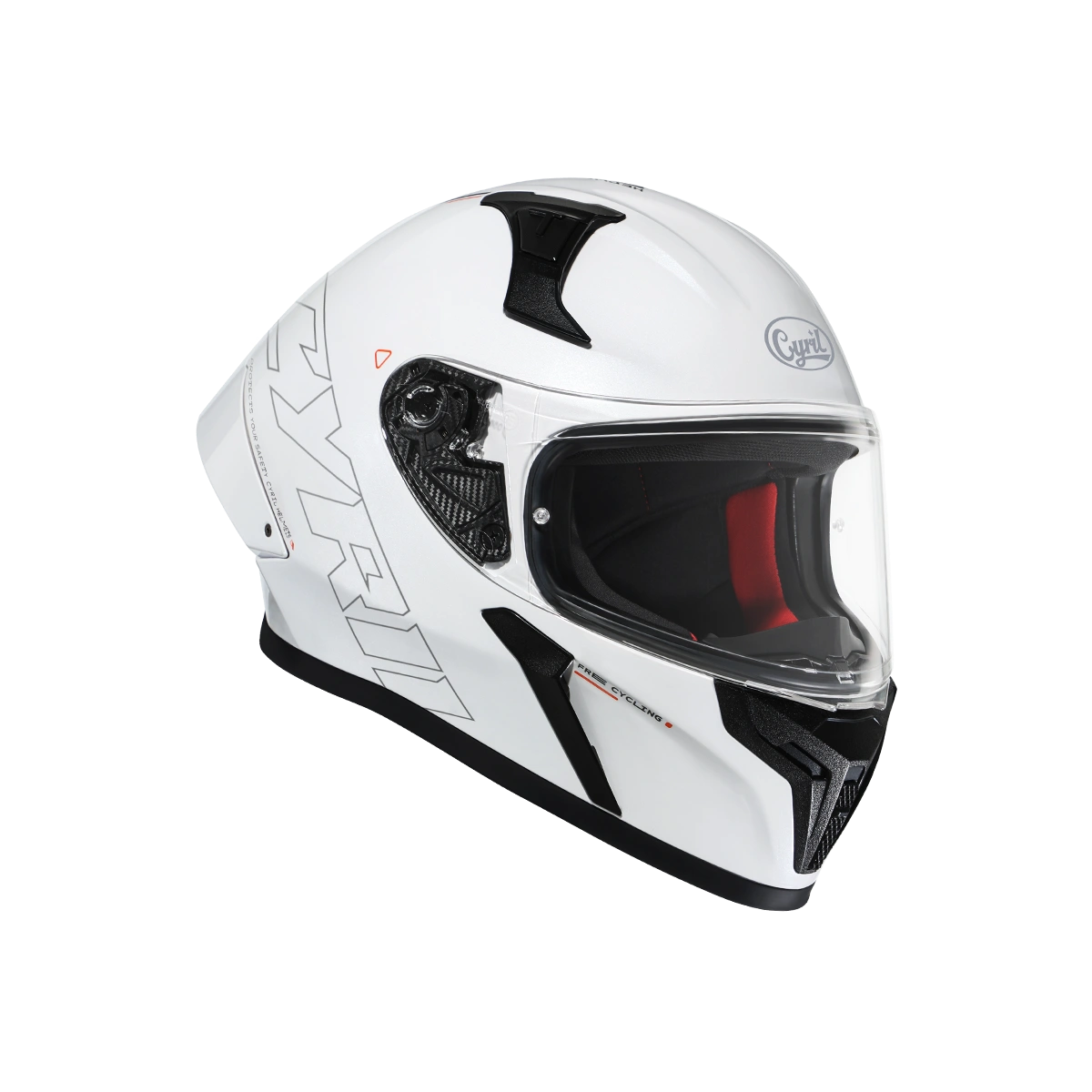
Best for Daily Commuters
The Mad Shark is a full-face helmet with DOT / FMVSS 218 information, a multi-layer EPS liner and removable washable liner. Its removable washable liner makes inspection and cleaning easier if a hot spot develops.
View Mad Shark
Best for Sport Riders
The R1-PRO carries DOT / FMVSS 218 and ECE 22.06 information. Its removable washable liner makes it easier to inspect contact areas during fit testing, while riders still need to confirm shape and size before keeping the helmet.
View R1-PRO
Best for Touring and Long Rides
The THUNDER is a dual visor modular helmet with DOT / FMVSS 218 and ECE 22.06 information. Its flip-up convenience can make rest-stop comfort checks easier, while the removable washable liner gives riders a cleaner way to inspect whether a liner edge or pad seating issue is part of the hot spot.
View THUNDERCommon Questions About Hot Spots
Is a hot spot the same as general tightness?
No. General tightness is evenly distributed pressure around the entire head. A hot spot is concentrated at one specific point. General tightness may improve with break-in. A hot spot usually does not.
Can break-in eliminate a hot spot?
Only sometimes. Firm new foam may settle a little if the pressure is broad and mild. A sharp point caused by a liner ridge, seam, accessory, or shell shape mismatch is less likely to improve cleanly. If the same spot repeats during controlled indoor tests, treat it as a fit or support issue before riding more.
Should I return a helmet with a hot spot?
Yes, if the hot spot is caused by a shell shape mismatch or liner defect. First try repositioning the helmet and checking for liner irregularities. If the hot spot remains, return the helmet within the window. A helmet with a hot spot is a helmet that will cause pain every ride.
Can I fix a hot spot by adding padding?
Adding padding usually makes hot spots worse by increasing pressure. The only padding-related fix is replacing a defective pad with a properly shaped one. Do not add aftermarket padding to solve a hot spot without understanding the cause.
Why does my hot spot get worse on long rides?
Sustained pressure on a single point causes tissue compression and inflammation that accumulates over time. A hot spot that is mildly annoying at 10 minutes can become unbearable at 60 minutes. Long rides amplify any localized pressure problem.
Can two helmets of the same model have different hot spots?
Yes. Manufacturing variations in liner foam density, seam placement, and shell finishing can create hot spots in one unit that do not exist in another. If you love a model but your specific helmet has a hot spot, try exchanging for the same model in a different unit.
How do I describe a hot spot to customer support?
Describe the exact location, when it appears during wear, and whether it persists after helmet removal. Mention if you found a liner irregularity at that spot. Specific details help support diagnose whether it is a defect, sizing issue, or shape mismatch.
Can a hot spot cause permanent damage?
Not usually from short-term use, but chronic pressure on the same spot can cause skin irritation, nerve sensitivity, or pressure sores over time. Do not ignore a persistent hot spot. Address the cause or replace the helmet.
Final Notes
A hot spot is a precise signal. It tells you exactly where your helmet is failing to distribute pressure. Learning to find it, inspect the cause, and apply the right fix separates riders who suffer through discomfort from riders who solve the problem. A helmet without hot spots is a helmet you can wear for hours without a second thought.