
Why Does My Helmet Slide Forward While Riding?

Why Does My Helmet Slide Forward While Riding?
If your helmet creeps toward your eyebrows or nose while you ride, treat it as a stability problem first, not as normal break-in. The most useful clues are when it moves, which direction it moves, and whether strap tightening is doing too much of the work.
A helmet that slides forward is usually too loose in the crown, seated too high at the rear, affected by strap angle, or being pushed by collar and wind. Do a level-position check indoors before blaming road speed. If the brow line drops into your view, the chin bar moves toward your face, or you need an uncomfortable strap setting to keep the helmet stable, involve support before riding more.
This guide was built from publicly available helmet fit guidance, including NHTSA motorcycle helmet fit guidance and MSF rider training materials, plus official Cyril product information. Before publication, it was checked for source-backed fit claims, verified product details, practical rider relevance, and no invented product weight, price, stock, size range, certification number, or safety promise.
The Short Answer
A helmet that slides forward is usually too loose in the crown, sitting too high at the rear, or being pulled by strap angle and wind pressure. This is different from normal snugness: the helmet is moving as a separate object instead of staying indexed to your head.
Do not judge it only after one annoying ride. Put it on level, fasten the strap, look down, shoulder-check, and then note whether the brow line creeps toward your eyes or nose. If forward movement repeats indoors, the problem is fit or setup, not just road wind.
Rider Persona: Maya - Stoplight Slide. This composite support scenario tracks a 25-minute commuter whose helmet feels fine leaving home but drops toward her eyebrows after repeated stops and shoulder checks. The useful clue is movement direction: forward creep points to stability, strap angle, rear seating, or size rather than a simple pressure hot spot.
Why This Problem Happens
Forward slide usually starts at the back of the helmet. If the rear sits high, the shell has room to rotate down in front. If the strap is loose or pulling from the wrong angle, it may not hold the helmet under the jaw. If the crown is too roomy, wind and head movement can keep walking the shell forward.
The NHTSA helmet guidance emphasizes a snug fit that stays in place. For this specific issue, the key test is not only pressure. It is whether the eye port, brow line, and chin bar stay in the same place after normal head movement.
| Possible Cause | What It Feels Like | Best First Check |
|---|---|---|
| Position | Helmet sits too high, too low, or tilted | Reset the helmet level and fasten the strap before judging fit |
| Size | The helmet is too tight or too loose overall | Repeat the head measurement and compare it with the product size chart |
| Shape | Pressure appears in one clear zone while another zone feels loose | Compare round, intermediate oval, and longer oval head-shape signs |
| Liner | A seam, pad edge, washed liner, or replaced padding creates a hard point | Remove only removable parts as instructed and inspect for uneven placement |
| Riding setup | Collar, glasses, earplugs, speakers, or posture changes the contact point | Repeat the fit test with the exact gear you use while riding |
What to Check First
Start with helmet position. Seat the front just above your eyebrows, pull the rear down until the shell feels level, then fasten the strap. Now look down as if checking a tank bag, turn for a lane check, and gently push up at the rear edge. The helmet should resist rolling forward.
- Check whether the rear edge sits low enough before you tighten the strap.
- Fasten the strap so one or two fingers fit under it without slack hanging below your jaw.
- Look down for five seconds; the helmet should not cover more of your upper vision.
- Turn your head left and right with your jacket collar in place.
- If the helmet slides only at speed, repeat the test after checking windshield, posture, and strap slack.
Rider Persona: Marcus - Highway Check. This composite rider notices the chin bar dropping closer to his mouth on a naked bike at 55 mph. Indoors, the same helmet rolls forward when he pushes up at the rear. That repeatable result makes the issue easier to explain to support than saying the helmet "feels weird in wind."
Normal Fit or Warning Sign?
A little pad compression over time is normal. Sliding is not the same thing. If the helmet changes your view, touches your nose after movement, or needs repeated pushing back at stops, it is failing the stability part of the fit check.
Skin Moves With Shell
The helmet pulls your scalp slightly when moved by hand but does not rotate over your head.
Only Happens With Gear
A thick collar, hoodie, or hair bulk pushes the rear upward and creates forward rotation.
View Changes While Riding
The brow line drops, the chin bar shifts, or you keep pushing the helmet back into place.
A Practical Test Routine
Use a short stability routine before riding outside or removing return-protection items. The goal is to reproduce forward movement without road risk and without damaging the helmet.
- Stand in riding posture and mark where the brow line starts in your field of view.
- Look down, then return to neutral; note whether the brow line stays lower.
- Push gently upward at the rear edge; excessive roll suggests poor stability.
- Repeat with your usual jacket collar, hair, glasses, or communication gear.
- Send support side and front photos if the helmet moves but the size chart looks correct.
How to Avoid the Same Problem Next Time
When choosing again, do not solve forward slide by simply tightening the strap until it hurts. Look for a size and shell shape that hold the crown evenly, sit low enough at the rear, and remain stable with your normal jacket and posture.
If you are between sizes, ask support about the movement pattern instead of only asking for a size label. A smaller size may reduce slide, but the right answer depends on head shape, rear seating, and whether the current helmet has unused space at the crown.
Rider Persona: Daniel - Return Window Decision. This composite rider can make the helmet feel acceptable by overtightening the strap, but then his jaw hurts. That tradeoff is a warning sign: the helmet should not need an uncomfortable strap setting to stay out of his eyes.
If the helmet only shifts once and resets cleanly, document the setup and retest. If it repeatedly drops toward your eyes, touches your face, or needs painful strap tension to stay put, treat exchange or return as the practical next step.
How to Apply This When Choosing
For forward slide, focus on stability, rear seating, and whether the helmet still feels controlled after head checks. Product pages cannot prove fit for your head, but they can help you choose the right style to test.
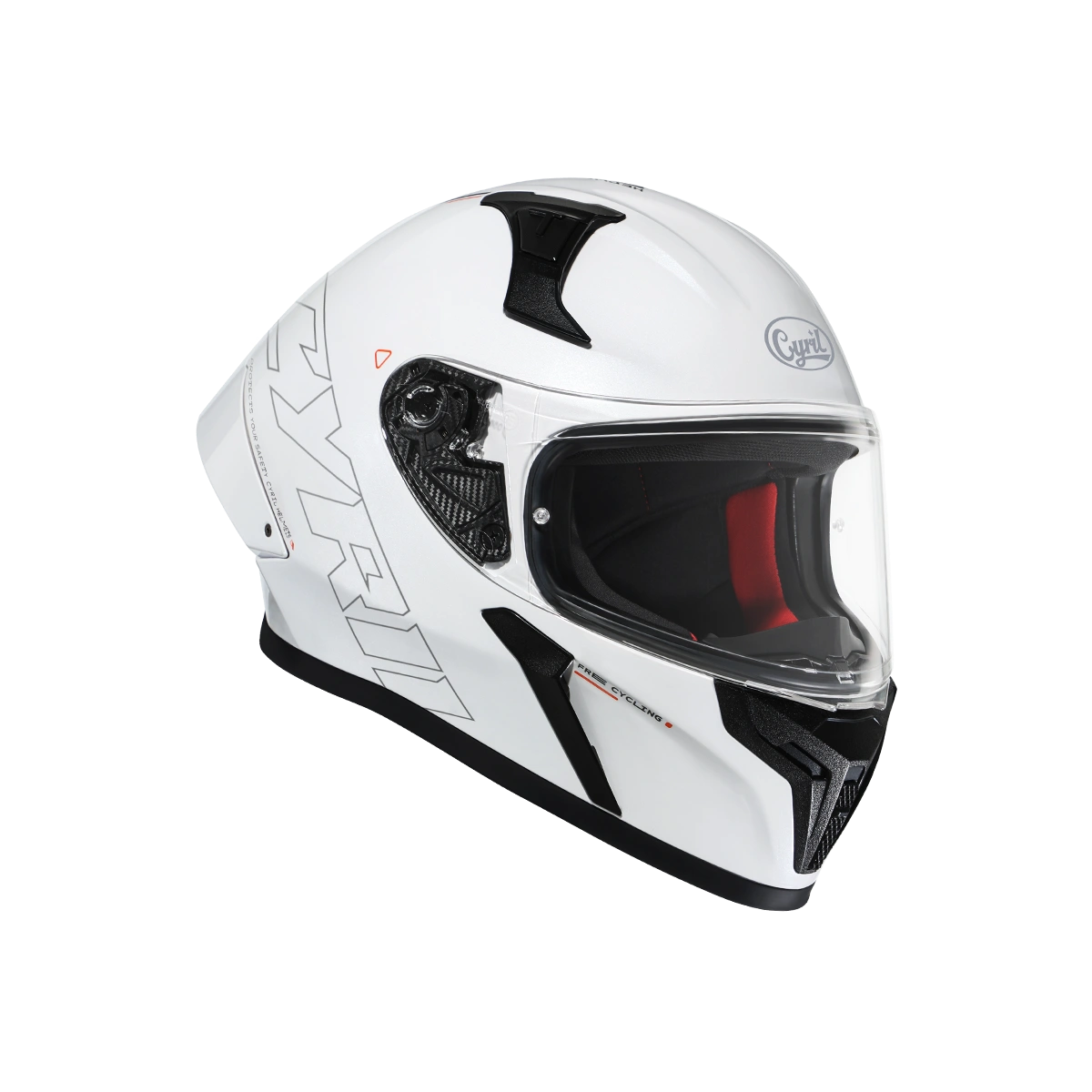
Best for Commuters Checking Stability
The Mad Shark is a full-face helmet with DOT / FMVSS 218 information, an ABS shell, multi-layer EPS, active ventilation, a clear visor view, and a removable washable liner. For riders dealing with forward slide, use the product page as the starting point, then verify rear seating and strap stability during an indoor fit test.
View Mad Shark
Best for Sportier Full-Face Stability Checks
The R1-PRO is a full-face helmet with DOT / FMVSS 218 and ECE 22.06 information, a sport-inspired profile, magnetic visor release, ventilation, a removable washable liner, and a stable full-face shell profile. It is worth considering when your concern is how a full-face helmet feels during head checks and higher-speed posture changes.
View R1-PRO
Best for Riders Who Need Stop-and-Go Convenience
The THUNDER is a dual visor modular helmet with flip-up convenience, a clear outer shield, an inner sun visor, wide-view comfort, a removable washable liner, and DOT / FMVSS 218 and ECE 22.06 information. If you prefer modular convenience, still test forward stability with the chin bar closed, the strap fastened, and your normal jacket collar in place.
View THUNDERCommon Questions About Why Does My Helmet Slide Forward While Riding
Is a helmet sliding forward always too big?
Not always. A too-large size is common, but rear seating, strap slack, collar interference, and head shape can also let the helmet rotate forward. Check those before choosing a different size.
Can I fix forward slide by tightening the chin strap?
Only to a point. The strap should be snug, but it should not choke, pull your jaw painfully, or be the only thing stopping the helmet from covering your view.
Why does it slide more when I look down?
Looking down shifts the shell forward. A stable helmet returns with your head. If it stays low over your eyes, there may be too much crown space or poor rear seating.
Can a jacket collar cause this?
Yes. A tall or stiff collar can push the rear of the helmet upward, especially on upright bikes. Test with the exact jacket you ride in before blaming the helmet alone.
Should I ride to test whether wind is the real cause?
Do indoor checks first. If the helmet rolls forward indoors, road wind will usually make it worse. If it only happens at speed, document the speed, bike posture, windshield, and strap setup.
What photos help support diagnose forward slide?
Send front, side, and rear photos with the helmet level and strapped. A side photo after looking down can also show whether the shell has rotated from its starting position.
Will thicker cheek pads stop sliding?
Cheek pads can improve side stability, but they cannot fully solve crown space or rear lift. Use only supported pad options and ask support before changing parts.
When is exchange or return the cleaner answer?
If the helmet repeatedly drops into your vision, touches your nose after movement, or needs an uncomfortable strap setting to stay stable, exchange or return is more practical than adapting your ride around it.
Final Notes
A helmet that slides forward is a stability problem, not just an annoyance. Check rear seating, strap angle, crown space, collar interference, and repeatability before riding more. If the helmet still moves into your view, involve support while the return or exchange path is still clean.