
Why Does My Helmet Chin Strap Twist Every Time I Put It On?

Why Does My Helmet Chin Strap Twist Every Time I Put It On?
A helmet chin strap can twist because the removable fabric cover rotated, the webbing was stored or handled with a half-turn, the buckle is being picked up from the wrong side, or the twist begins at a fixed anchor. Straighten only what the exact manual treats as user-adjustable. If the load-bearing webbing exits an anchor twisted, is damaged, or will not lie flat through its closure, stop using the helmet and get support.
Inspect the helmet off-head and separate three things: the structural webbing, any removable chinstrap cover, and the buckle or rings. Trace each side from its shell anchor to the closure without unthreading anything. A rotated removable cover may be reinstalled through a documented procedure; a twist that originates at sewn webbing, a rivet, or an unfamiliar buckle route is not a DIY rethreading task. Never fasten over a hard fold just because the buckle clicks.
NHTSA’s motorcycle helmet guidance treats sturdy chin straps and solid rivets as features of compliant helmets and emphasizes complete fit rather than shell size alone. The official SHOEI NXR2/RF-1400 manual shows, for that model only, removable chinstrap covers passing over left and right straps and snapping closed. R1-PRO’s retention fact comes from the current CYRIL product page. Neither external source authorizes altering R1-PRO webbing or closure routing.
Find Out What Is Twisted Before Trying to Fix It
A soft strap cover can rotate around flat webbing and create the appearance of a structural twist. The webbing itself can also take a half-turn between its shell anchor and buckle. Finally, a loose end may merely be folded back by its keeper. These are not equivalent.
Set the helmet upright and open the cheek area without removing parts the manual does not identify as removable. Trace each strap visually from the highest visible point to the closure. The load-bearing webbing should not be hidden by a bunched cover, and the closure should face the orientation shown in the exact manual.
What the Pattern Can Reveal
| Pattern | Likely Area to Inspect | Safe Boundary |
|---|---|---|
| Only the padded sleeve looks rotated | Removable chinstrap cover and its snap/orientation | Reinstall only if the exact manual shows removal |
| Webbing lies flat off-head but twists during donning | Which hand grabs the buckle, cheek-pad gap, loose-end keeper | Change the donning sequence without altering hardware |
| Half-turn starts at the shell | Fixed anchor, rivet, or sewn attachment | Do not rotate, unbolt, or re-stitch it |
| Twist appeared after liner service | Strap cover, cheek-pad strap opening, trapped webbing | Repeat the documented interior installation |
| Closure faces inward or will not lie flat | Unknown buckle/ring routing or wrong reassembly | Do not improvise rethreading; request the diagram |
| Loose end flips but load path is flat | Keeper position and excess-tail management | Use only the supplied or approved keeper |
An Off-Head Check That Does Not Unthread the Closure
- Leave the buckle or rings threaded. Photograph both sides and closure orientation before moving a soft cover.
- Trace the load-bearing webbing. Use a fingertip along its visible edges from anchor to closure; do not pull at the anchor.
- Identify the cover. Check whether the manual names it as removable and shows its snap or left/right relationship.
- Check the cheek-pad route. The strap should pass through its intended pad opening without fabric trapping a half-turn.
- Check the tail keeper. Confirm the loose end is managed by the supplied loop or snap without folding the loaded section.
- Lay both sides naturally. The closure should meet under the chin without needing one side spun immediately before fastening.
- Stop if the diagram and helmet disagree. Send photos to the maker rather than guessing which layer to reverse.
If the Twist Happens Only While Putting the Helmet On
Use the exact manual’s donning method and guide the straps outward only as it permits, without yanking their anchors, while lowering the helmet straight onto the head. Once seated, let both sides hang before reaching for the closure. Repeatedly grabbing one buckle from behind the cheek pad can add a half-turn even when the stored strap was flat.
Practice indoors in front of a mirror. Watch whether the same hand rotates the buckle or whether a thick glove snags the loose-end keeper. Fasten through the exact closure instructions, then feel along the exposed webbing. It should lie broad and flat rather than presenting a narrow folded edge against the jaw or neck.
Do not solve twisting by leaving the strap loose. Correct routing and correct tension are separate requirements. If a flat strap creates neck contact or poor closure position, reassess helmet position, strap geometry, and fit with the manufacturer or a trained fitter.
Why It Often Starts After Liner Cleaning
Cheek pads and chinstrap covers may have to be installed in a specific relationship. In the reviewed SHOEI example, a chinstrap passes through its cover and the cover snaps closed; the cheek pads also route around the strap. This does not define R1-PRO, but it shows why the soft sleeve and structural webbing must not be confused.
If the twist began after cleaning, compare your exact manual and pre-service photos. Ensure the cover is dry, correctly oriented, and secured. Confirm the strap exits its cheek-pad opening without a fabric fold. If the webbing itself was unthreaded from a buckle or removed from an undocumented point, stop and request official reassembly rather than relying on memory.
Do Not Heat, Iron, Stitch, or Re-Rivet a Helmet Strap
Heat used to flatten a crease can affect synthetic webbing. Added stitching creates new holes and changes the load path. Cutting a cover can expose edges and hide damage. A loose or rotating rivet is not tightened with a household fastener, and a quick-release buckle is not replaced by a visually similar universal one.
Clean only through the helmet maker’s method. Unknown solvents can stiffen or weaken webbing and affect buckle parts. If contamination cannot be removed, ask whether the complete helmet or an authorized retention assembly can be serviced.
Three Twists With Different Answers
Leah’s webbing is flat, but a washable sleeve rotated after liner care. Her manual shows that cover as removable, so she restores its orientation without touching the anchor or buckle threading.
Owen stores both sides flat, then reaches behind the left cheek pad and spins the buckle every time. He changes his hand sequence and lets both straps hang before fastening.
June sees a half-turn beginning where the strap disappears into the shell and notices movement at the anchor. She stops using the helmet and sends close photos to support.
How This Applies to R1-PRO
The R1-PRO page lists adjustable quick-release retention. It does not publish a strap-cover removal or buckle rethreading procedure on the page reviewed here. If an R1-PRO strap twists, identify whether it is the cover, loose tail, or load-bearing webbing and ask CYRIL for the exact diagram before changing any threading or fixed hardware.
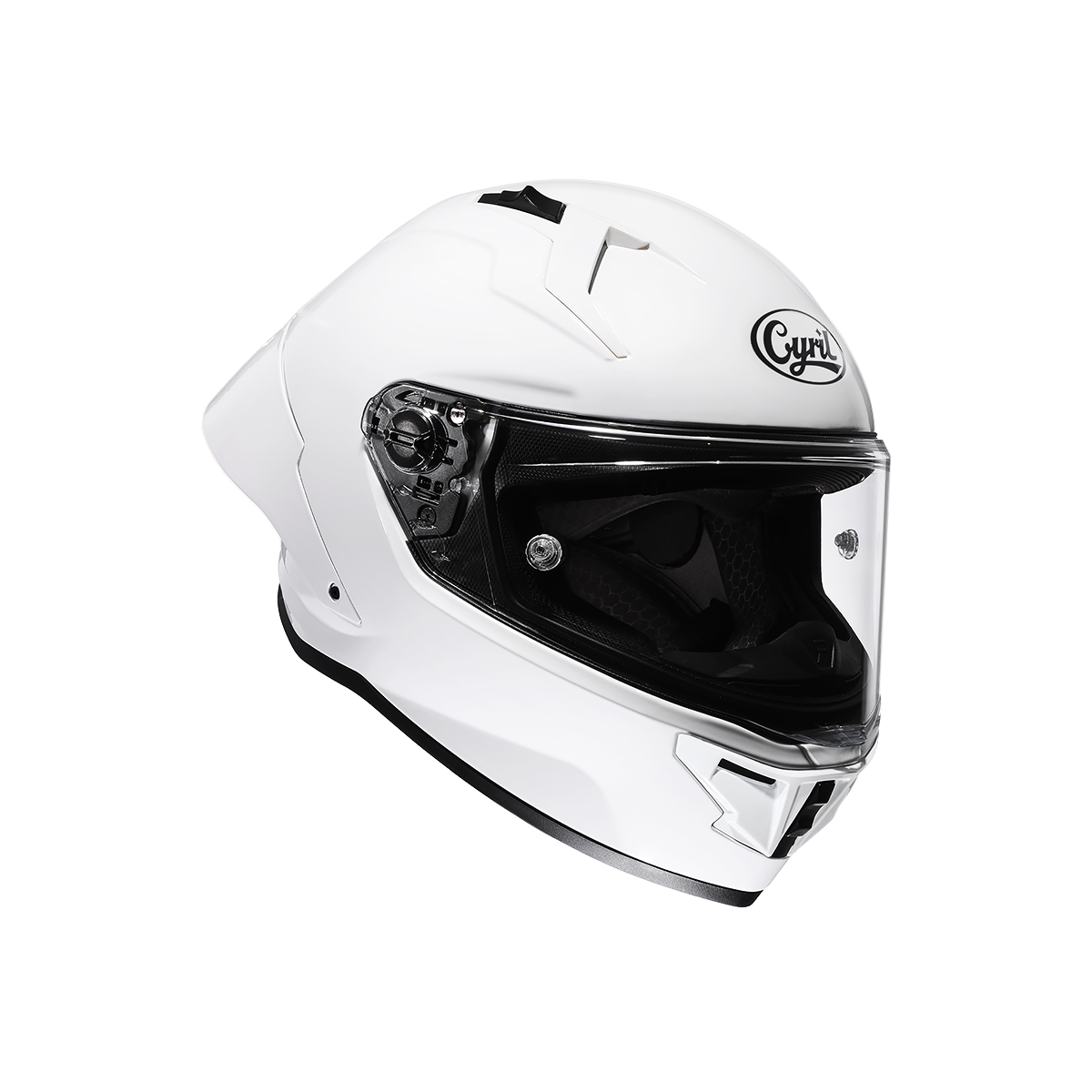
R1-PRO Full Face Helmet
A sport-street helmet with adjustable quick-release retention that should lie flat and follow the exact CYRIL operating route.
View current R1-PRO detailsTwisted Chin-Strap Questions
Can I fasten a helmet strap while it is twisted?
No. The load-bearing webbing should follow the closure instructions and lie flat without a hard fold. Resolve the cause off-head first.
How do I know whether the strap or its cover is twisted?
Trace the flat structural webbing separately from any padded sleeve. Move the cover only if the exact manual identifies it as removable.
Can I unthread a quick-release buckle to fix the twist?
Not without the exact manufacturer procedure. Photograph the current route and request model-specific instructions rather than guessing.
Why does the twist appear only when I put the helmet on?
Your hand may rotate the closure behind a cheek pad, or the loose-end keeper may snag. Let both straps hang flat before fastening.
Can cheek-pad installation twist the strap?
A pad or cover can trap the strap in the wrong orientation. Repeat the exact interior route without pulling or altering the fixed anchor.
Can I iron or heat a creased helmet strap?
No. Heat can affect webbing and nearby materials. Ask the helmet maker to assess a persistent sharp crease or stiffened strap.
Is a moving strap rivet a home repair?
No. Stop using the helmet. Do not re-rivet, bolt, glue, or stitch a fixed retention anchor.
What should I send support?
Send the model and label, photos from each anchor to the closure, the manual revision, recent liner work, and the exact point where the half-turn begins.
Final Notes
Treat a twisted chin strap as a routing question, not a reason to fasten looser. Separate the removable cover from the structural webbing, trace the original path, and change only what the exact manual permits. A twist at fixed hardware, damaged webbing, uncertain rethreading, or closure that will not lie flat belongs with the manufacturer.